
Local service guide
Pest Control Services in Corpus Christi, TX
To arrange Pest Control Services in Corpus Christi, ask for pest identification, check the provider's Texas licensing for the proposed work, and compare written quotes that include treatment areas, follow-up visits and tax. Texas requires licensing for structural pest control businesses and individuals working for hire. For outdoor mosquitoes, check the city's service restrictions and any HOA arrangements before booking private treatment. [1] [3] [4]
Choose the inspection before choosing the treatment
Describe where you see activity, when you first noticed it and what you have tried. Send clear photos if you can take them without disturbing the pest. Ask the provider to identify the pest and explain the evidence behind the proposed treatment before you agree to a recurring plan.
Texas places roaches, ants, mosquitoes, rats and mice within its pest control category. It treats termite and other wood-destroying organism control as a separate category, and structural fumigation as another. Ask which category covers your job and request the business license details and the credentials of the person attending. [3]
For suspected wood damage, ask the inspector to distinguish pest treatment from repair work. Request a description of the affected areas, the proposed treatment boundaries and any areas they could not inspect. For rodents, ask who will investigate entry points, remove trapped animals and complete any agreed sealing work.
Compare the full quote and follow-up terms
Ask each provider to quote the same problem and areas of the home. Have them itemize the initial inspection, treatment, scheduled visits, monitoring and any exclusion or repair work. Ask whether you can buy a single treatment and what you commit to if you choose ongoing service.
The Texas Comptroller requires providers to collect sales tax on structural pest control, even when they find no pests. Taxable services include inspections, infestation reports, prevention and treatment. The state rate is 6.25 percent, with up to 2 percent local tax. Ask the provider to show the applicable tax and total rather than assuming a rate for your address. [4]
Some distinct services have different tax treatment. The Comptroller lists live-trap animal removal, yard bee removal and non-pesticidal animal barriers among nontaxable services. If your job combines removal, sealing and pesticide treatment, ask the provider to itemize the work and explain the tax calculation. [4]
Read the return-visit promise before accepting it. Ask which pests and rooms it covers, how you report continued activity, whether return visits cost extra and when coverage ends. Request cancellation and renewal terms in writing. Compare those commitments alongside the total price.
Plan outdoor mosquito work around city coverage
The city says it sprays for mosquitoes from March through October, with the season's start affected by weather and temperature. Technicians use trap counts to choose treatment routes. The city says a route's absence from the schedule means its counts did not exceed the spraying threshold. Check the current weekly notice before planning around a city visit. [1]
In its June 1, 2026 notice, the city anticipated more mosquito activity after recent rain and warned that rain or high winds could delay spraying. The notice covered a historical June schedule. For private outdoor treatment, ask the provider how weather affects scheduling and what happens if they postpone your visit. [2]
Start with water sources on your property. The city recommends draining water from containers, tires, buckets, clogged gutters and plant saucers, along with trimming grass and shrubs. Ask a private provider to inspect these sources and explain which homeowner tasks should accompany any proposed application. [1]
Prepare the home and agree on the next visit
Get written preparation instructions before moving furniture, emptying cupboards or cleaning treated areas. Tell the provider about children, pets, aquariums and anyone with respiratory sensitivities. Ask which rooms they need to access, whether you must leave and the conditions for returning.
For municipal mosquito spraying, the city's June safety notice advised residents to stay indoors when possible, close doors and windows, bring pets inside or keep them away from spray areas, and cover outdoor furniture, toys and pet dishes. Follow the city's precautions for municipal operations and obtain treatment-specific instructions from your private provider. [2]
Before the technician leaves, ask what activity to record and when to report it. Keep the service report, preparation sheet and contract together. Note sightings by room and date so you can describe continued activity at the follow-up and ask whether the provider needs to reassess the treatment.
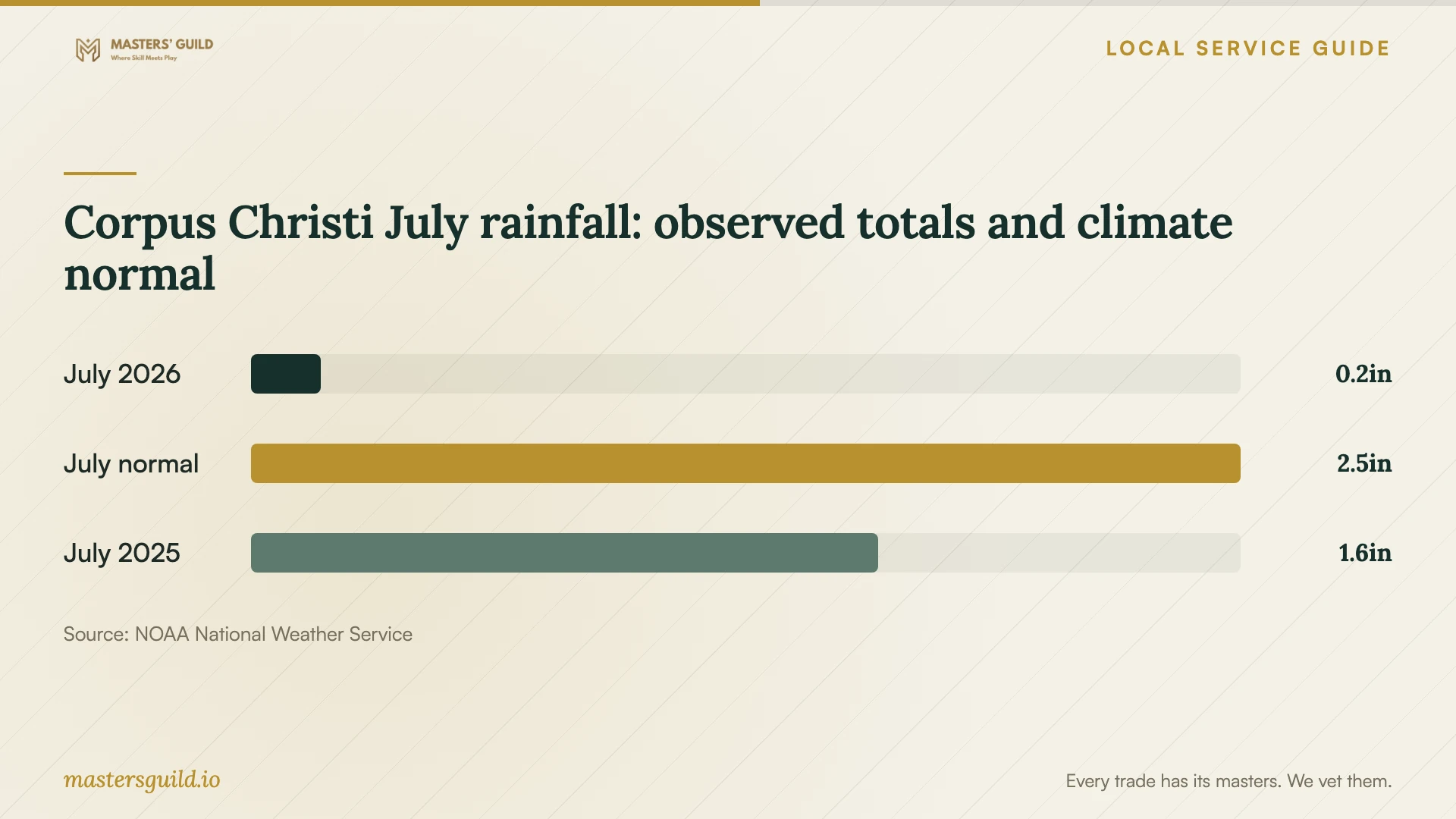
Corpus Christi July rainfall: observed totals and climate normal
Local details that affect your job
Private and gated properties need a separate mosquito plan
Corpus Christi Vector Control does not enter private communities, gated communities or apartment complexes. The city assigns mosquito control there to the HOA or complex manager. Before paying for yard treatment, ask your HOA or manager what they cover, who arranges access and whether your proposed work overlaps with their service. [1]
Bee calls go to a different specialist
City Vector Control does not handle bees and recommends contacting a local beekeeper. Describe whether you see a swarm outdoors or activity entering a wall, and ask whether the specialist handles that situation. If access or repairs are necessary, request those responsibilities in the written scope. [1]
Report off-property standing water through 311
The city directs residents to call 311 about abandoned property, high grass or standing water. If you notice a problem beyond your yard, report its location while addressing containers and gutters you control. Ask a private provider to define the property boundaries they will treat. [1]
Match the problem to the next step
| Problem | Next step | Question to ask |
|---|---|---|
| Roaches, ants or rodents | Ask about the Texas pest control category. | What evidence supports the treatment, and which areas will you inspect? |
| Suspected termites or wood-destroying pests | Ask about the separate termite control category. | What will you treat, and who handles any repairs? |
| Mosquitoes in a gated community | Check the HOA or manager's plan; city Vector Control does not enter. | What does the community service cover on my property? |
| Bees | Contact a beekeeper, as city Vector Control recommends. | Do you handle this location and any access or repair work? |
| Removal plus pesticide treatment | Request an itemized scope and tax explanation. | Which charges are taxable, and what is the final total? |
Your hiring checklist
- Record pest sightings, affected rooms, photos and treatments you have tried.
- Request business license details and ask which credentials cover the proposed work.
- Compare written scopes covering the same pest and treatment areas.
- Ask for the total with tax, follow-up charges and renewal terms.
- Confirm access, preparation, pet arrangements and return-home instructions.
- Ask your HOA or manager about existing mosquito service before booking overlapping work.
- Keep the service report and agree on when to report continued activity.
Frequently Asked Questions
Does city mosquito spraying replace treatment at my home?
The city selects routes using mosquito trap counts and does not enter private or gated communities or apartment complexes. Check your current route notice and any HOA arrangements, then ask a provider to assess the remaining problem on your property. [1]
Can an inspection carry sales tax if the provider finds no pests?
Yes. The Texas Comptroller says structural pest control providers must collect sales tax even when they find no pests. Ask whether the quoted inspection price includes tax and whether the provider credits any inspection charge toward treatment. [4]
Does a general pest control license cover termite treatment?
Texas lists pest control and termite control as separate license categories. Ask the provider to explain which category and personnel credentials cover your proposed termite work before accepting the quote. [3]
Should I book recurring service at the first visit?
Ask the provider to explain the inspection findings, the purpose of each scheduled visit and the alternatives. Request the cancellation terms and return-visit coverage, then decide whether the proposed schedule fits the problem and your budget.
Sources and scope
This guide combines the sources below with practical planning guidance. Figures apply to the stated geography and period; request a written quote for your property.