
Local service guide
Pest control in Fort Worth, TX: Hiring and Planning
To arrange pest control in Fort Worth, ask companies to identify the pest, explain the proposed treatment, and quote the inspection, treatment and follow-up work separately. Check the business against Texas Department of Agriculture active-license reports. For termite work, obtain the required disclosure documents with the bid before agreeing to treatment. [1] [2]
Start with identification and an inspection scope
Describe what you have seen before requesting a treatment price. Send photographs, list affected rooms and outdoor locations, and say when you first noticed activity. Include previous treatments and any current service agreement. Ask whether the company can identify the pest from that information or needs an inspection before proposing work.
For suspected termites, save a sample of swarmers for the inspector if you can collect them without disturbing the affected area. TDA identifies mud shelter tubes, blistered wood and discarded wings among possible signs. Ask an inspector to assess the evidence before you choose a termite treatment. [1]
Ask the inspector to record areas they could not access. TDA explains that a wood-destroying insect inspection does not involve dismantling or removing objects and does not constitute a structural damage report. If you also need repair advice, arrange a separate assessment of the affected building materials. [1]
Compare written quotes for the same work
Request a quote that names the target pest, treatment areas, method, preparation requirements and follow-up plan. Ask the company to separate the initial visit from later visits and renewal charges. For a recurring agreement, request the billing schedule, cancellation terms and rules for visits between scheduled treatments.
TDA advises homeowners to contact several companies because prices, treatment options and contract terms vary. Use the same description of your problem for each request. If one proposal covers an entire structure and another covers a limited area, ask each company to explain its scope before comparing totals. [1]
For termite proposals, read the warranty alongside the treatment plan. Texas disclosure requirements address the warranty period, renewal options and cost, retreatment or damage-repair obligations, and owner actions or conditions that could void coverage. Ask the company to point out the covered areas and exclusions in its documents. [1]
Prepare access and agree on the visit plan
Ask for written preparation instructions before moving furniture, emptying cabinets or arranging time away. Tell the company about children, pets, aquariums and any concerns about pesticide exposure. Request product information and clear instructions on access, re-entry and cleaning after treatment.
Describe crawl-space entrances, locked gates, stored belongings and other access limits when booking. Agree on who will open each area and whether the company needs a return visit to inspect anything it cannot reach. Keep photographs and a short activity log so you can describe changes at follow-up.
For termite prevention, ask the inspector to assess moisture, earth-to-wood contact, firewood against the foundation and wood debris in the crawl space. TDA lists these among conditions conducive to infestation. Request a written division between treatment work and property corrections you need to arrange. [1]
Plan follow-up before paying for repeat treatment
Before the first visit, agree on how you will report continued activity and when the company will reassess it. Ask what observations warrant a return visit, what the agreement includes and which additional services require a new quote. Keep the inspection report, product information, invoice and warranty together.
If termites return while you have a contract, contact the contracted company for identification and assessment. TDA says annual subterranean termite retreatment is prohibited without clear evidence of reinfestation or barrier disruption. Ask what inspection, monitoring or coverage you receive for an annual renewal charge and whether it includes another pesticide application. [1]
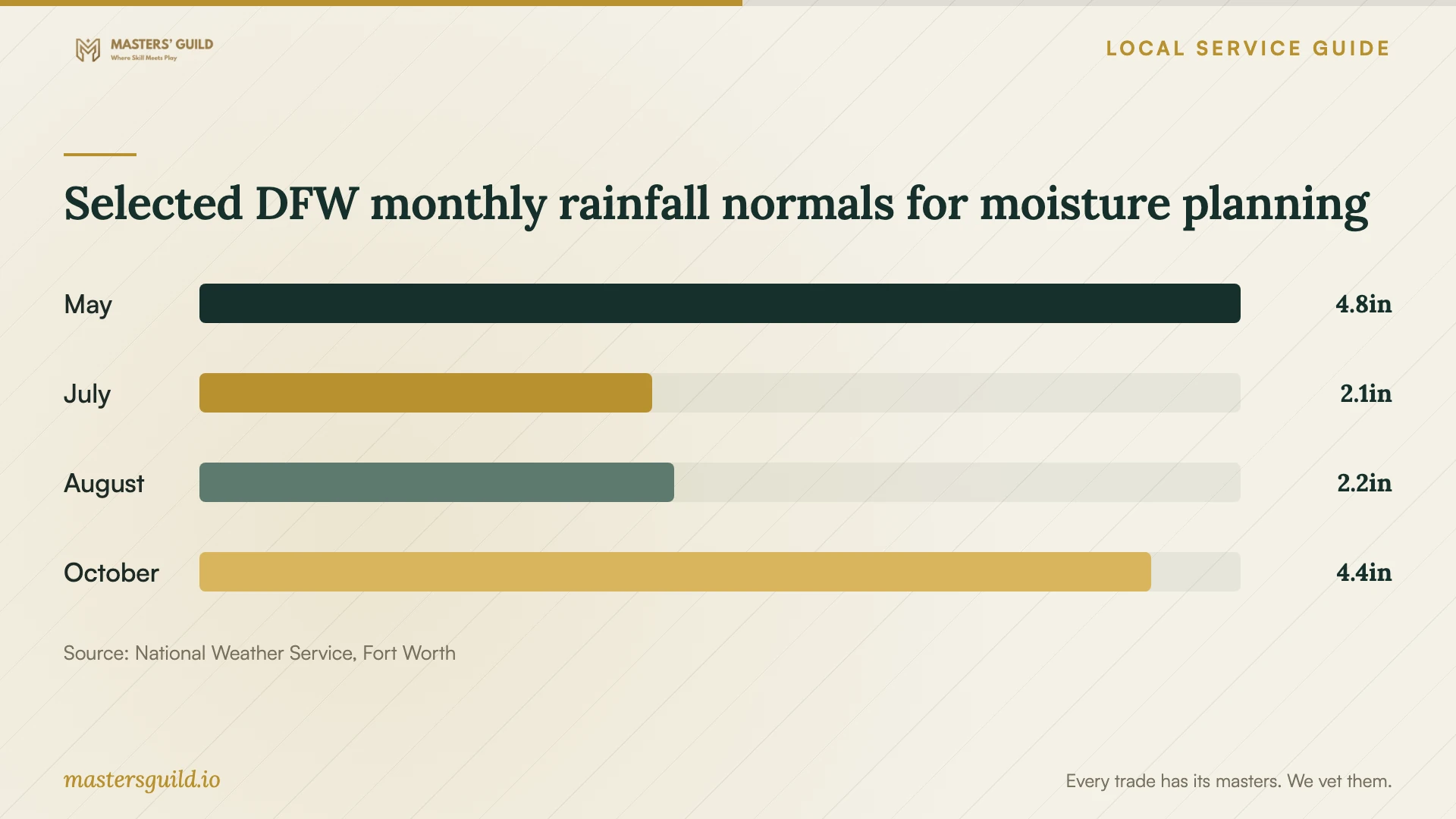
Selected DFW monthly rainfall normals for moisture planning
Local details that affect your job
Use Texas business and personnel license reports
For a Fort Worth home, use TDA's statewide structural pest-control reports to check the proposed company and the people assigned to the job. TDA publishes separate active-license reports for commercial businesses, applicators, technicians and apprentices. Ask for the legal business name and attending worker's name so you can match the appropriate records. Treat the license check as one part of your assessment, alongside the proposed work and contract. [2]
Require Texas termite documents with the bid
Texas requires the proposing company to give you termite disclosure documents when it submits the bid and before treatment. Expect a structure diagram, the recommended pesticide label and proposed concentration, treatment definitions, warranty details and a signature of approval from a certified applicator or technician licensed in the termite category. If a company offers only a verbal price, request the complete proposal before scheduling treatment. [1]
Include drainage observations in an October inspection
The regional DFW climate record gives October normal precipitation of 4.37 inches for 1991–2020. For an autumn inspection here, point out water that collects near the foundation and ask the inspector to assess moisture conditions. TDA identifies moisture and faulty grade as termite-conducive conditions. Use the regional rainfall figure as context; ask the inspector to assess your property's conditions and any pest evidence. [1] [3]
Choose the next step from the evidence you have
| Your situation | Next step | Question to ask |
|---|---|---|
| You cannot identify the pest | Request identification before accepting a treatment plan. | Do you need a sample, photographs or an inspection? |
| You see mud tubes or discarded wings | Arrange an inspection for possible termite evidence. | Which evidence supports your identification? |
| You suspect damage inside concealed areas | Discuss inspection access and arrange a separate damage assessment if needed. | Which areas will you inspect, and what remains outside your scope? |
| You have a termite treatment bid | Review the Texas disclosure documents before scheduling. | Which areas and damage obligations does the warranty cover? |
| Termites return during an existing contract | Contact the contracted company for assessment. | What evidence supports retreatment, and does my agreement cover it? |
Your hiring checklist
- Photograph the pest or evidence and list affected areas.
- Give each company the same description and treatment history.
- Request the legal business name and attending worker's name for license checks.
- Ask for separate inspection, treatment, follow-up and renewal charges.
- Obtain written preparation, access and re-entry instructions.
- Ask the inspector to record inaccessible areas and recommended property corrections.
- Read warranty coverage, exclusions and cancellation terms before agreeing.
Frequently Asked Questions
How much should I budget for treatment?
Request property-specific written quotes before setting your budget. TDA says prices, treatment options and contract terms vary between companies. Compare the initial work, follow-up visits and renewal obligations together, and ask each company to identify any charges outside its quoted scope. [1]
Does a clear termite inspection guarantee the house has no termites?
No. TDA describes a wood-destroying insect inspection as an assessment of accessible areas for visible evidence. Inspectors do not dismantle objects, and the inspection does not warrant the absence of wood-destroying insects. Ask the inspector to explain access limits in the report. [1]
Does a termite warranty include damage repairs?
Read the specific warranty. TDA requires disclosure of the company's retreatment or repair obligations, renewal terms and conditions that could void coverage. Ask the company to explain whether it offers damage coverage and which parts of the structure it covers. [1]
How do I handle an unresolved termite treatment complaint?
First discuss the problem with the company. If you cannot resolve it, TDA directs consumers to the Structural Pest Control Service. Ask the agency about preserving evidence before arranging repairs or another treatment. TDA states that SPCS cannot compel a company to pay damages or settle a contractual dispute. [1]
Sources and scope
This guide combines the sources below with practical planning guidance. Figures apply to the stated geography and period; request a written quote for your property.