
Local service guide
Pest Control Services in Arlington, TX
To arrange Pest Control Services in Arlington, TX, start with pest identification, verify Texas credentials for the proposed work, and compare written quotes with the same treatment area and follow-up scope. Texas requires licensing for businesses and individuals performing structural pest control for hire. For termite work, review the required bid-stage disclosures before approving treatment, including the structure diagram, pesticide information, and warranty. Have the company separate initial treatment charges, included return visits, monitoring, and renewal costs. [1] [2]
Define the problem before choosing treatment
Describe where you saw activity, when you first noticed it, and which rooms or outdoor areas you want inspected. Share photographs and details of earlier treatments. Let the inspector identify an unfamiliar insect rather than naming it from a guess. Before approving work, have the inspector explain the evidence and the proposed treatment area.
Specify whether you want service inside the house, around the exterior, in the attic or garage, or at detached structures. For rodent work, clarify who will locate entry points, seal openings, remove trapped animals, and check for continuing activity. For a recurring plan, review the covered pest list and the conditions for visits between scheduled appointments.
For suspected termites, save several swarmers in a plastic bag for the inspector. Texas Department of Agriculture guidance lists mud shelter tubes, blistered wood, and weak or broken structural members among possible signs of subterranean termites. Arrange an inspection before choosing a treatment from photographs alone. [2]
Verify credentials for the specific scope
Texas requires licenses for businesses and individuals performing structural pest control for hire. The household pest control category includes roaches, ants, mosquitoes, rats, and mice. The termite control category covers termites and other wood destroying organisms through methods other than fumigation. Use those distinctions when reviewing the company’s proposed scope. [1]
Collect the business license information and the credentials of the person assigned to inspect or treat your home. Have the company explain how those credentials cover the job. The Texas Department of Agriculture’s termite guidance says homeowners can contact the Structural Pest Control Service to confirm a company’s license. Keep that confirmation with the proposal. [2]
Include proof of liability insurance in your hiring file and check that the contract names the business you intend to hire. If one agreement combines indoor treatment, termite work, or treatment of ornamental plants, have the company identify the responsible person and applicable category for each scope. [1]
Compare written quotes and warranty obligations
Obtain written quotes for the same pest, affected areas, and service period. Include inspection charges, preparation assistance, treatment, return visits, monitoring, and any taxes or other charges in the comparison. For a recurring agreement, review the initial payment, later payments, renewal terms, and cancellation conditions together.
Texas Department of Agriculture advises homeowners to contact several companies because prices, treatment options, and contract terms vary. Its termite guidance directs homeowners to examine damage coverage, renewal options, and conditions that could void a warranty. Read the retreatment obligation and any damage-repair obligation as separate contract terms. [2]
Settle the follow-up questions before signing: what evidence should you report, who reviews it, what triggers a return visit, and whether you will pay for that visit? Keep the proposal, treatment record, and follow-up instructions together. For termite bids, use the disclosure documents described below to compare each company’s treatment and coverage.
Prepare the property and address inspection limits
Get preparation and re-entry instructions for the exact treatment before appointment day. Tell the company about children, pets, aquariums, and health concerns you want addressed. Confirm which rooms or storage areas need clearing and whether you need to leave. Follow the company’s instructions before moving belongings between rooms.
Discuss access before a termite inspection. Texas guidance limits wood destroying insect inspections to readily accessible areas and excludes dismantling or removing objects. Have the inspector document areas they could not inspect and explain any recommended next step. The inspection report does not establish the extent of structural damage or guarantee the absence of hidden insects. [2]
Show the inspector moisture near the foundation, firewood against the house, and wood touching soil. Texas Department of Agriculture identifies these as conditions conducive to termite infestation. Discuss corrections and disclose planned excavation or landscaping, since the agency’s subterranean termite guidance identifies construction, excavation, and landscaping as possible causes of barrier disruption. [2]
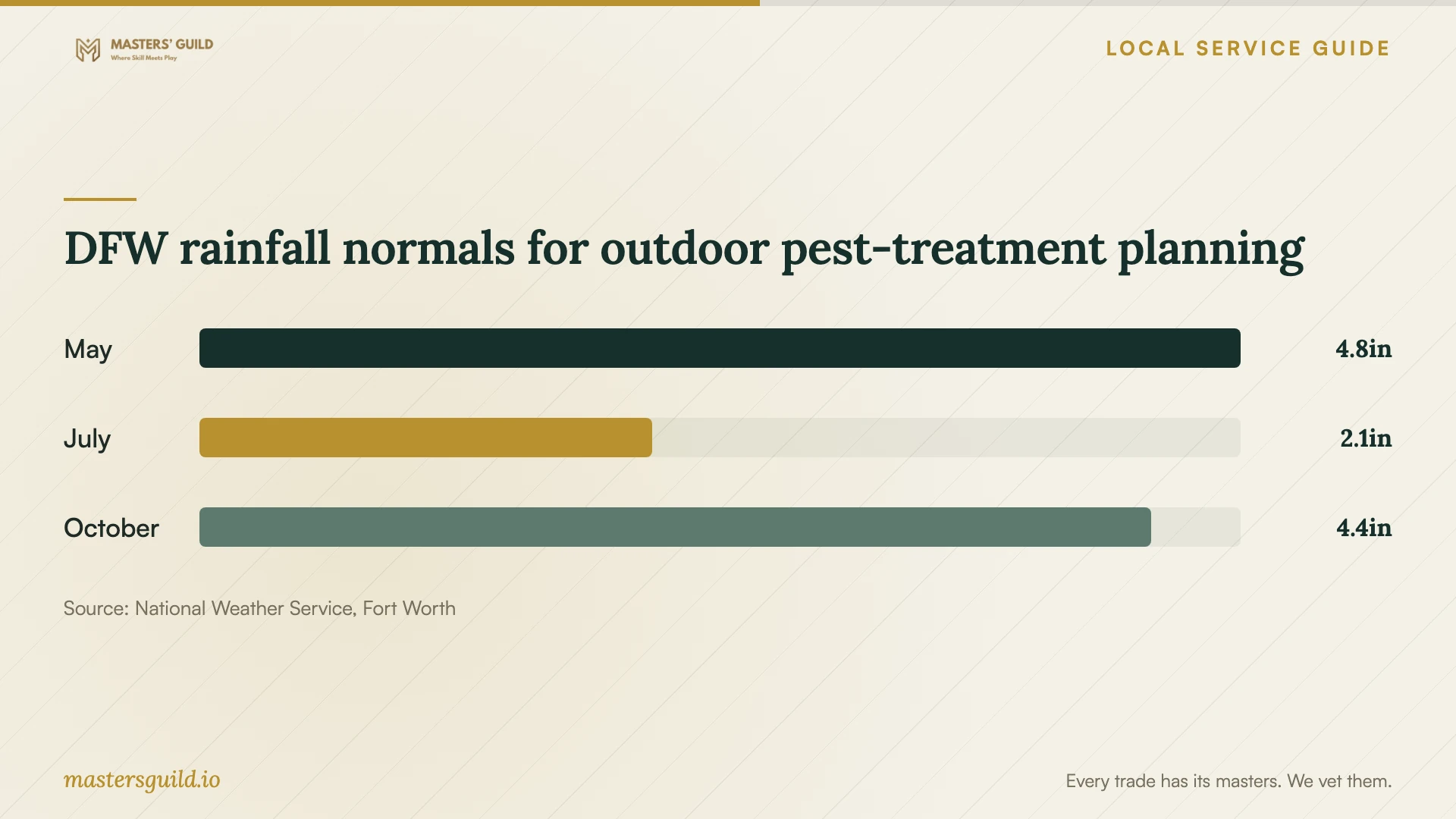
DFW rainfall normals for outdoor pest-treatment planning
Local details that affect your job
Texas categories change whom you hire
For work at an Arlington home, match the company’s credentials to Texas license categories. The state distinguishes household pest control from termite control, lawn and ornamental treatment, and structural fumigation. If you want indoor ant treatment and pest treatment on ornamental plants, confirm coverage for both categories before combining the work in one agreement. [1]
Texas termite disclosures belong in the bid
Texas requires the company to provide termite treatment disclosures when submitting a bid and before treatment. The documents must include a structure diagram, pesticide label and proposed concentration, treatment definitions, complete warranty details, and an approval signature from the company’s certified applicator or technician licensed in the termite category. Check that the diagram includes any detached structure you want treated. Review the covered areas, warranty period, renewal options and costs, retreatment or repair obligations, and owner-related conditions that could void coverage. [2]
Plan outdoor work using regional rainfall context
The National Weather Service publishes DFW precipitation normals of 4.78 inches for May, 2.08 inches for July, and 4.37 inches for October, based on 1991–2020 observations. These regional averages do not measure rainfall at your home. Before an outdoor appointment, discuss how the proposed product’s instructions affect scheduling around rain. Show the inspector any pooling near the foundation and include moisture corrections in the discussion of termite prevention. [3] [2]
Match your problem to the proposed service
| Your situation | Next step | Check before approving |
|---|---|---|
| Ants, roaches, rats, or mice | Arrange identification and define the household treatment area. | Texas includes these pests in its pest control license category. |
| Mud tubes or suspected termite activity | Arrange a termite inspection and compare treatment bids. | Review the required Texas termite diagram, pesticide information, and warranty. |
| Pests on ornamental plants or lawn | Describe the affected plants and define the outdoor scope. | Texas lists lawn and ornamental work as a separate license category. |
| Possible damage to wood framing | Arrange pest inspection and a separate structural damage assessment. | A wood destroying insect report does not assess structural damage. |
Your hiring checklist
- Photograph the pest or evidence and list the affected areas and prior treatments.
- Collect business license information, treatment-category credentials, and proof of insurance.
- Compare written quotes for the same areas, service period, and follow-up scope.
- Review termite disclosures, treatment diagrams, covered areas, and warranty obligations.
- Confirm preparation, property access, and treatment-specific re-entry instructions.
- Agree on how to report continued activity and whether return visits carry a charge.
Frequently Asked Questions
Does a pest control company need a Texas license?
Yes. Texas requires licensing for businesses and individuals performing structural pest control for hire. Confirm the business license and the credentials applicable to your proposed treatment category. [1]
Does a clear termite inspection rule out hidden termites?
No. Texas guidance describes an inspection for visible evidence in accessible areas, without dismantling or removing objects. Have the inspector explain access limits and any further inspection they recommend. Arrange a separate assessment for structural damage. [2]
Will a termite warranty cover damage repairs?
Read the agreement before assuming repair coverage. Texas requires disclosure of warranty terms, including retreatment or repair obligations, covered areas, renewal options and costs, and conditions that could void coverage. Have the company identify its repair obligation in writing. [2]
Should I approve annual pesticide retreatment for subterranean termites?
For the subterranean termite soil-barrier context described by Texas Department of Agriculture, annual structural retreatment requires clear evidence of reinfestation or barrier disruption. Have the company explain the evidence and the proposed product-label application method. Distinguish inspections and bait-station monitoring from another pesticide treatment. This guidance does not establish a blanket annual-retreatment rule for drywood termites or every treatment method. [2]
Sources and scope
This guide combines the sources below with practical planning guidance. Figures apply to the stated geography and period; request a written quote for your property.