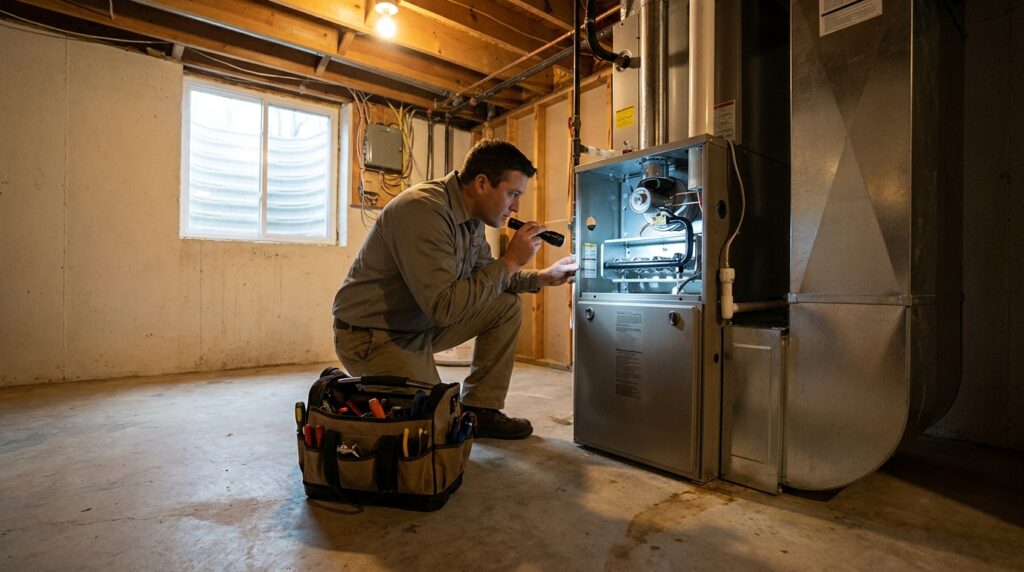
If your heat clicked, groaned, or simply didn’t come on during the first cool morning of the year, here’s the short answer: furnace repair costs between $100 and $1,500 in 2026, with the average fix landing around $350. Small jobs like a flame sensor cleaning or igniter swap run $150–$400, a blower motor or control board is $400–$900, and a cracked heat exchanger can top $3,000 — the point where replacement usually makes more sense. Prices are similar in USD and CAD, with Canadian repairs running about 10–15% higher in dollar terms for the same part.
The number that matters most this month: an emergency call costs $300–$1,200, versus $80–$250 for a September tune-up. The part doesn’t change. The timing does.
Furnace Repair Cost by Part
Most furnaces fail in a handful of predictable ways. Prices below include parts and labor for a standard gas furnace; electric furnaces tend to sit at the lower end because they have fewer moving parts and no combustion system.
| Repair | US (USD) | Canada (CAD) |
|---|---|---|
| Diagnostic / service call | $75–$150 | $80–$150 |
| Flame sensor clean or replace | $100–$250 | $150–$300 |
| Igniter replacement | $150–$400 | $150–$350 |
| Thermostat replacement | $120–$350 | $150–$400 |
| Capacitor or transformer | $100–$250 | $150–$300 |
| Control board | $300–$650 | $400–$900 |
| Blower motor | $400–$900 | $400–$900 |
| Draft inducer motor or gas valve | $400–$1,200 | $700–$1,500 |
| Heat exchanger | $1,000–$3,000 | $1,500–$3,500 |
Most contractors credit the diagnostic fee toward the repair if you go ahead with it — but confirm that before you book, because not all do.
The heat exchanger problem
A cracked heat exchanger is the one repair that changes the conversation. It’s the most expensive part, replacing it means tearing the furnace down, and a crack can leak carbon monoxide into your home. If a tech finds one on a furnace older than 15 years, most will tell you the same thing: put the money toward a new unit.
What Changes the Price
- Timing. This is the big one. HVAC companies charge $150–$215 per hour for after-hours and weekend work, and the first freezing week in Minneapolis or Calgary books every tech in the city solid. A September appointment is cheaper and faster.
- Furnace age and brand. Parts for a 20-year-old unit may be discontinued or special-order. High-efficiency condensing furnaces have more sensors and pressure switches to fail.
- Fuel type. Gas and oil furnace repairs run $100–$480 for typical jobs; electric furnace repairs run $100–$380.
- Where you live. Expect 15–25% above the ranges in high-cost metros like Chicago, Boston, and Toronto. Rural calls sometimes add a travel fee.
- Parts inflation. HVAC equipment prices rose again in August, and tariffs on imported components have pushed up control boards and motors in particular.
Repair or Replace?
Use the 50% rule: if the repair costs more than half the price of a new furnace ($3,000–$7,500 installed for a standard gas unit) and the furnace is over 15 years old, replacement usually wins on lifetime cost. Newer units are 95%+ efficient versus 80% for many older ones, which trims heating bills 10–20% a year. Under 10 years old, or a repair under $800? Fix it — unless it’s the third repair in two years.
DIY vs Hiring a Pro
A few things are safely yours: replace the filter (a clogged one is the top cause of “my furnace keeps shutting off”), check thermostat batteries, confirm the furnace switch and breaker are on, and gently clean the flame sensor with fine sandpaper if you’re handy. That last one fixes a surprising share of no-heat calls.
Anything involving gas, combustion, or the heat exchanger is a licensed job — most US states and every Canadian province require a licensed technician for gas work, and a bad repair can void your homeowner’s insurance.
How to Vet a Furnace Repair Pro
- Check the license. Ask for the HVAC or gas-fitter license number and look it up with your state or provincial regulator.
- Get the diagnostic fee and its credit policy in writing before anyone shows up.
- Ask for the failed part. A legitimate tech will show you the cracked igniter or burnt board. Be wary of a “you need a whole new furnace” verdict from a company that also sells furnaces — get a second opinion on any quote over $1,000.
- Confirm identity and reviews. On Masters’ Guild, HVAC pros are identity-verified with government ID and a live selfie check, and your payment is held until the job’s done — no paying for a “fix” that fails the next cold night.
Our AC repair cost guide covers the other half of the system, and Canadian readers can see full-system pricing in our HVAC service cost guide for Canada. Tempted to wait and see? Read what delaying a repair actually costs first.
Frequently Asked Questions
How much does a furnace tune-up cost?
A fall furnace tune-up runs $80–$250 in 2026, with most comprehensive inspections (burner cleaning, safety testing, carbon monoxide check) at $150–$200. Booking in September beats October — prices and wait times both climb once the cold hits.
Why does my furnace turn on and then shut off?
Short-cycling is most often a dirty filter, a dirty flame sensor, or a failing limit switch. Replace the filter first; if it persists, a $100–$250 sensor service usually solves it.
Is furnace repair covered by home insurance?
Normal wear and tear isn’t. Sudden damage from a covered event (a power surge, a burst pipe flooding the utility room) may be. An extended warranty or home warranty plan is where most repair coverage actually comes from.
How long should a furnace last?
Gas furnaces typically last 15–20 years with annual maintenance; electric furnaces 20–30. Past 15 years, weigh any repair over $800 against replacement — and find an HVAC pro near you for a second opinion before committing.
Don’t wait for the first freeze. Post your furnace job as a quest with your budget and get offers from verified HVAC pros — Get quotes on MastersGuild.