
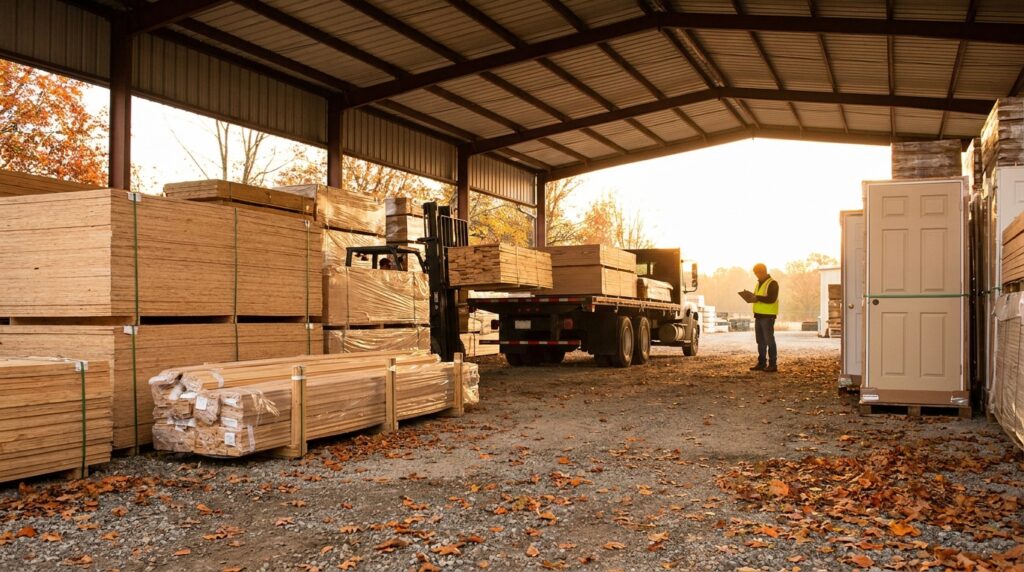
The effect of tariffs on renovation costs stopped being hypothetical this week. On August 22 the United States applied a 50% tariff to three lists of Canadian imports after weekend negotiations collapsed — and the building-materials section is long: plywood and veneered panels, wood moldings, particle board and MDF, doors, and cement. On August 25 Canada answered with dollar-for-dollar counter-tariffs on C$27.6 billion (US$19.9 billion) of American goods, effective September 8, with rates of 15%, 25% and 50% across more than 700 products, including 50% on US steel and aluminum and new duties on appliances.
If you have a fall project on the calendar in either country, here is what changed, what did not, and what to do before Labor Day.
What the new tariffs on renovation costs actually cover
Our July analysis of tariffs and renovation costs explained how the first rounds fed through to quotes. This round is different in two ways: it is bigger, and it is two-directional.
The US side (in effect since August 22)
According to PBS News, the 50% rate applies across three lists that also include dairy and motor vehicles. For homeowners, the relevant lines are the wood and building products: ForestSource’s breakdown lists wood moldings, particle board, MDF, plywood and veneered panels, doors, and pulpwood. Cement is on the list too.
One detail cut the other way: tariffs on certain steel and aluminum derivative products — including some HVAC equipment — dropped from 25% to 15%. Anyone pricing a furnace or heat pump this fall got a small break, which matters after the August HVAC price hikes.
The Canadian side (starting September 8)
Ottawa’s list, published on Canada.ca, targets steel, aluminum, appliances, agricultural equipment, pulp and paper, plastics and electronics. The CNBC report notes the 50% steel and aluminum rate doubles the current level, alongside a C$7.5 billion support package for affected businesses and workers.
For a Canadian homeowner that means US-made appliances, structural steel, aluminum railings and siding, and imported plastics (think plumbing fittings and vinyl) are the categories to watch after September 8.
What is NOT in the new round: framing lumber
This surprises people. Softwood lumber — the 2x4s and 2x6s in a deck, an addition or a basement finish — is not on the August 22 list, because it already sits under Section 232 plus anti-dumping and countervailing duties. The combined rate on most Canadian producers is about 35%, and recently announced preliminary AD/CVD rates would nudge the total to roughly 36% once finalized, per Residential Contractor.
Prices reflect that stability: Madison’s Lumber Price Index held at US$558 per thousand board feet in early August, flat week over week and down 2.6% from a year ago. So the August shock is concentrated in panels, millwork, doors and cement, not in framing.
Who feels it, by project
| Project | US homeowner exposure | Canadian homeowner exposure |
|---|---|---|
| Kitchen cabinets & millwork | High — Canadian MDF, particle board, moldings now +50% | Low–medium — domestic supply, but US hardware/appliances face Sept 8 duties |
| Interior/exterior doors | High | Low |
| Deck / addition framing | Unchanged (~35% duties already priced in) | Unchanged |
| Subfloor & sheathing (plywood/OSB) | High for Canadian plywood; OSB substitutes partly | Low |
| Concrete work, foundations | Medium — cement on the list | Low |
| Appliances | Slight relief on some HVAC (25% → 15%) | Medium — US-made appliances tariffed Sept 8 |
| Railings, metal roofing, siding | Medium (steel/aluminum derivatives) | High — 50% on US steel and aluminum |
The NAHB estimates cumulative tariffs and duties have added at least US$10,000 to the cost of a new home, and reports that more builders are moving from fixed-price contracts to dynamic pricing that floats with the market. Expect the same clause to show up in renovation quotes.
What to do before Labor Day
- Lock in written quotes now, and read the fine print. Ask whether the quote includes a material escalation clause and how long the price is valid. A 30-day validity window used to be standard; with builders shifting to dynamic pricing, expect shorter ones.
- Buy finish materials early. Cabinets, doors, trim and panels are where the US increase lands. If your kitchen remodel is scheduled for October, ordering cabinetry in the next two weeks beats waiting for September price sheets.
- Canadians: order appliances before September 8. Anything US-built that ships after that date may carry the new duty. Our appliance installation pros are already seeing pre-deadline bookings.
- Don’t panic-buy framing lumber. Its duties are already baked in and prices are flat. Spend the rush on panels and millwork instead.
- Ask about substitutes. US-milled plywood, OSB, domestic doors and locally made trim are exempt from the new rate; a good contractor will offer them.
Homeowners in border metros like Seattle and Toronto — where cross-border materials are the norm — should expect the sharpest quote movement.
Our take
Trade policy has flipped twice this year and will likely flip again; the pros who thrive are the ones who quote transparently and date their prices. For homeowners, the fall financing window is still open, but the cheapest project is the one you price this week, not the one you price after September 8.
Post your project with a budget and let verified local pros compete for it — payment is held until the work is done.