
Local service guide
Kitchen remodeling in Seattle: scope, permits and hiring
For kitchen remodeling in Seattle, hire a remodeler who will define the work, identify the permit route and name the plumbing and electrical subcontractors before you approve demolition. Check the remodeler's registration, bond and insurance through Washington L&I. Ask SDCI whether your proposed alterations qualify for its smaller-project construction permit pathway, and assign responsibility for plumbing or gas permits through Public Health – Seattle & King County. [1] [2] [3]
Define the kitchen before requesting bids
Write a scope that distinguishes what you will keep from what you will replace. Include cabinets, counters, flooring, lighting, appliances and ventilation. Mark any proposed wall removal, sink relocation or gas-piping change on a sketch. Ask each bidder to visit the kitchen and explain which existing conditions they need to investigate.
Compare a retained-layout option with your preferred redesign. Request separate prices for the changes you could omit, such as moving the sink or opening a wall. Choose appliance models before approving cabinet dimensions, and ask who will check measurements against the manufacturer's installation requirements.
Confirm the construction permit route
Seattle offers a subject-to-field-inspection permit, known as STFI, for small projects that meet its criteria. SDCI lists remodeling part of a house among possible qualifying projects. Staff review the plans for eligibility and land-use compliance; if the work exceeds the criteria, they direct the applicant toward a regular building permit. [3]
Ask your remodeler to describe the proposed route in the bid and identify who prepares the drawings, submits the application and answers city questions. SDCI requires plans that show existing conditions and proposed alterations. After issuance, the applicant prints the permit and approved plans, displays the permit and schedules inspections. [3]
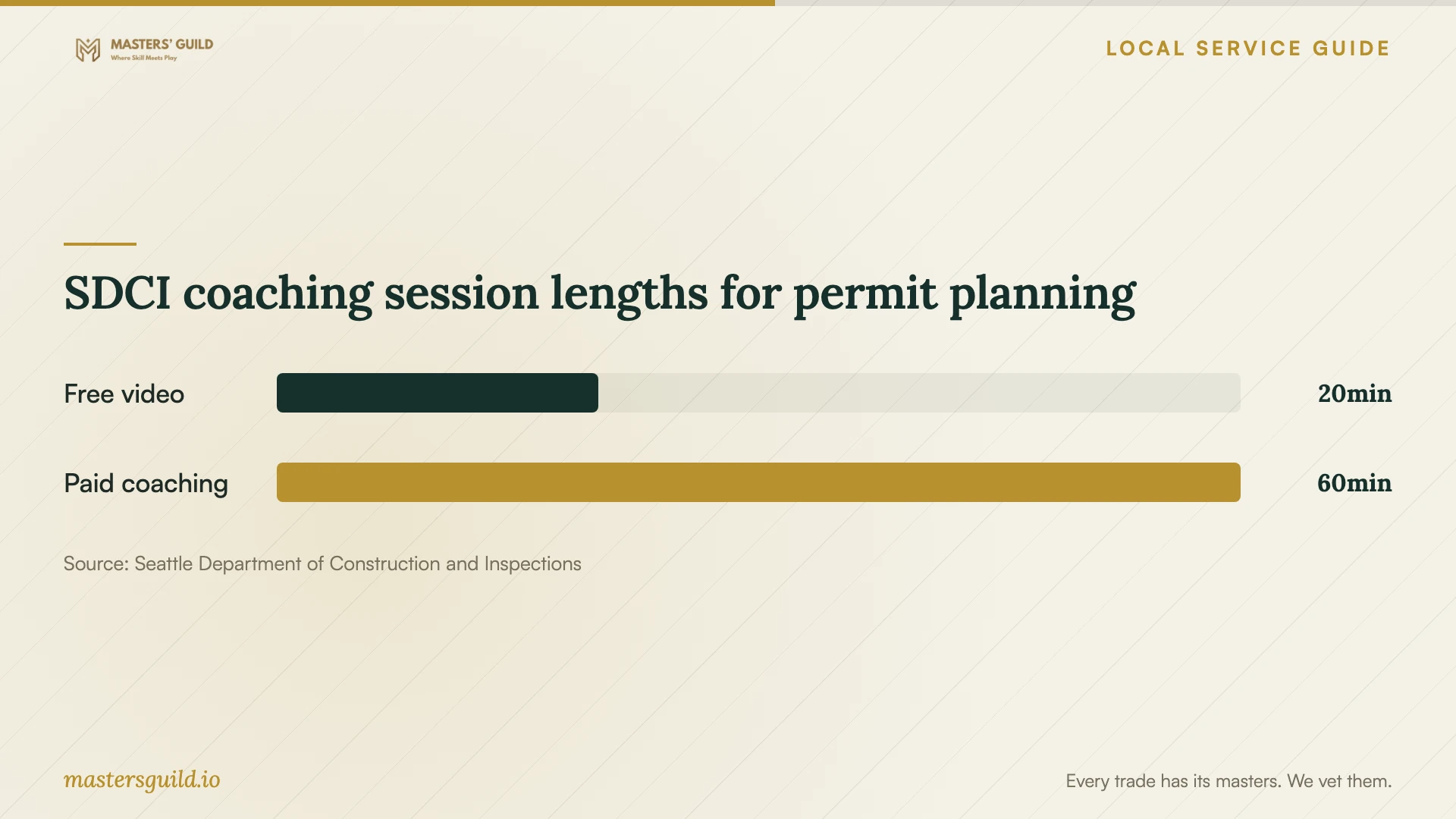
Use SDCI coaching to resolve a permit question before committing to demolition. The department offers a free 20-minute video session for construction permit and related questions, plus a paid one-hour option. Bring your sketch and a specific question about eligibility. Ask your contractor to distinguish application, material-delivery and construction dates in the schedule. [3]
Assign plumbing and gas work to the right permit
Public Health – Seattle & King County requires a permit when you install, relocate or change plumbing or gas piping. It issues these permits and performs inspections in Seattle. Its Public Health Permit Center handles applications, design documents, inspection requests and application status. [1]
For a sink move, dishwasher plumbing change or gas-piping alteration, ask the remodeler to identify the responsible contractor and describe the permit scope. Record who applies, pays fees and requests inspections. Ask for a schedule that includes the relevant inspections before the crew conceals the work. [1]
Public Health allows homeowner plumbing permits and recommends hiring a professional plumber. A homeowner permit authorizes the homeowner to perform the plumbing. If you plan to hire a plumber, discuss the application arrangement with that contractor rather than accepting a vague instruction to obtain an owner permit. [1]
Verify the remodeler and subcontractors
Use Washington L&I's Verify service to check active contractor registration, bond and insurance, employee workers' compensation coverage, citations and lawsuits against the bond. Match the business name in the record to the name on your proposal. L&I also lets you check whether the person performing plumbing or electrical work holds Washington certification. [2]
Request the subcontractors' business names before signing. Ask who supervises the work, who handles an inspection correction and whom you contact if the crew finds concealed damage. Put those responsibilities in the contract alongside the scope, payment milestones and written change-order process.
For a home built before 1978, L&I directs homeowners to Washington's Department of Commerce Lead Paint Program before renovation or remodeling to check applicable lead requirements. Raise this before demolition and ask bidders to explain how they will address painted surfaces and any associated work. [2]
Compare the total commitment before demolition
Request a written breakdown for demolition, cabinetry, counters, installation and trade work. Identify permit fees, appliance purchases, disposal and finish repairs as included items or exclusions. For each allowance, ask what product and quantity the contractor assumed and how you will approve a price change.
The official sources here do not provide a kitchen-remodel price range. Use project-specific bids to set your budget. Agree on how the contractor will price concealed repairs, and keep an owner-controlled reserve rather than treating an undefined allowance as a fixed total.
Before the crew starts, agree on kitchen access, dust separation, temporary food preparation and delivery storage. Ask for a closeout package with inspection records, product information, warranties and a list of remaining corrections. Tie your final walkthrough to the scope you signed.
SDCI coaching session lengths for permit planning
Local details that affect your job
Seattle separates construction from plumbing permitting
Assign responsibilities to both agencies at the proposal stage. SDCI handles the construction permit pathway described here, while Public Health – Seattle & King County issues plumbing and gas-piping permits and performs those inspections in Seattle. Ask the remodeler to list each applicable application and its responsible contractor. [1] [3]
Use city coaching before choosing a permit pathway
SDCI offers free 20-minute video coaching for construction permit questions and paid one-hour sessions. Bring a drawing of the proposed wall, layout and fixture changes. Use the session to clarify the application route before you accept a contractor's proposed start date. [3]
Check the property jurisdiction for nearby projects
Public Health's listed plumbing and gas-piping jurisdictions are Seattle, Clyde Hill and unincorporated King County. It directs owners in other King County cities to their city building department. Confirm the property's jurisdiction if you are arranging work outside Seattle, rather than carrying over the same application process. [1]
Match your proposed work to the next planning step
| Proposed work | Next step | Ask the bidder |
|---|---|---|
| Cabinet or finish replacement | Give bidders a defined scope and ask SDCI to clarify any construction permit question. | Which installation and finish repairs does your price include? |
| Wall or layout alteration | Confirm STFI eligibility with SDCI; staff may direct the project to a regular building permit. | Who prepares plans and responds to city requests? |
| Plumbing or gas-piping change | Assign the required Public Health permit and inspection responsibilities. | Which contractor applies and requests inspections? |
| Work in a pre-1978 home | Check applicable lead requirements through the Department of Commerce program identified by L&I. | How will you address painted surfaces before demolition? |
Your hiring checklist
- Prepare a scope and sketch showing retained items and proposed changes.
- Choose appliance models and ask the installer to confirm cabinet dimensions.
- Request comparable bids with firm prices, allowances and exclusions separated.
- Ask the remodeler to identify the construction and trade permit responsibilities.
- Review the remodeler and subcontractor records before signing.
- Discuss painted-surface preparation and demolition controls with each bidder.
- Agree on inspection coordination, delivery storage and temporary kitchen arrangements.
- Require written change approvals and a closeout package.
Frequently Asked Questions
Can my kitchen remodel use an STFI permit?
It may qualify if the proposed work meets SDCI's criteria. The department lists remodeling part of a house as a possible qualifying project, then reviews the plans. Ask the contractor to confirm eligibility rather than assuming that an interior remodel qualifies. [3]
Does moving the sink require a plumbing permit?
Public Health requires a permit for installing, relocating or changing a plumbing system. For a sink relocation, ask the plumber to define the work and handle the applicable permit and inspection arrangements. [1]
What should I check before hiring a remodeler?
Review active registration, bond, insurance, workers' compensation coverage and available citation or bond-lawsuit records through L&I. Check the plumbing and electrical workers' certification too. Compare the contract scope and ask who will supervise subcontractors. [2]
How long should I allow for the remodel?
Request a schedule for your design, permit route, purchases and construction scope. SDCI describes STFI application screening as taking a few days, but that statement does not establish a complete kitchen-remodel timeline. Ask the contractor to identify dependencies before promising a completion date. [3]
Sources and scope
This guide combines the sources below with practical planning guidance. Figures apply to the stated geography and period; request a written quote for your property.