
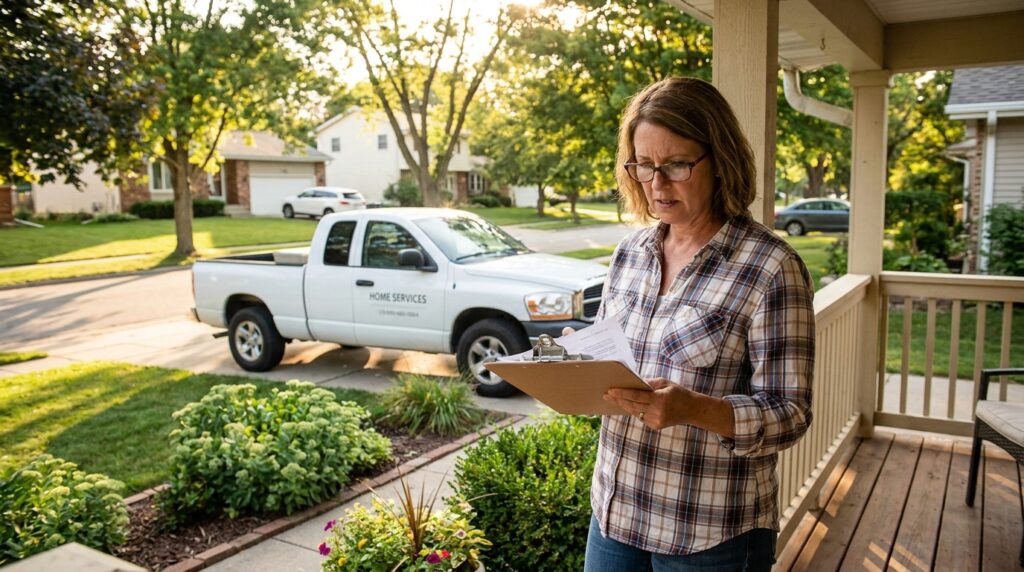
Contractor fraud in Canada is more common than most homeowners want to believe. A new Nanos Research poll conducted for CTV News found that 26.7 per cent of Canadians say they, a family member, or someone they know paid for a home renovation that was never completed. And 39.1 per cent believe governments are doing a poor or very poor job of protecting homeowners from unethical or fraudulent contractors. If you’re planning a project this summer, those numbers are worth a closer look — because the best protection isn’t coming from regulators. It’s coming from how you hire.
Why contractor fraud is in the news right now
The poll landed alongside a string of CTV investigative stories about contractors who took deposits and vanished — including an Ontario contractor with a long list of angry clients and a New Brunswick homeowner left with an unfinished deck.
The timing isn’t a coincidence. Summer is peak renovation season in Canada, and it’s also peak season for door-knockers and too-good-to-be-true quotes. Add in a tight market for legitimate trades — something we covered in Canada’s skilled trades shortage — and desperate homeowners become easy targets. When the good contractors are booked out for weeks, “I can start tomorrow” starts to sound like a feature instead of a warning sign.
What the numbers actually tell homeowners
Two findings deserve attention.
First, the one-in-four figure. Fraud at that scale isn’t a fringe problem caused by a few bad actors — it’s a structural gap. Most provinces don’t licence general contractors the way they licence electricians or plumbers, so anyone with a truck and a business card can call themselves a renovator.
Second, the trust gap. When nearly 40 per cent of Canadians say government protection is failing, the practical takeaway isn’t to wait for new rules. It’s that screening is the homeowner’s job — and most people don’t know how to do it.
Red flags that show up before you lose money
Almost every fraud story follows the same script. Watch for:
- Large deposits up front. A deposit of 10–15 per cent is normal for materials. A contractor demanding 50 per cent or more before work starts is financing their last job with your money.
- No written contract. A handshake deal leaves you with no scope, no timeline, and no recourse.
- Cash-only pricing. The “no-tax discount” also means no paper trail and usually no insurance.
- Pressure to decide today. Legitimate pros with full calendars don’t need high-pressure tactics.
- No verifiable references or reviews. A real business has a history you can check.
How vetted marketplaces change the equation
This is where we’ll be upfront about our own stake: closing the screening gap is exactly why MastersGuild exists. When providers build a track record of completed jobs, verified reviews, and repeat customers on a platform, the “disappear with the deposit” business model stops working — their reputation is worth more than any single deposit.
That doesn’t replace your own diligence. Compare multiple quotes (unusually low bids are a red flag, not a bargain — our movers cost guide shows how wide legitimate price ranges can be), insist on a written contract, and pay in stages tied to completed work.
The Nanos poll is a reminder that in most of Canada, homeowner protection is largely self-serve. The homeowners who get burned aren’t careless — they’re usually just in a hurry. Slow the hiring decision down by a day, check the track record, and keep your deposit small.
Ready to hire someone with a verifiable history? Get quotes on MastersGuild