
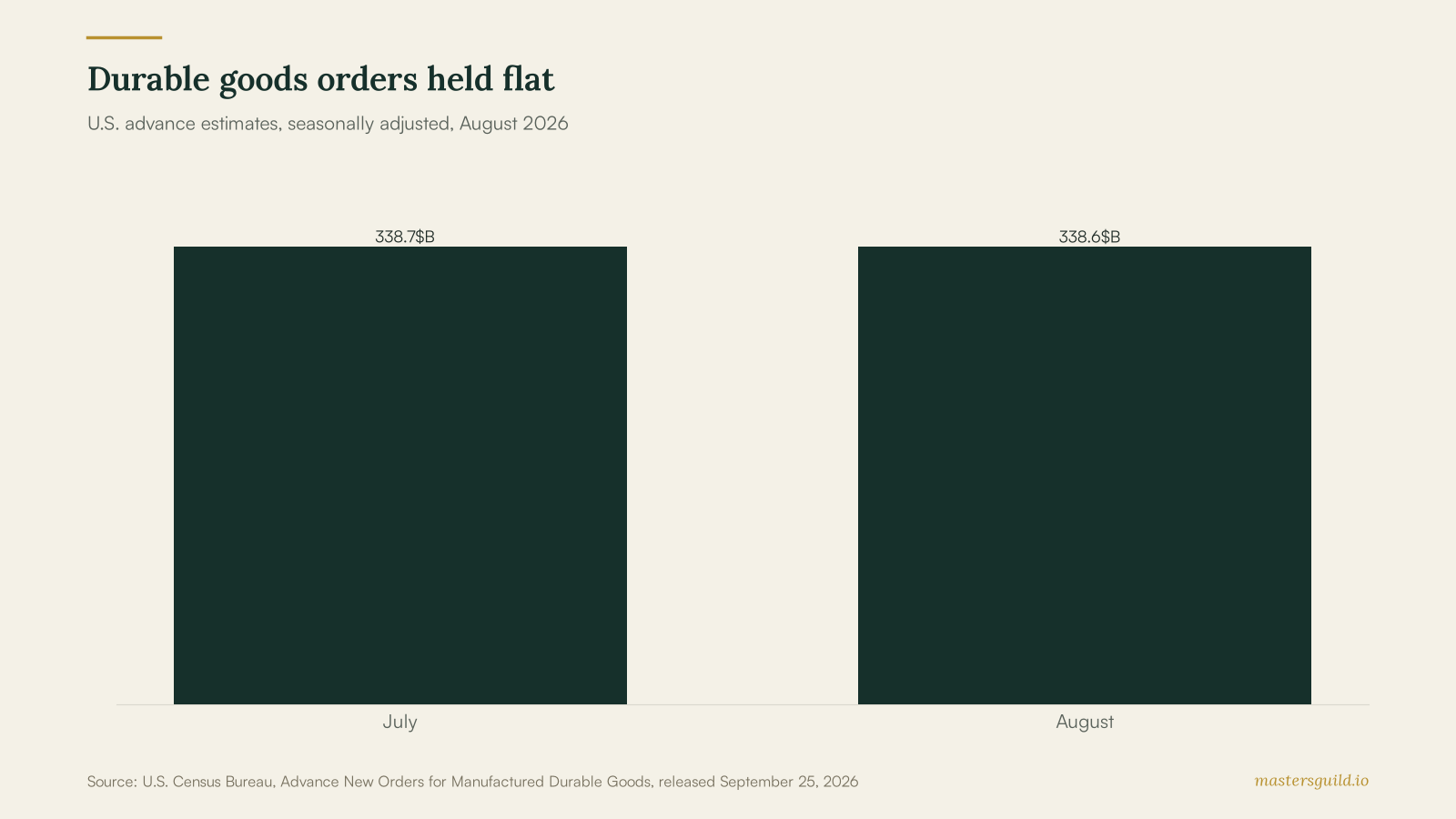
Durable goods orders held at $338.6 billion in August 2026, a 0.0% change from July in the U.S. Census Bureau’s advance estimate. That durable goods orders figure does not set the price of a kitchen appliance, an electrical upgrade, or a contractor visit. It does give homeowners and local pros a timely reason to bring a detailed scope to each home-project bid.
Key takeaways
- U.S. durable goods orders totaled $338.6 billion in August 2026.
- Census reported a 0.0% change from the revised July estimate.
- The national figure measures manufacturing orders, not a local quote or retail price.
- A written scope lets homeowners compare labor, materials, delivery, permits, and disposal.
The August durable goods reading stayed flat
The Census Bureau released its advance August report on September 25. It lists new orders for manufactured durable goods at $338.6 billion, compared with a revised $338.7 billion in July, and reports the monthly change as 0.0%. Census explains that the estimate tracks new orders received by domestic manufacturers, net of cancellations.
| Census measure | July 2026, revised | August 2026 | Reported change |
|---|---|---|---|
| New orders for manufactured durable goods | $338.7B | $338.6B | 0.0% |
The report is a broad manufacturing indicator. It does not separate a homeowner’s installed appliance quote from other orders, and it does not account for local labor availability, delivery access, permit work, or the condition of an existing home. A contractor should price those job details in the offer.
A written scope makes national data useful at home
Use the report as context, then focus on the work in front of you. For an appliance project, list the model number, delivery date, installation location, electrical or plumbing changes, haul-away, and cleanup. Ask each provider to show labor and materials separately. A homeowner can then compare two offers that describe the same job.
For a replacement dishwasher, range, or washer, start with our appliance installation cost guide and add the site details that change the work. If the job includes a circuit, panel, outlet, or fixture, use the electrician cost guide to frame the electrical portion before requesting offers.
Local pros can use the same list to write bids that hold up after arrival. Name the appliance, site condition, included connections, permit responsibility, and items that would change the price. That level of detail saves a homeowner from comparing a low labor-only offer with a complete installation offer.
Fall projects need a defined starting point
The August number offers no promise about next month’s local project costs. Homeowners still control the part of the process that creates a fair comparison: a clear task list, photos of the site, and written answers on what each offer includes. National manufacturing data can provide context; a complete scope gives you a decision tool.
Homeowners: Post your home project and compare local offers.