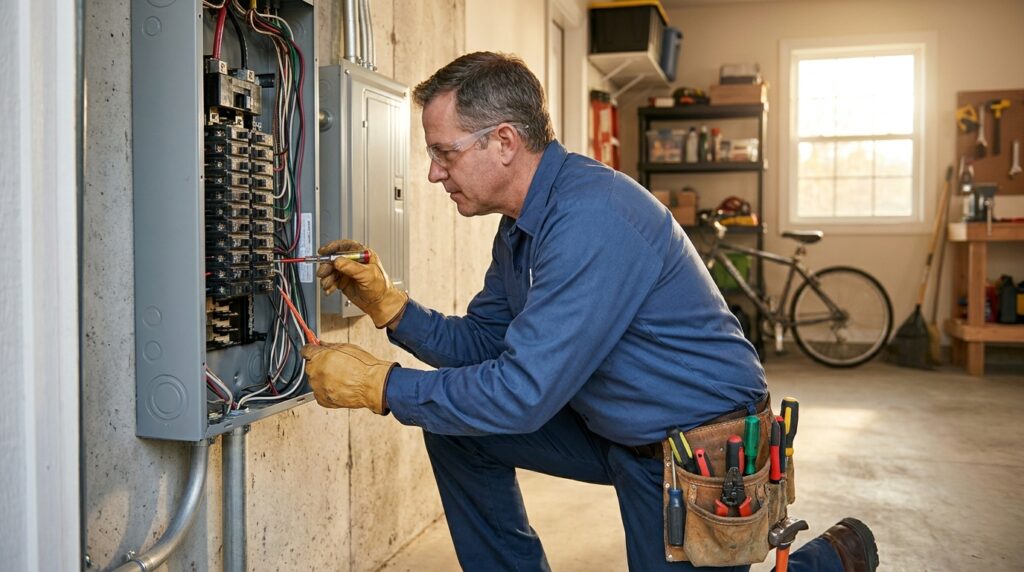
Hiring an electrician in 2026 typically costs $50–$130 per hour in the US and $80–$150 per hour in Canada, plus a service-call fee of $100–$300 that covers travel and diagnosis. That means even a small job — a dead outlet, a flickering fixture — usually lands between $150 and $400 all-in. Electrician cost depends far more on what the job is than how long it takes, so this guide breaks down real 2026 prices for the most common electrical jobs, what pushes them up, and how to hire well.
Electrician Cost Per Hour in 2026
Rates scale with licensing level:
| License level | US (USD/hr) | Canada (CAD/hr) |
|---|---|---|
| Apprentice (supervised) | $35–$70 | $50–$90 |
| Journeyman | $55–$120 | $80–$150 |
| Master electrician | $75–$160 | $100–$180 |
Two things surprise most homeowners:
- The service-call minimum. Most contractors charge $100–$200 in the US ($150–$300 in big Canadian metros like Toronto) just to show up and diagnose. It often covers the first hour of work.
- Flat-rate pricing. Many shops now quote by the job, not the hour. That’s usually good for you — a slow job doesn’t cost extra — but always ask what the flat rate includes.
Common Electrical Jobs and Typical Prices
| Job | US (USD) | Canada (CAD) |
|---|---|---|
| Replace an outlet or switch | $75–$200 | $150–$300 |
| Install a new outlet (new wiring) | $150–$400 | $200–$450 |
| Ceiling fan or light fixture install | $150–$400 | $200–$500 |
| Level 2 EV charger install | $600–$1,600 | $800–$2,000 |
| Panel upgrade (100A → 200A) | $1,800–$4,500 | $2,000–$5,500 |
| Whole-home rewiring | $5,000–$15,000+ | $8,000–$20,000+ |
EV charger installs are the fastest-growing line item — and the price doubles or triples if your panel needs an upgrade first. If you’re planning a charger, get the panel assessed in the same visit.
What Drives Electrician Prices Up or Down
- Access and wire runs. An outlet on an open basement wall is cheap; fishing wire through a finished second-floor wall is not.
- Home age. Pre-1980s homes may have aluminum wiring, no ground, or a crowded panel — all of which add hours.
- Permits and inspection. Panel changes, new circuits, and EV chargers usually need a permit ($50–$500 depending on your city). A legitimate electrician builds this in; a suspiciously cheap quote often skips it.
- Timing. Emergency and after-hours calls run 1.5–2× standard rates. Summer is peak season — AC circuits and tripped breakers keep schedules full, so book non-urgent work a couple of weeks out.
DIY vs Hiring a Licensed Electrician
Swapping a like-for-like light fixture or a cover plate is reasonable DIY territory for a careful homeowner. Almost everything else isn’t. Electrical work is the clearest case of where DIY savings end: unpermitted wiring can void your home insurance, fail a home sale inspection, and — unlike a bad paint job — burn your house down quietly, years later. In most US states and every Canadian province, new circuits and panel work legally require a licensed electrician or a homeowner permit with inspection.
If a breaker trips repeatedly, outlets feel warm, or lights dim when the AC kicks on, stop troubleshooting and find an electrician near you — those are classic overload warning signs, especially in summer heat.
How to Vet an Electrician
- Verify the license — every US state and Canadian province has an online lookup. Match the name on the license to the business quoting you.
- Ask about insurance — liability coverage protects your home, workers’ comp protects you from liability.
- Get the permit question answered first. “Will this need a permit, and do you pull it?” A pro answers instantly.
- Compare 2–3 written quotes that itemize labor, materials, and permit fees — the middle quote with the clearest scope usually beats the cheapest one.
Platforms like MastersGuild’s electrical repairs service let you compare vetted local electricians and collect quotes in one place instead of chasing callbacks.
Frequently Asked Questions
Why do electricians charge a service-call fee?
The fee ($100–$300) covers travel, setup, and diagnosis. Most shops apply it toward the repair if you approve the work on the spot — ask before booking.
Is it cheaper to bundle several small electrical jobs?
Yes, significantly. Since the service call and first hour are the expensive part, having three small jobs done in one visit often costs 30–40% less than three separate visits.
How much does it cost to upgrade an electrical panel in 2026?
A 100A-to-200A upgrade runs $1,800–$4,500 in the US and $2,000–$5,500 in Canada, including permit and inspection. Large metros and detached-meter setups trend higher.
Can I legally do my own electrical work?
Rules vary, but most jurisdictions allow homeowners to do minor work in their own home with a permit and inspection. Anything involving the panel, new circuits, or rentals generally requires a licensed electrician.
Ready to fix that outlet or plan a panel upgrade? Get quotes on MastersGuild