

Contractor labor costs are still climbing, and the two jobs reports released this morning show why. In the US, construction added 22,000 jobs in August while the Bureau of Labor Statistics counted 162,000 new jobs overall, roughly three times what economists expected. Construction job openings sit near a two-year high, and pay for craft workers is rising 5.2% a year, well ahead of the private-sector average. Canada went the other way: Statistics Canada reported 42,000 jobs lost in August, construction flat, and the sector that includes cleaning and landscaping crews down 20,000. For a homeowner, that means one thing in Dallas and another in Toronto.
Key takeaways
- US, August 2026: 162,000 jobs added (55,000 expected), unemployment 4.1%, construction up 22,000 with nonresidential specialty trades leading
- Construction job openings reached 326,000 in July, up from 298,000 in June and the highest opening rate in nearly two years
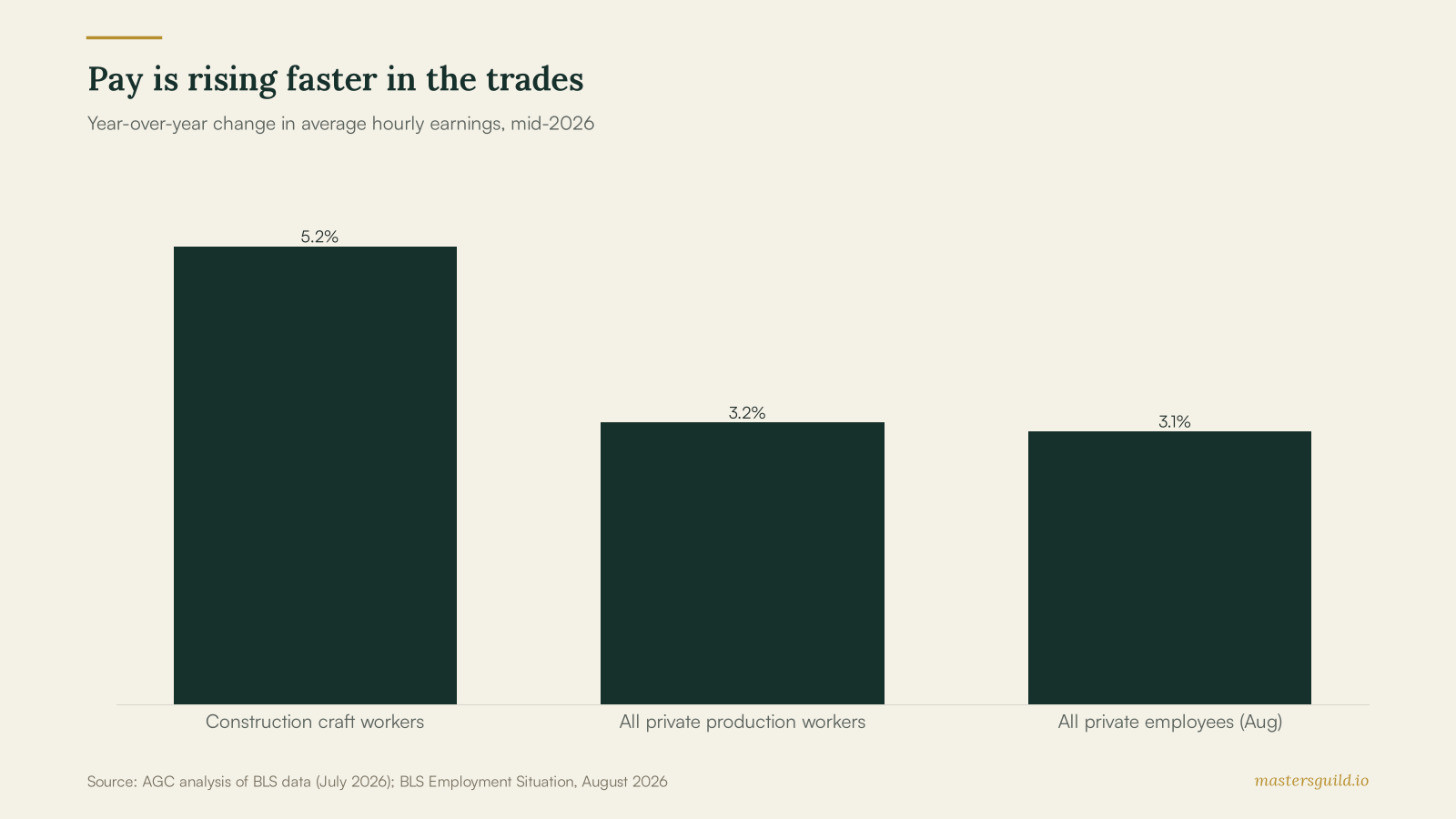
- Construction craft pay is $39.24 an hour, up 5.2% in a year, versus 3.2% for all private-sector production workers
- Canada, August 2026: 42,000 jobs lost (15,000 gain expected), unemployment 6.4%, construction unchanged, building-support services down 20,000
- The gap is structural: ABC says the US needs 349,000 new construction workers in 2026, and BuildForce Canada expects 135,000 residential workers to retire by 2035
What the August Jobs Reports Say
The US report beat every forecast. Total nonfarm payrolls rose 162,000, the unemployment rate held at 4.1%, and average hourly earnings for all private employees reached $37.75, up 3.1% over the year. Construction added 22,000, a figure the BLS describes as “changed little,” but the detail matters: nonresidential specialty trade contractors gained 8,000, above their 6,000-a-month average over the prior 12 months. Those are the same electricians, HVAC installers and pipefitters that residential work competes for, and data-center and power projects are bidding hard for them.
Canada’s Labour Force Survey was the surprise in the other direction. Employment fell 42,000 in August against expectations of a 15,000 gain, ending a run of 181,000 jobs added from April through July. The unemployment rate stayed at 6.4%. Construction showed no significant change after rising 16,000 in July, while business, building and other support services, the category that covers janitorial, landscaping and pest-control crews, lost 20,000 positions, a 2.8% drop in a single month.
| Indicator (August 2026) | United States | Canada |
|---|---|---|
| Total employment change | +162,000 | -42,000 |
| Forecast | +55,000 | +15,000 |
| Unemployment rate | 4.1% | 6.4% |
| Construction employment | +22,000 | No significant change |
| Building-services crews | n/a | -20,000 (-2.8%) |
| Average hourly earnings, all employees | $37.75 (+3.1% y/y) | n/a |
Why Contractor Labor Costs Keep Rising
The August hiring number is small next to the openings behind it. Tuesday’s Job Openings and Labor Turnover Survey put open construction positions at 326,000 in July, up from 298,000 in June and 305,000 a year earlier, with the opening rate at its highest in nearly two years. Contractors are paying to fill them. The Associated General Contractors of America calculates that production and nonsupervisory construction workers earned $39.24 an hour in July, 5.2% more than a year earlier and 21.1% above the average for all private-sector production workers, whose pay rose 3.2%.
That premium lands on your quote. Labor is often 40–60% of a renovation bill, so a 5% wage increase adds roughly 2–3% to the whole project before materials, which are facing their own tariff shock on September 8. It is the same pattern we saw in the Q2 home-service price data: the labor line moves first.
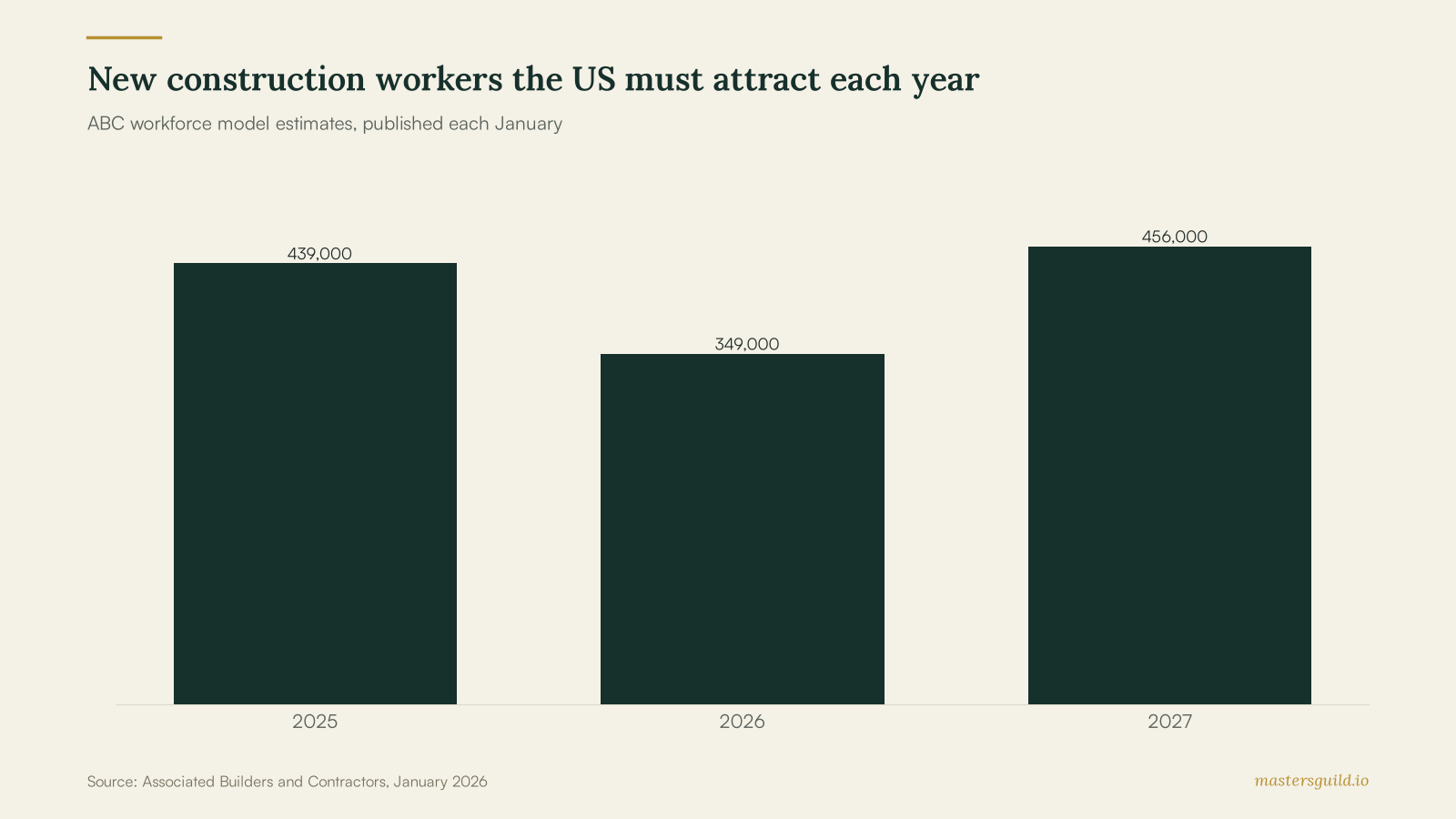
The shortage is structural rather than seasonal. Associated Builders and Contractors estimates the US industry must attract 349,000 new workers in 2026, down from 439,000 in its 2025 estimate, then 456,000 in 2027 as spending growth picks up again. The number fell because spending slowed, not because the pipeline of new workers caught up, though the Gen Z shift into the trades is finally moving in the right direction.
Canada: Softer Now, Tighter Later
Canada’s flat construction month gives homeowners a short window. Renovation demand has softened this year as pandemic-era mortgages renew at higher rates, and a 20,000-job drop in building-support services means cleaning, landscaping and yard crews have more open calendar than they did in spring. BuildForce Canada projects residential employment to dip through 2028 before recovering, which is another way of saying residential contractors should be easier to book over the next two years than they have been since the pandemic.
The long view is the opposite. BuildForce expects about 21% of the residential workforce, 135,000 workers, to retire by 2035, pushing the industry’s hiring requirement to 306,200 and leaving a shortage of up to 34,300 even after recruitment. A homeowner in Toronto planning a kitchen gets better pricing this fall than in two years’ time.
What It Means for Your Fall Project
- US: book before the heating season. Nonresidential projects are absorbing electricians and HVAC techs. A licensed electrician in Dallas or an HVAC contractor near you has a shorter calendar in September than in November.
- Expect the labor line 5% above last fall’s quote. If a bid is far above that, ask what changed. If it is far below, ask who is doing the work.
- Canada: ask for three bids and negotiate. Flat construction hiring and idle service crews mean pros are competing for your job this season, not the other way around.
- Lock the price in writing. With wages rising 5% a year and tariffs landing next week, a fixed-price contract with a dated scope beats a time-and-materials estimate.
- Vet harder, not softer. When the good crews are booked, the temptation is to hire whoever answers. Check the licence, the insurance and the identity of the person who shows up.
For Pros: The Premium Is the Business Model
If you run a crew, the 21% pay premium over other production work is what keeps your people. Every open position on the JOLTS chart is a competitor’s offer. Retention beats lead generation this year, and paying for leads that never convert makes the math harder. Masters’ Guild does not sell leads: homeowners post a job with a budget, identity-verified pros send offers, and payment is released when the work is done.
The Bottom Line
Today’s reports say the same thing from two directions. US construction is still hiring into a labor pool that cannot fill 326,000 open positions, so contractor labor costs keep rising about 5% a year. Canada’s market is softer this fall and tighter later. Either way, a dated quote from a vetted pro is worth more this month than it will be next.