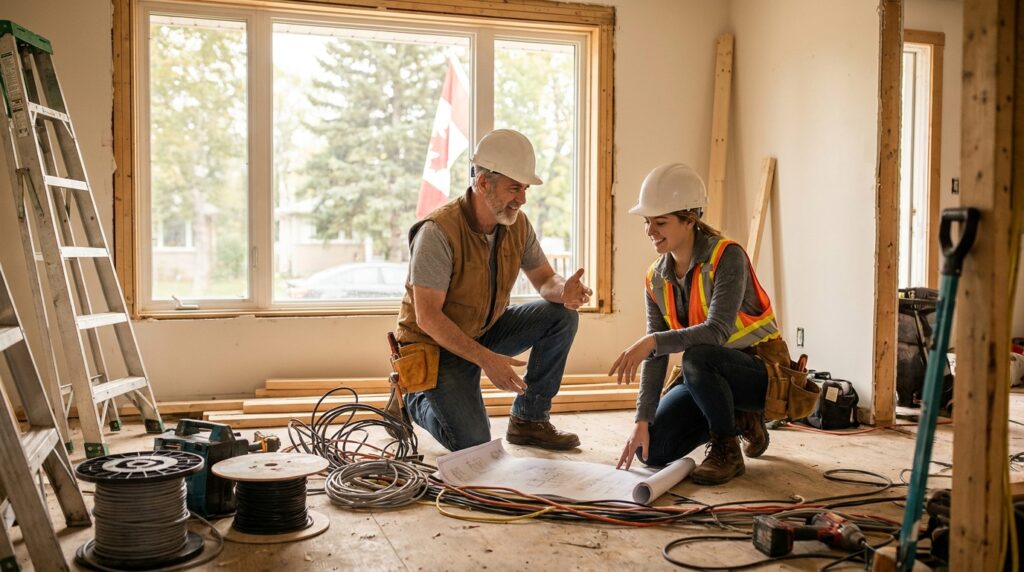
The toolbelt generation stopped being a catchy headline this back-to-school season and became a set of numbers. Enrollment at vocational-focused public two-year colleges in the US rose 11.7% — about 91,000 more students — in the latest National Student Clearinghouse count, two-year HVACR programs grew 29% in 2025 and another 16.7% in 2026, and Statistics Canada reports a record 101,541 new apprenticeship registrations, the fourth straight year of growth. Gen Z, the cohort born 1997–2012, is choosing the trades at a rate nobody predicted five years ago.
For homeowners tired of hearing “we’re booked three weeks out,” this is the first genuinely good news about the skilled-trades shortage in a long time. It just comes with a timeline.
What the toolbelt generation numbers actually say
The headline figures come from three different sources that all point the same way:
- US enrollment: high-vocational public two-year colleges posted their third consecutive year of substantial growth, and vocational and trade-focused institutions now enroll roughly 871,000 students, up almost 20% since spring 2020. Mechanic and repair technology majors grew 10.4% year over year; engineering technology programs grew 8.3%.
- HVAC specifically: according to the ACHR News analysis of Clearinghouse data, HVAC programs are outperforming the wider vocational sector — a direct response to the very HVAC price hikes we wrote about last week.
- Canada: Statistics Canada’s apprenticeship release shows 101,541 new registrations in 2024, up 5.9% and the highest since the series began in 2008. Ontario, Alberta and BC drove the gains; Nova Scotia (-7.4%) and Quebec (-4.3%) slipped.
The workforce is already changing shape. Gen Z now makes up about 14.1% of the US construction workforce, up from 6.4% in 2019.
Why they’re picking the trades
Three forces show up in every survey: four-year tuition that keeps climbing, real anxiety that AI is coming for entry-level desk jobs, and a trade career that starts paying during training instead of after it. Washington added a fourth this summer — Pell Grants now cover short-term trade programs, which lowers the cost of an HVAC or electrical certificate to something close to zero for eligible students. Canada’s Red Seal completion bonus and employer apprenticeship incentives do a similar job north of the border.
Why your furnace tech won’t get cheaper this winter
Here’s the timeline problem. A new registration today becomes a licensed journeyperson in four to five years. The apprentices enrolling this September will be running their own service calls around 2030–2031.
Meanwhile the hole is still enormous. The US posts roughly 600,000 skilled-trade jobs a year against about 150,000 apprentices entering — for every five tradespeople who retire, two replace them, per the JLL research cited by Fortune. Canadian certifications, at 46,971 in 2024, are still 9.6% below pre-pandemic levels. Our Canada trades-shortage explainer from July walks through the retirement math.
So the honest read: the toolbelt generation changes the 2030 market, not the 2026 one. What changes sooner is who shows up at your door.
What homeowners will notice first
More two-person crews
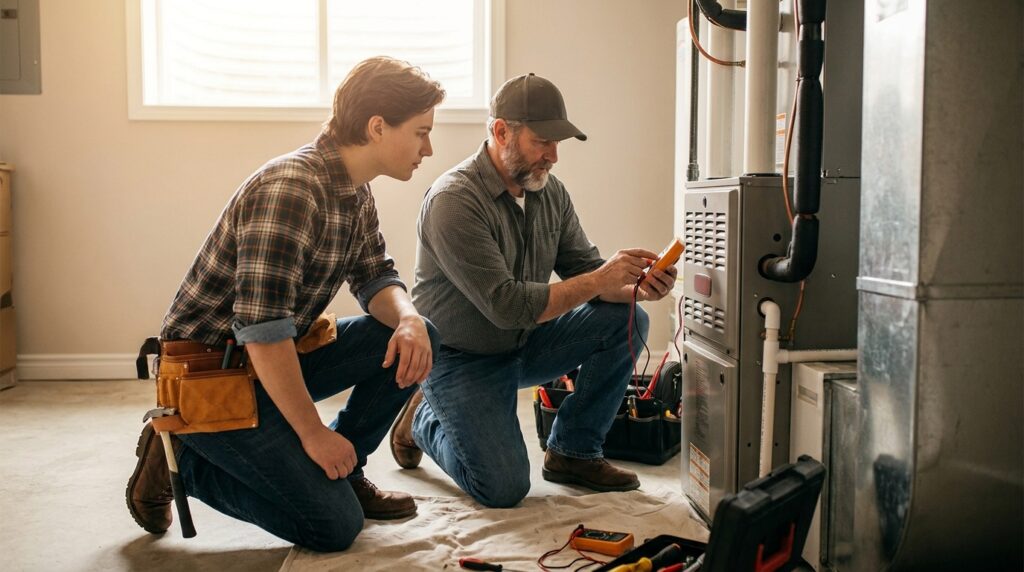
Shops that took on apprentices send them out with a journeyperson. Expect a young tech doing the hands-on work under supervision on more routine calls — water heater swaps, furnace tune-ups, panel upgrades. That’s normal and, frankly, how the trade has always trained. Ask who is licensed on the crew; the answer should be immediate.
Better scheduling, slowly
The first thing extra hands fix is capacity, not price. Contractors who have been turning away small jobs can start taking them again. If you’ve been sitting on a small repair because nobody would come out, this fall is a reasonable time to try again — especially before the heating-season rush.
A tech-first generation of pros
Gen Z tradespeople arrive expecting digital quotes, text updates, and online payment. Hiring through an app that holds payment until the job is done isn’t a novelty to them — it’s the default. That tends to mean clearer written scopes and fewer “we’ll figure it out on site” surprises.
What it means for contractors and shop owners
If you run a plumbing, electrical or HVAC business, the apprentices are finally coming — but they are choosing employers, not just trades. The shops winning them share a few traits:
- A visible path: hours tracked toward licensing, exam prep paid for, a clear timeline to journeyperson wages.
- Modern tools and systems: dispatch software, digital invoicing, a truck that isn’t a rolling filing cabinet.
- A brand they can be proud of: this cohort grew up on short-form video; they want to work somewhere with a reputation they can point to online.
The flip side: a young workforce means supervision costs and callback risk. Price your training time into the job rather than eating it.
The bottom line
The toolbelt generation is real, measurable, and the best structural news the home-services market has had in a decade. It will not lower your electrician’s rate this year. It will, over the next few years, make it steadily easier to find an electrician near you who answers the phone. In the meantime, the fastest fix for the booking problem is the same as it’s always been: post the job, state your budget, and let verified pros compete for it.