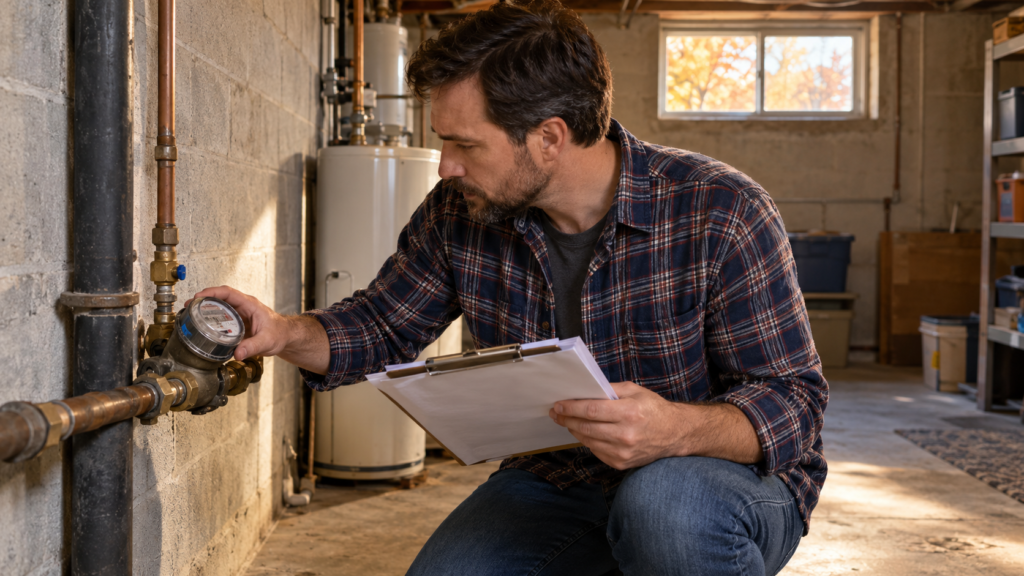
Use your winter water bill to find a hidden leak by comparing it with last winter, then reading the water meter before and after two hours with no water use. A changed meter reading points to a leak or water use that needs investigation before you book a repair.
Key takeaways
- Compare the same month from last year before treating a higher bill as a plumbing problem.
- A family of four with no outdoor winter water use may have a serious leak above 12,000 gallons per month, according to EPA guidance.
- Read the meter twice during a two-hour period with no water use to screen for a leak.
- Give a plumber the readings, bill history, fixture notes, and photos instead of asking for a vague leak inspection.
A winter bill gives you a useful baseline
Outdoor watering can hide a small plumbing leak during warmer months. Winter use gives many households a cleaner comparison because irrigation and hose use have stopped. The U.S. Environmental Protection Agency says a family of four with no outdoor winter water use may have a serious leak if monthly use exceeds 12,000 gallons, or 16 hundred cubic feet. Use that threshold as a prompt to inspect, not as proof that a pipe has failed. EPA’s home-maintenance guidance also recommends comparing your monthly bill with the same month in the prior year.
Start with the bill and write down the billing period, total consumption, and whether guests, a new appliance, or a known repair changed your use. Canadian households can use the same year-over-year method, but should follow the units and leak-alert guidance from their local utility. A bill shows that water entered the property; it cannot identify the fixture or pipe that used it.
| What you find | What to record | Next step |
|---|---|---|
| Higher winter use than last year | Both billing periods and the units shown | Run the meter test when nobody needs water |
| Meter moves with fixtures off | Start and end readings, start and end times | Check toilets, visible valves, and accessible supply lines |
| Moisture, staining, or a musty area | Photos, room, and when it appears | Ask a qualified plumber to locate the source |
| Meter stays still | The two readings and time window | Review changes in household use before pursuing a repair |
The two-hour meter test separates a bill from a clue
Choose a two-hour window when no one will flush a toilet, run an appliance, shower, fill a pet bowl, or use a connected irrigation system. Locate the meter, photograph or write down its reading, and repeat the reading after two hours. EPA says a changed reading during that no-use window means you probably have a leak. The method does not tell you where the leak sits, so do not open walls or dig based on the meter alone.
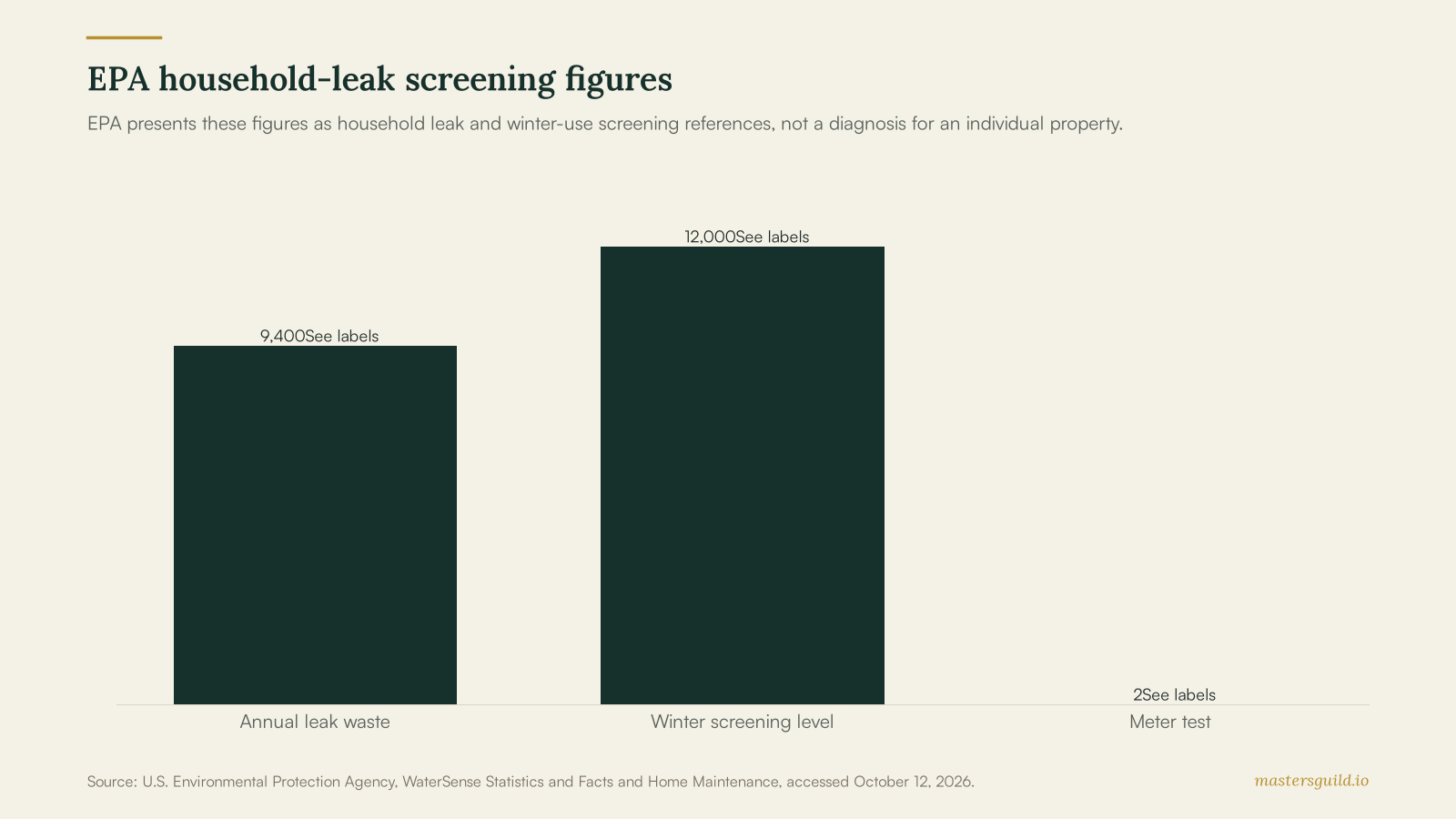
The EPA estimates that household leaks can waste about 9,400 gallons of water each year for the average family. Its WaterSense statistics put national household leak waste at nearly 900 billion gallons a year. Your utility rate, the source of the leak, and site access determine the cost and repair scope at your address.
Toilets and valves deserve the first inspection
Check for a toilet that refills after flushing, a faucet that drips, wet cabinet bottoms, moisture near an appliance supply line, and visible corrosion at accessible valves. EPA’s checklist suggests placing dye or food coloring in a toilet tank and waiting 10 minutes without flushing. Color in the bowl indicates a toilet leak. Flush after the test so the dye does not stain the fixture.
Do not remove a meter cover, handle a main shutoff that you cannot operate safely, or attempt repairs on concealed piping. A toilet flapper or exposed faucet washer may have a narrow repair scope. A meter change with no visible source calls for diagnosis. Read our plumber cost guide before you request offers, and use the plumbing services page to describe the type of help you need.
A detailed request helps a plumber find the source
Send the plumber the last two comparable winter bills, the meter readings and times, photos of visible moisture, and notes on fixtures that refill, drip, or change the meter reading. State whether the property has irrigation, a water softener, or an appliance that could draw water during the test. Ask the plumber whether the visit includes diagnosis, the repair options, access work, and any restoration of finishes.
You can gather records and inspect accessible fixtures. A qualified plumber should diagnose a meter result, concealed leak, damaged supply line, failed shutoff, or moisture that reaches walls, floors, or ceilings. Post your hidden-leak repair job on Masters’ Guild and compare offers from identity-verified local pros.