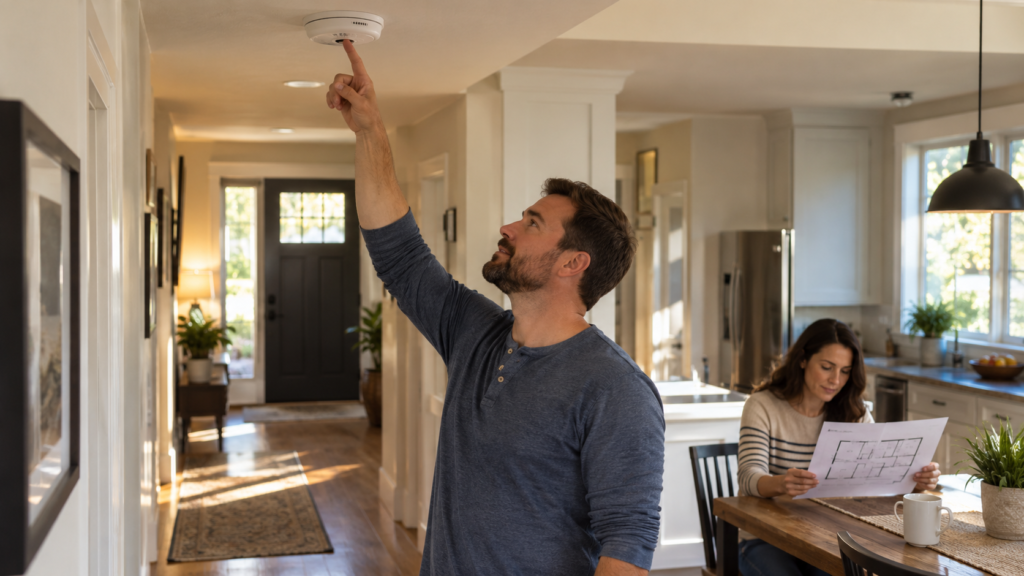
Use this smoke alarm checklist to test each alarm, confirm that alarms cover sleeping areas and every level, and replace units that have reached the date on their label. The National Fire Protection Association says working smoke alarms cut the risk of dying in a reported home fire by half.
Key takeaways
- Press the test button on every smoke alarm once a month.
- Put alarms inside bedrooms, outside sleeping areas, and on every level, including the basement.
- Replace an alarm that does not sound during a test or has passed its manufacturer replacement date.
- Hire a qualified electrician for hardwired, interconnected, or wiring-related work.
Test each alarm and record the result
Walk through the home and use the test button on each alarm. Record the room, the test date, whether the unit sounded, and the replacement date printed on its back. The National Fire Protection Association advises households to test alarms at least once a month. The U.S. Consumer Product Safety Commission says to replace batteries once each year and smoke alarms that are more than 10 years old. CPSC fire-safety guidance explains those replacement steps.
If an alarm stays silent, chirps after you follow the manual, appears damaged, or has no readable date, replace it. Do not silence or remove an alarm to solve repeated nuisance alarms. Check the manufacturer instructions and placement first, then ask a qualified electrician or local fire department for guidance if the issue persists.
| Check | Do this yourself | Call a qualified pro when |
|---|---|---|
| Test response | Press the test button and record the result | A hardwired alarm stays silent or trips a breaker |
| Replacement date | Read the date on the back of the alarm | The unit has passed its service life or has no readable date |
| Placement | List alarms by level, bedroom, and sleeping-area hallway | Coverage needs new hardwired or interconnected alarms |
| Escape plan | Identify two exits from each room and a meeting place | A household member needs an accessible alert system |
Placement protects sleeping areas and every level
The U.S. Fire Administration recommends smoke alarms inside every sleeping room, outside each separate sleeping area, and on every level of the home, including the basement. USFA’s placement guidance gives homeowners a clear map to compare with their own floor plan.
Start with a sketch of each floor. Mark bedrooms, sleeping-area hallways, stairs, and existing alarms. This check does not replace local code or a manufacturer’s instructions, which can vary by home and jurisdiction. Keep smoke alarms at least 10 feet from a stove when possible, as the NFPA advises, to reduce cooking-related nuisance alarms. NFPA’s smoke-alarm guidance also recommends interconnected alarms so an alarm in one location alerts the whole home.
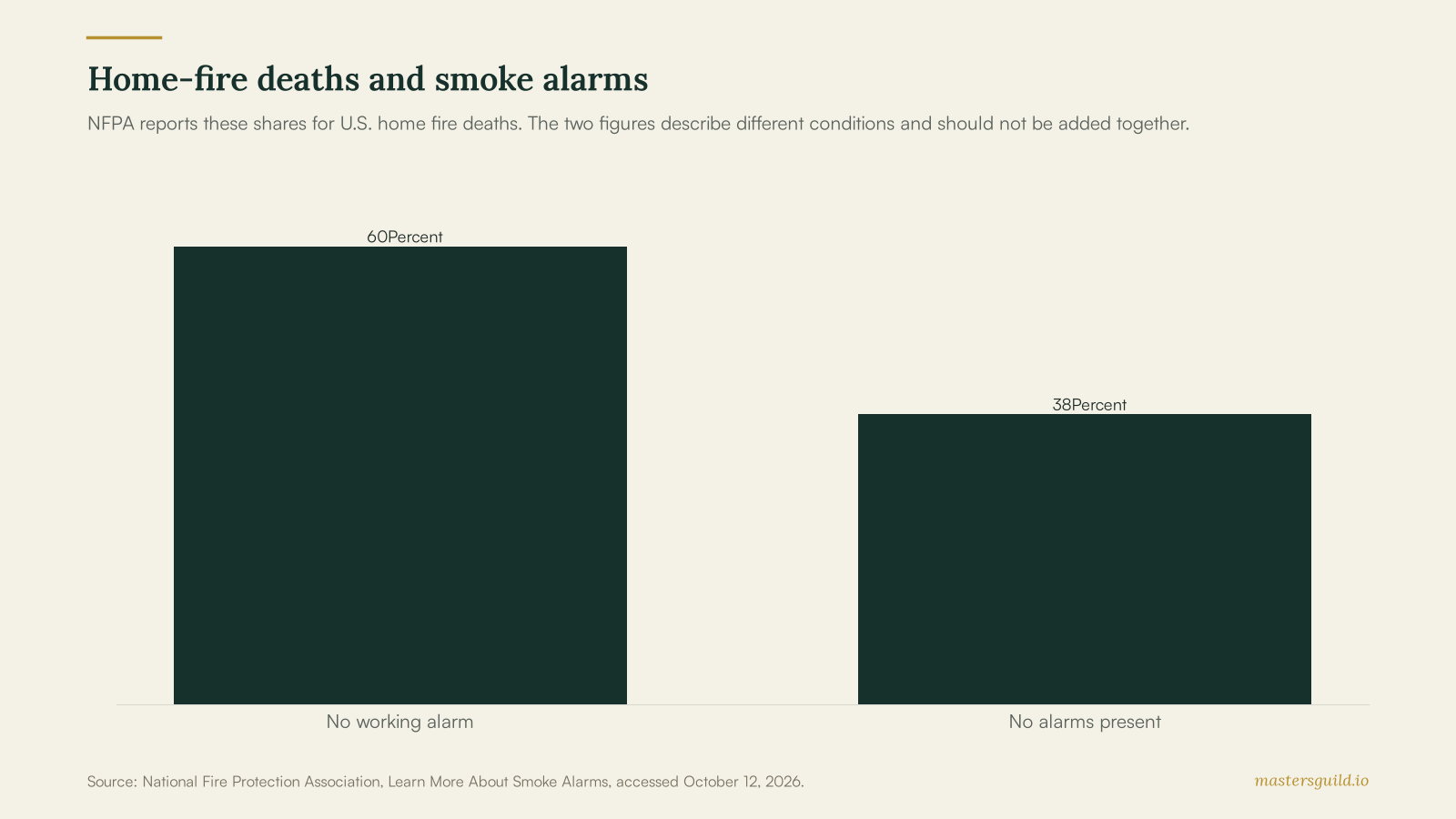
NFPA reports that roughly three out of five home fire deaths happen in homes with no smoke alarms or no working smoke alarms. It also reports that more than one-third of home fire deaths result from fires where no smoke alarms are present. Use those figures as a reason to complete the check, not as a substitute for a home-specific escape plan.
Replacement work needs a defined scope
Give an electrician a room list, photos of each existing alarm, the age shown on the label, and a note on whether the alarms sound together during testing. Ask the electrician to list the alarm type, power source, interconnection work, wall or ceiling repairs, permit responsibility, testing, and cleanup in the quote. A written scope makes two offers easier to compare.
You can test alarms, update the household’s records, and practice an exit plan. Leave new wiring, hardwired alarm replacement, interconnection, ceiling repairs, and any breaker issue to a qualified pro. If you have other electrical concerns, use our electrician cost guide to prepare your questions. For seasonal work that can reduce winter strain on a home, review our fall weatherization checklist. A household considering backup power can also read our home backup power guide.
Post your electrical repair job on Masters’ Guild and compare offers from identity-verified local pros. Include the alarm locations, replacement dates, power type, and test results so pros can price the same scope.
Frequently Asked Questions
How often should I test smoke alarms?
The CPSC advises testing smoke alarms monthly. Press the test button, record the result, and follow the manufacturer’s instructions for any battery or unit replacement.
Where should smoke alarms go in a home?
USFA advises alarms inside every sleeping room, outside each separate sleeping area, and on every level of the home, including the basement. Confirm local requirements and the manufacturer’s instructions before adding or moving an alarm.
When should I replace a smoke alarm?
Replace a smoke alarm that does not sound during a test, appears damaged, or is more than 10 years old. Check the unit label and the manufacturer instructions for the model-specific replacement date.
Do hardwired smoke alarms need an electrician?
Hire a qualified electrician when replacement involves wiring, interconnection, a breaker problem, new alarm locations, or local permit requirements. You can document the existing system before requesting the work.