A home repair emergency fund is the piece most households are missing, according to a survey HomeServe released on September 2. More than 80% of US homeowners had at least one repair emergency in the past 12 months, yet 30% have $500 or less set aside for one, and 12% have nothing. The gap matters because $500 rarely covers the call. An after-hours plumber charges $150–$300 an hour before parts, and the most common emergencies on the list, from a burst water line to a dead furnace, run to four figures. Canada tells the same story: 32% of Canadians have no emergency fund, and major home repairs are their second-biggest financial worry.
Key takeaways
- HomeServe’s 2026 State of the Home Survey (2,083 US homeowners, August 4–11): over 80% had a repair emergency in the past year
- 30% have $500 or less saved for emergency repairs, 12% have nothing, and 56% have delayed a repair they couldn’t afford
- 45% feel less equipped with practical home skills than their parents; 68% turn to Google first, only 39% to a pro
- A $500 cushion covers a clogged drain; a water heater ($900–$2,500+) or furnace part ($150–$900) needs a $2,500 floor
- Canada: RBC finds 32% have no emergency fund and 35% would put a surprise bill on a credit card at unchanged 2.25% rates
What the 2026 State of the Home Survey Found
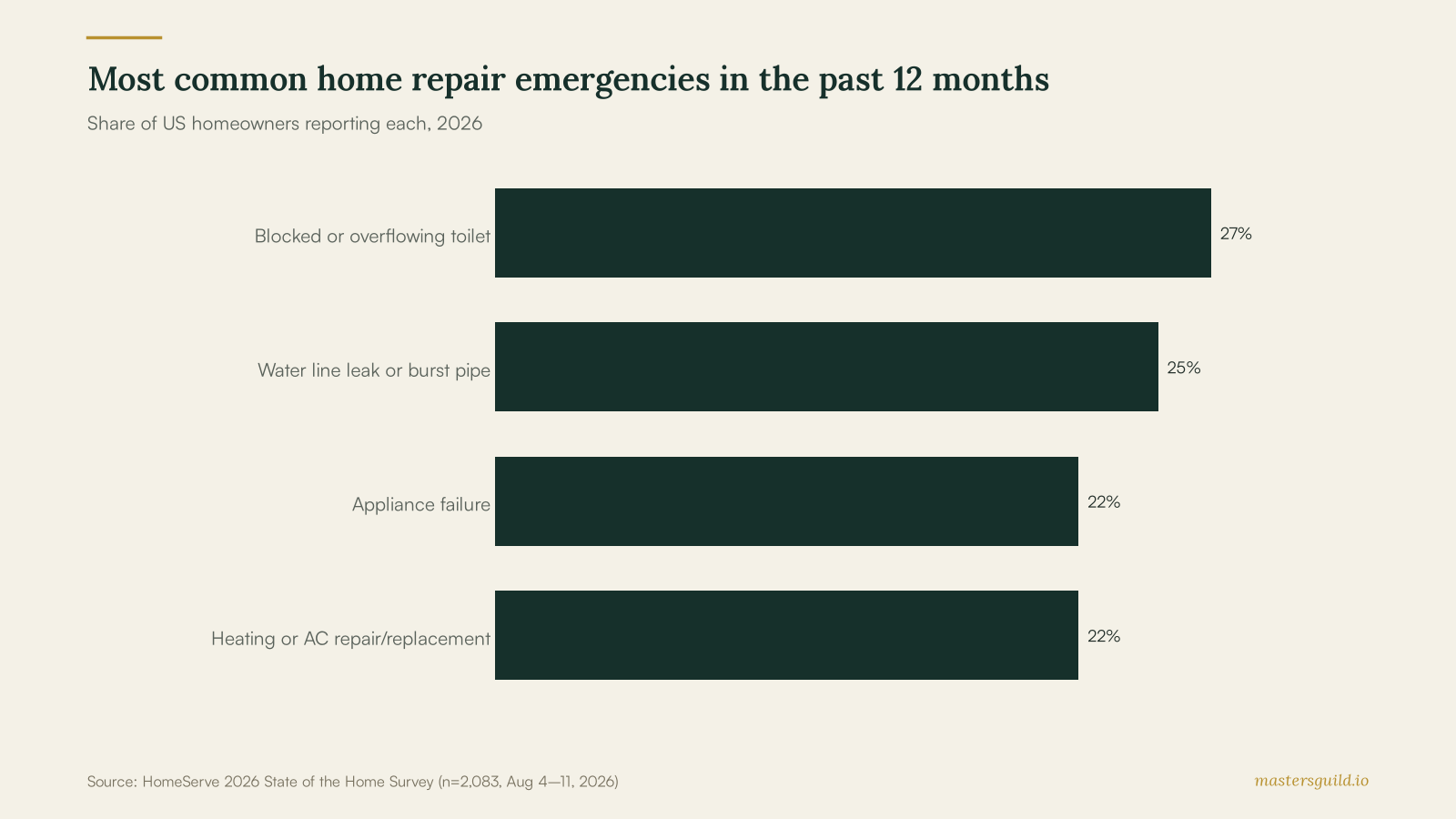
HomeServe has run the State of the Home Survey since 2015. The 2026 edition, fielded August 4–11 with 2,083 US homeowners, found emergencies are an annual event rather than bad luck. The four most common in the past 12 months:
- Blocked or overflowing toilet: 27%
- Outside water line leak, break or burst pipe: 25%
- Appliance failure or repair: 22%
- Heating or air-conditioning repair or replacement: 22%
Money is the pressure point. Nearly one in three homeowners (30%) has $500 or less set aside for emergency repairs, and over 12% has nothing. As a result, 56% have delayed a repair because they couldn’t afford it, and 18% put one off for six months or longer. That is the same deferral pattern we covered this week in the cost of delaying repairs, where a postponed $150 fix tends to resurface as a $600 one.
Why $500 Doesn’t Cover a Home Repair Emergency
Here is what the emergencies on that list cost, using the ranges from our 2026 cost guides:
| Emergency | Typical cost (USD/CAD) |
|---|---|
| Clear a clogged drain or toilet | $100–$300 |
| Repair a leaking pipe | $150–$500 |
| Furnace part (igniter to blower motor) | $150–$900 |
| Water heater replacement | $900–$2,500+ |
| AC compressor replacement | $1,000–$3,000 |
| After-hours plumber surcharge | +$150–$300/hr, plus a $150–$250 call fee |
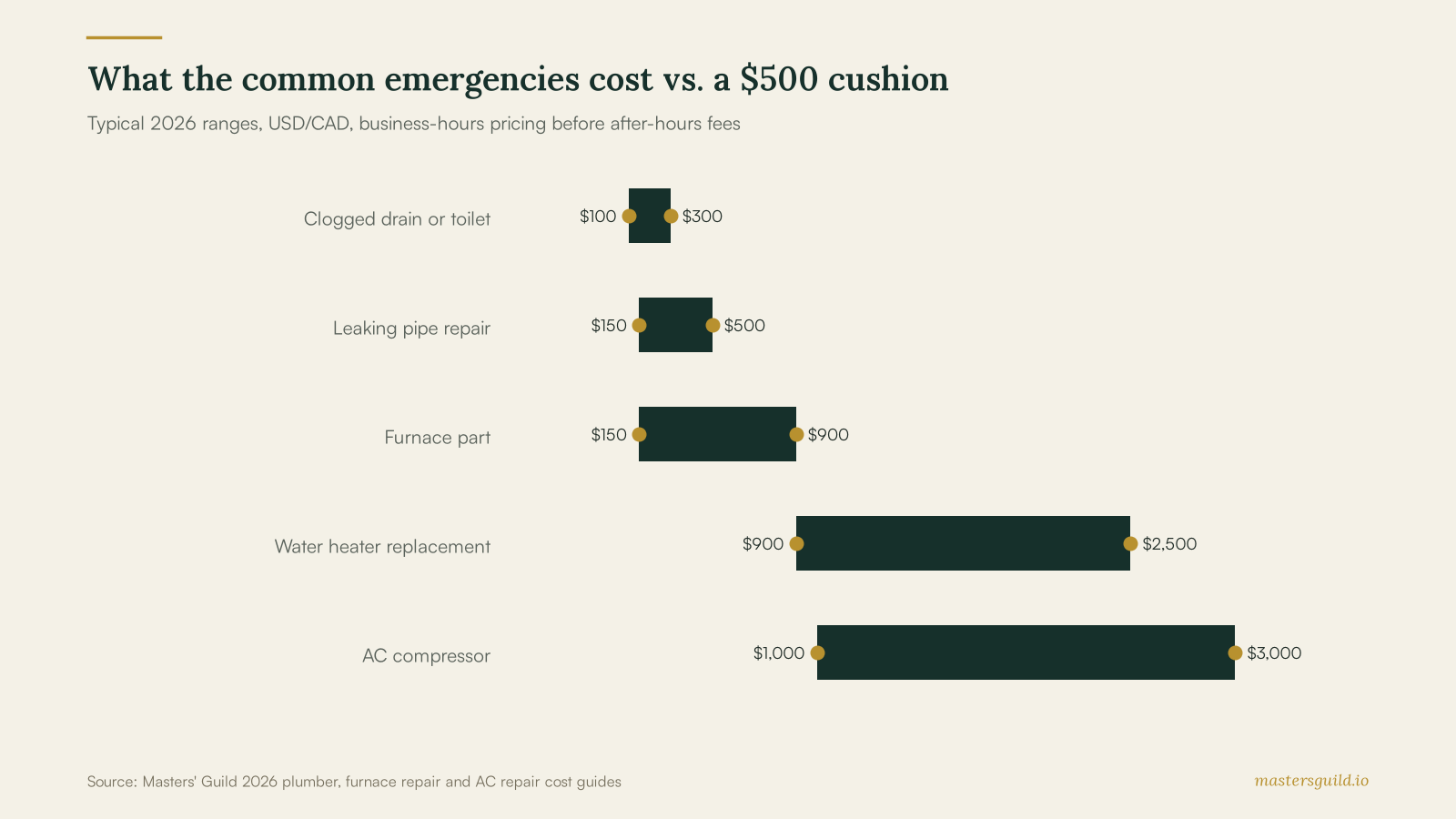
Only the first row fits inside $500, and only during business hours. HomeGuide puts emergency plumber rates at $100–$350 an hour, with weekend calls at $150–$350 and most companies adding a $150–$250 service fee for showing up outside business hours. A plumber’s regular rate is $80–$130 an hour in most US and Canadian cities, so the same burst pipe on a Saturday night costs roughly double. A furnace repair follows the same curve: a $150–$400 igniter swapped during a fall tune-up becomes an emergency call in January.
The Skills Gap Nobody Expected
The survey’s second finding explains why those calls happen at 10 p.m. instead of 10 a.m. Forty-five percent of homeowners say they feel less equipped with practical home skills than their parents’ generation, and only 35% feel more equipped. Baby Boomers report the widest gap at 60%, followed by Millennials at 48%, Gen Z at 41% and Gen X at 37%. Despite endless tutorials, 74% have felt overwhelmed by home maintenance, and 33% often do.
When something breaks, 68% start with a Google search, 52% ask family or friends, 41% open a video tutorial, and just 39% contact a professional. Only 48% feel very confident identifying the source of a common problem such as a minor leak or a tripped breaker. Most know their limits: 72% would never attempt electrical wiring, 61% HVAC repairs and 60% roof work. The problem is not the DIY line. It is that most people meet their electrician for the first time during an emergency, with no quote to compare and no time to check a licence.
Canada: Same Gap, Rates Aren’t Helping
RBC’s Emergency Readiness Poll, fielded in April with 1,513 Canadians, found 42% feel one major surprise expense could derail their finances and 32% have no emergency fund at all, rising to 38% in households earning under $100,000. Major home repairs ranked as the second-biggest worry at 38%, behind car repairs. Asked how they would cover a surprise bill, 35% said a credit card.
That plan got no cheaper this week. The Bank of Canada held its policy rate at 2.25% on September 2, as expected, and the Fed has sat at 3.5–3.75% all year. A $2,000 furnace repair carried on a card at 20% costs another $400 a year in interest. A homeowner in Calgary or Columbus is better off funding the repair account than the card.
How Much a Home Repair Emergency Fund Should Hold
The old 1% rule is out of date; the average home now costs $8,808 a year to maintain, and single failures land in lumps. A practical target based on the cost table above:
- Floor: $2,500. That covers a water heater, a furnace motor or control board, or a weekend pipe repair with the after-hours fee, without touching a card.
- Older home or 15-year-old systems: $5,000. An AC compressor, a heat exchanger or a leak that reached the subfloor all cost more than the floor.
- Keep it separate and automatic. RBC’s data shows the homeowners who succeed use a dedicated account with a monthly transfer. A $200 monthly move reaches the floor in about a year.
- Know the shutoffs before you need them. The main water valve, the electrical panel and the furnace switch turn a $3,000 flood into a $300 repair.
- Find your pro before the emergency. Only 39% call a professional first. Get two or three quotes now for a fall tune-up ($100–$300 for a furnace or AC), and you’ll have a vetted number saved when the pipe goes at midnight.
The Bottom Line
The 2026 State of the Home Survey describes a homeowner who will almost certainly face a repair emergency this year, has less saved for it than one after-hours service call, and feels less capable than their parents did. Another tutorial won’t fix that. A $2,500 home repair emergency fund, a fall tune-up and a vetted pro’s number in your phone cover the three most common emergencies at business-hours prices, and that is the whole game.
Post the job with your budget, get offers from identity-verified pros, and pay only when the work is done.