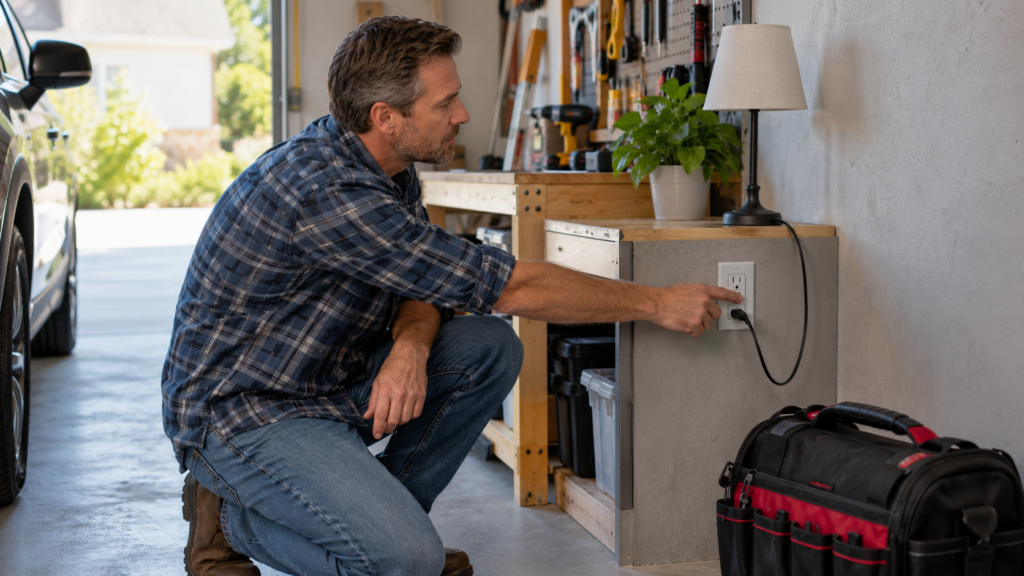
Use this GFCI outlet test checklist once a month: plug a small lamp into a GFCI outlet, press TEST, confirm the lamp turns off, then press RESET and confirm the lamp turns back on. Call a qualified electrician if that sequence fails or if the outlet, cover, cord, or surrounding area shows damage.
Key takeaways
- Find GFCI outlets by their TEST and RESET buttons. A protected outlet can also sit downstream from one of these devices.
- Test with a small lamp so you can confirm that power stops and returns.
- Stop using an outlet that will not test or reset. Do not open the receptacle or panel.
- Give an electrician the outlet location, the test result, and photos of visible damage.
A lamp makes the test result clear
Start in rooms and outdoor areas where water and electricity can meet, including bathrooms, kitchens, garages, unfinished basements, laundry areas, and exterior receptacles. Look for a receptacle or breaker with TEST and RESET buttons. One GFCI device can protect other outlets on the same circuit, so an ordinary-looking outlet can lose power during the check.
Plug in a small lamp and switch it on. Press TEST. The lamp should switch off and the reset button should release. Press RESET. The lamp should switch back on. The U.S. Consumer Product Safety Commission’s home-wiring guide gives this monthly test sequence and explains that a GFCI responds to leakage current on the protected circuit.
| Test result | What to do | Who should handle the next step |
|---|---|---|
| Lamp turns off, then returns after RESET | Record the date and move to the next outlet | Homeowner |
| TEST releases but the lamp stays on | Stop using the outlet and note the location | Qualified electrician |
| TEST will not release or RESET will not restore power | Leave the outlet out of service | Qualified electrician |
| Cover is cracked, damp, warm, loose, or discolored | Keep people away from the outlet and arrange an inspection | Qualified electrician |
Do not use the test as permission to work on wiring. Turn to a qualified pro for a failed test, recurring trips, damaged equipment, water exposure, a warm outlet, or a breaker-panel concern. OSHA advises that a qualified electrician inspect electrical equipment that has gotten wet before anyone energizes it. Its electrical-safety guidance also calls for GFCI protection in damp locations.
GFCIs interrupt a ground fault, not every electrical hazard
A GFCI compares the current going to equipment with the current returning from it. OSHA says the device can interrupt power within as little as one-fortieth of a second when the difference reaches about 5 milliamperes. That protection addresses a ground-fault hazard. It does not make damaged cords safe, replace dry conditions, or protect a person who contacts two energized conductors.
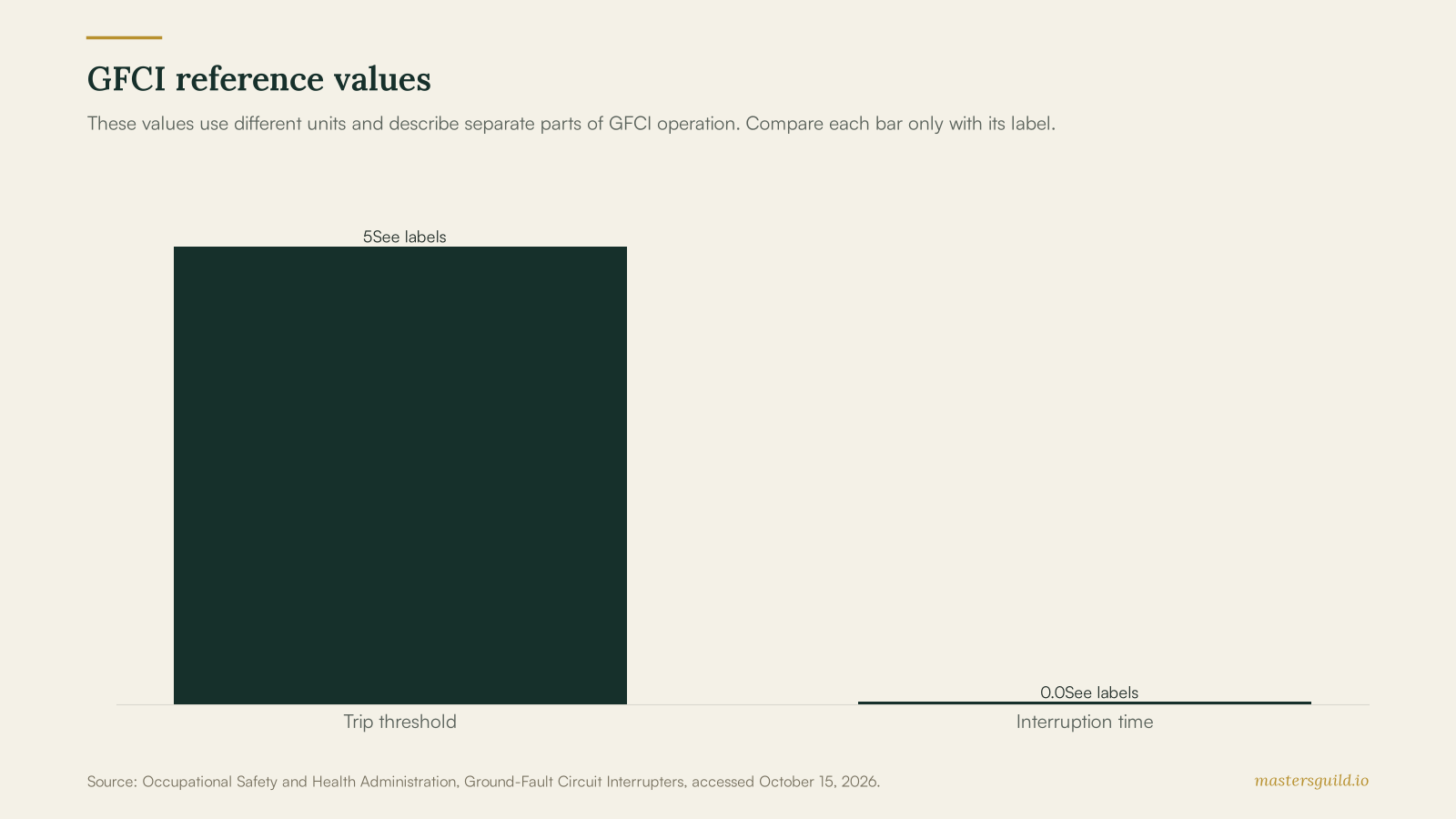
OSHA’s GFCI explainer describes the 5-milliampere threshold and the one-fortieth-second interruption time. Use the figures to understand the device’s role, not to diagnose an outlet. A test button confirms a basic function. It does not inspect concealed wiring or resolve a repeated trip.
A short room-by-room record helps an electrician
Make a list of each outlet or breaker you tested. Write the room, whether a lamp turned off and on as expected, and any visible issue. If one GFCI trips and several receptacles lose power, add each affected location to the list. That record gives an electrician a starting point without asking you to remove covers or open a panel.
For an outdoor outlet, pause the test if the area is wet or the cover is damaged. Do not plug in holiday lights, tools, or other equipment until a qualified electrician has addressed a failed test or damaged enclosure. A weather-resistant cover and suitable outdoor equipment matter as much as the GFCI itself.
Use our electrical repair guide to describe the repair category when you request help. Our electrician cost guide can help you prepare questions for a written scope, and our smoke alarm checklist covers another monthly home-safety check.
Post your electrical repair job on Masters’ Guild and compare offers from identity-verified local pros. Include the outlet locations, the TEST and RESET result, photos of any damage, and whether a breaker or other outlets were affected.
Frequently Asked Questions
How do I know whether an outlet is a GFCI outlet?
Look for TEST and RESET buttons on the receptacle. A GFCI device can also protect other outlets on the same circuit, so an electrician can identify the full protected run when the layout is unclear.
How often should I test a GFCI outlet?
The CPSC advises homeowners to test GFCIs at least once a month and after a power failure, following the manufacturer’s instructions. Add the test to a recurring home-maintenance reminder.
What should happen when I press the GFCI test button?
With a small lamp plugged in and switched on, the lamp should turn off after you press TEST. Pressing RESET should restore power. Stop using the outlet and call a qualified electrician if either part of that sequence fails.
Can I replace a GFCI outlet myself?
An outlet that fails its test can involve a bad device, wiring issue, or another condition on the circuit. Hire a qualified electrician to inspect and repair the problem rather than opening the receptacle or panel yourself.