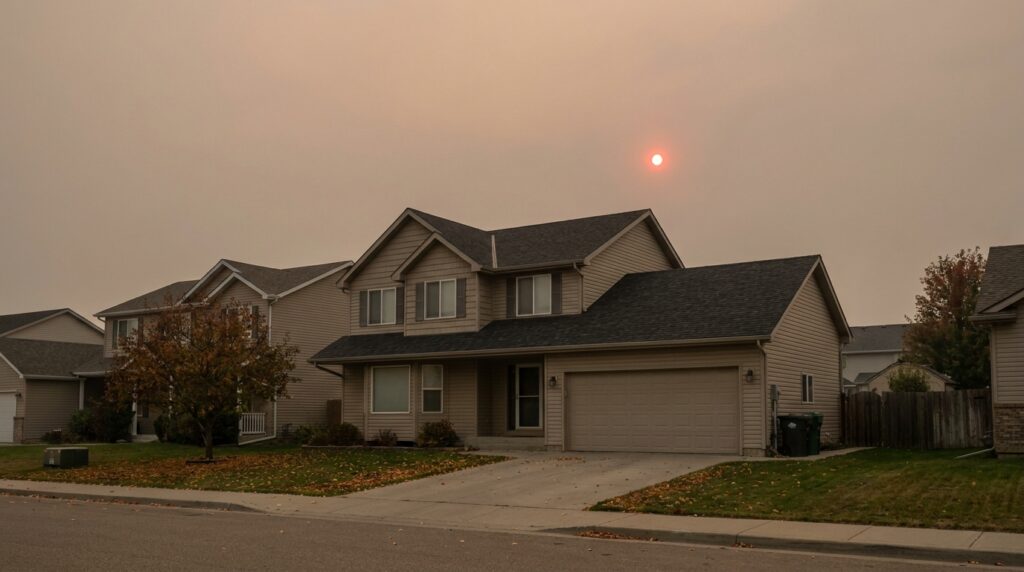
If you’ve wondered how to keep wildfire smoke out of your house this summer, you’re in a very large club. This July, smoke from more than 800 wildfires burning across Canada drifted thousands of miles south and put roughly 100 million Americans under air-quality alerts — with fine-particle readings near Washington, DC spiking close to 200 µg/m³, deep into “Code Purple” hazardous territory. The uncomfortable truth: closing your windows isn’t enough. Most North American homes leak enough air that indoor smoke levels catch up with outdoor levels within hours. The good news is that the fixes are mostly cheap, fast, and well within reach of an average homeowner — with a couple of jobs worth handing to a pro.
Smoke Is Now a Home Maintenance Problem
For decades, “wildfire season” was a West Coast story. Not anymore. This month’s smoke blanketed Minneapolis, Chicago, Toronto, New York, and DC — cities a thousand miles or more from the nearest flame. Sixteen states carried air-quality alerts in a single mid-July week, and health officials from Chicago to New York urged residents to stay indoors during peak pollution hours.
But “stay indoors” only works if indoors is actually cleaner. As a recent northern-Ontario analysis pointed out, our housing stock was engineered for a different enemy: cold. Homes built to hold heat in winter were never designed to filter fine smoke particles (PM2.5) in summer. The result is a blind spot — the same gaps that let winter drafts in let smoke in, and the standard fiberglass furnace filter most homes run catches almost none of it.
It’s a similar story to what we found when we looked at how extreme heat quietly damages homes: climate stress is showing up on home-maintenance checklists years before most homeowners expect it.
What Actually Works (Ranked by Cost)
1. Upgrade your HVAC filter to MERV 13 (~$20–$40 USD/CAD). This is the single highest-value move. A MERV 13 filter captures the fine particles in smoke; the builder-grade filter in most furnaces does not. On smoke days, set your system’s fan to “on” (not “auto”) so air keeps cycling through the filter, and make sure fresh-air intakes are set to recirculate.
2. Seal the leaks (~$30–$100 DIY). Weatherstripping around doors, caulk around window frames, and covers on through-wall vents block the paths smoke actually uses. If you can feel a winter draft somewhere, smoke gets in there too. A door and window repair pro can handle warped frames and failed seals that DIY weatherstripping can’t fix.
3. Run one real HEPA purifier (~$100–$300). One true-HEPA unit sized for your bedroom outperforms several plug-in ionizers scattered around the house. On a budget, a DIY box-fan filter (a MERV 13 filter strapped to a $25 box fan) is a proven stopgap that air-quality researchers themselves recommend.
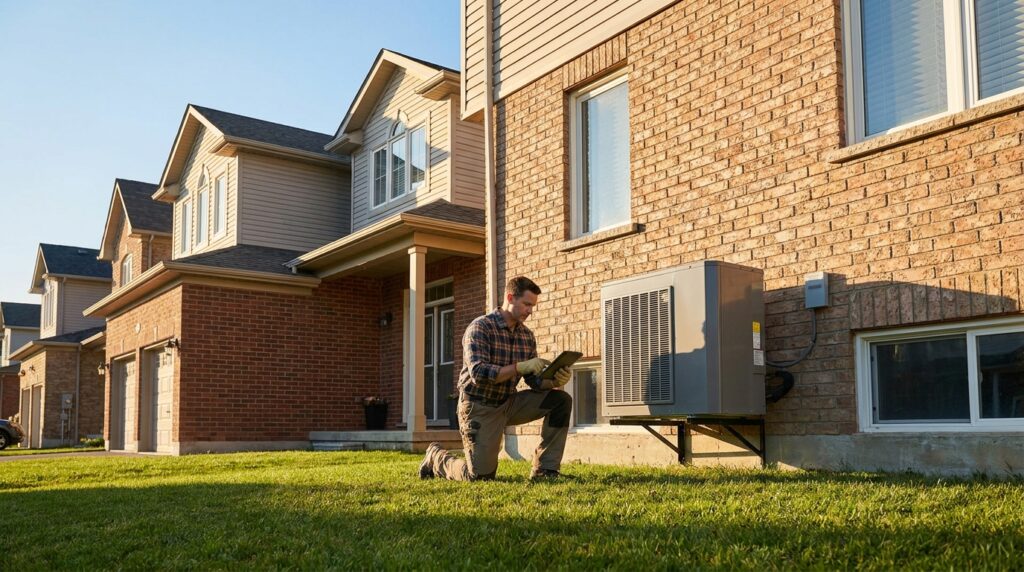
4. Get your ducts and HVAC system checked (~$300–$700). Leaky return ducts can pull smoky attic or crawl-space air straight into your living room, and a system that’s already struggling will struggle more with a denser filter. Our duct cleaning cost guide covers what a proper duct service costs, and if your system is due for a checkup anyway, AC repair prices are worth knowing before the next smoke wave — HVAC pros can also pressure-test the system and recommend the highest MERV rating your equipment can handle.
The New Seasonal Rhythm for Service Pros
There’s a flip side for the trades: smoke days are becoming what storm days have long been — a demand spike you can see coming. HVAC companies in smoke-affected regions report the same pattern each event: a rush on filter upgrades, purifier advice, and “why does my house smell like campfire” service calls. The pros who treat air quality as a service line — offering MERV retrofits, air-sealing packages, and duct sealing as a bundle — are turning a health hazard into legitimate summer revenue, in the same way snow contractors built businesses around winter.
For homeowners, that’s a timing tip: book air-sealing and HVAC work on clear weeks, not during an alert, when everyone else is calling too.
Don’t Wait for the Next Alert
The 2026 fire season still has weeks to run, and long-range forecasts suggest smoky summers are the new baseline, not a fluke. An afternoon of sealing, a $25 filter, and one well-placed purifier will cover most homes for most smoke events — and a one-time HVAC and duct checkup covers the rest.
If the pro jobs on this list have been sitting on your to-do list, get them quoted before the next haze rolls in.