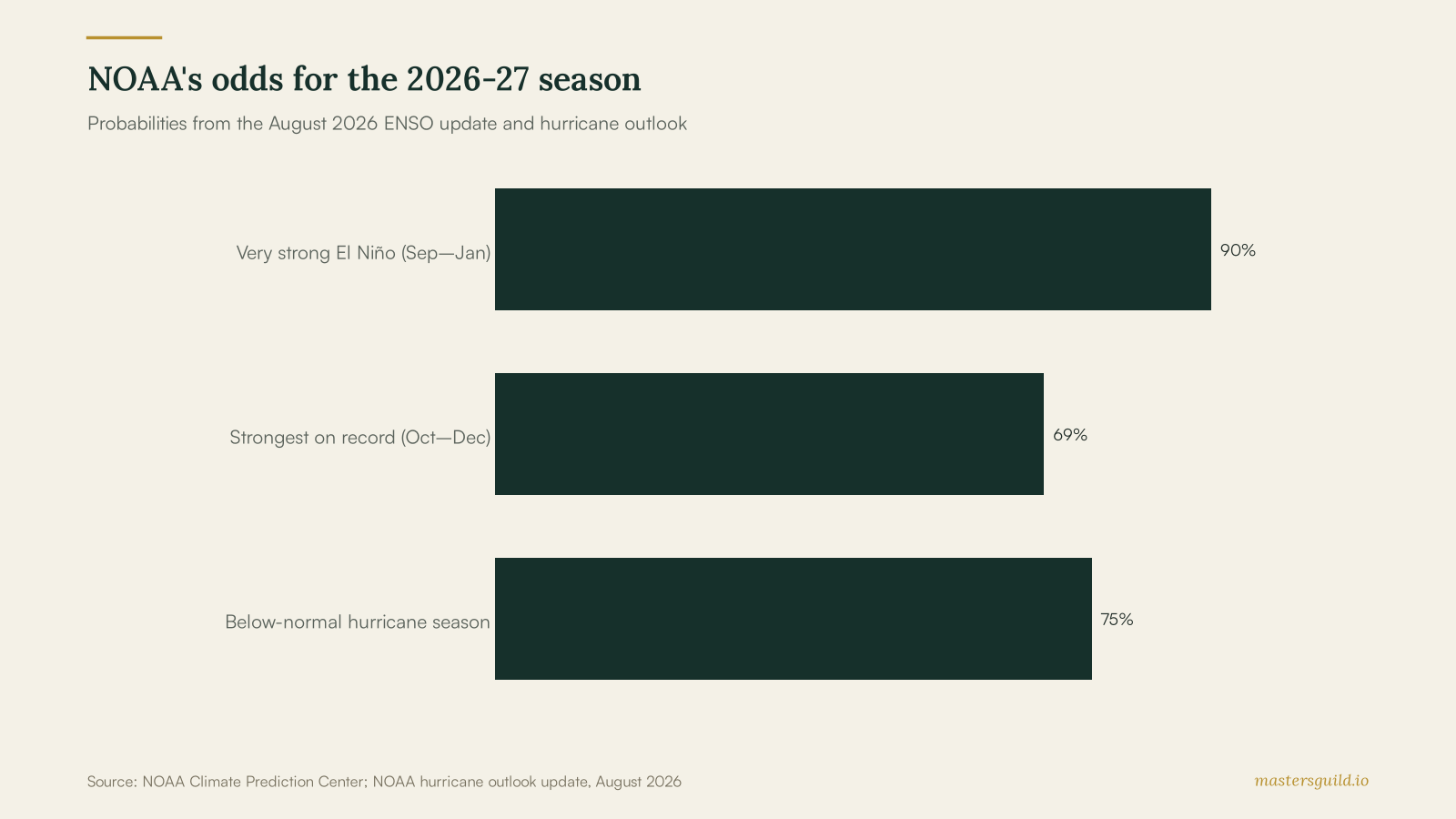
A super El Niño winter is now the most likely outcome for 2026-27, and it changes what your house needs before December. NOAA’s Climate Prediction Center has an El Niño Advisory in effect, gives the event a greater than 90% chance of reaching very strong intensity between September and January, and puts the odds that it becomes the strongest on record since 1950 at 69%. Strong El Niño winters are not cold winters. They push the storm track south, so the southern US gets the rain and the northern US and most of Canada get milder, drier weather with less snow. The homeowner question is simple: are you on the wet side of that line or the dry side?
Key takeaways
- NOAA: greater than 90% chance of a very strong El Niño this fall and winter, 69% chance it sets a record back to 1950
- Southern US, California through Texas to the Carolinas: wetter and stormier; the Southeast has the highest odds of above-normal precipitation
- Northern US and most of Canada: milder and drier, with below-average snow favored in the northern Plains and Great Lakes
- Ontario and Quebec: milder on average, but the 1997-98 record El Niño brought the January 1998 ice storm ($5.4 billion)
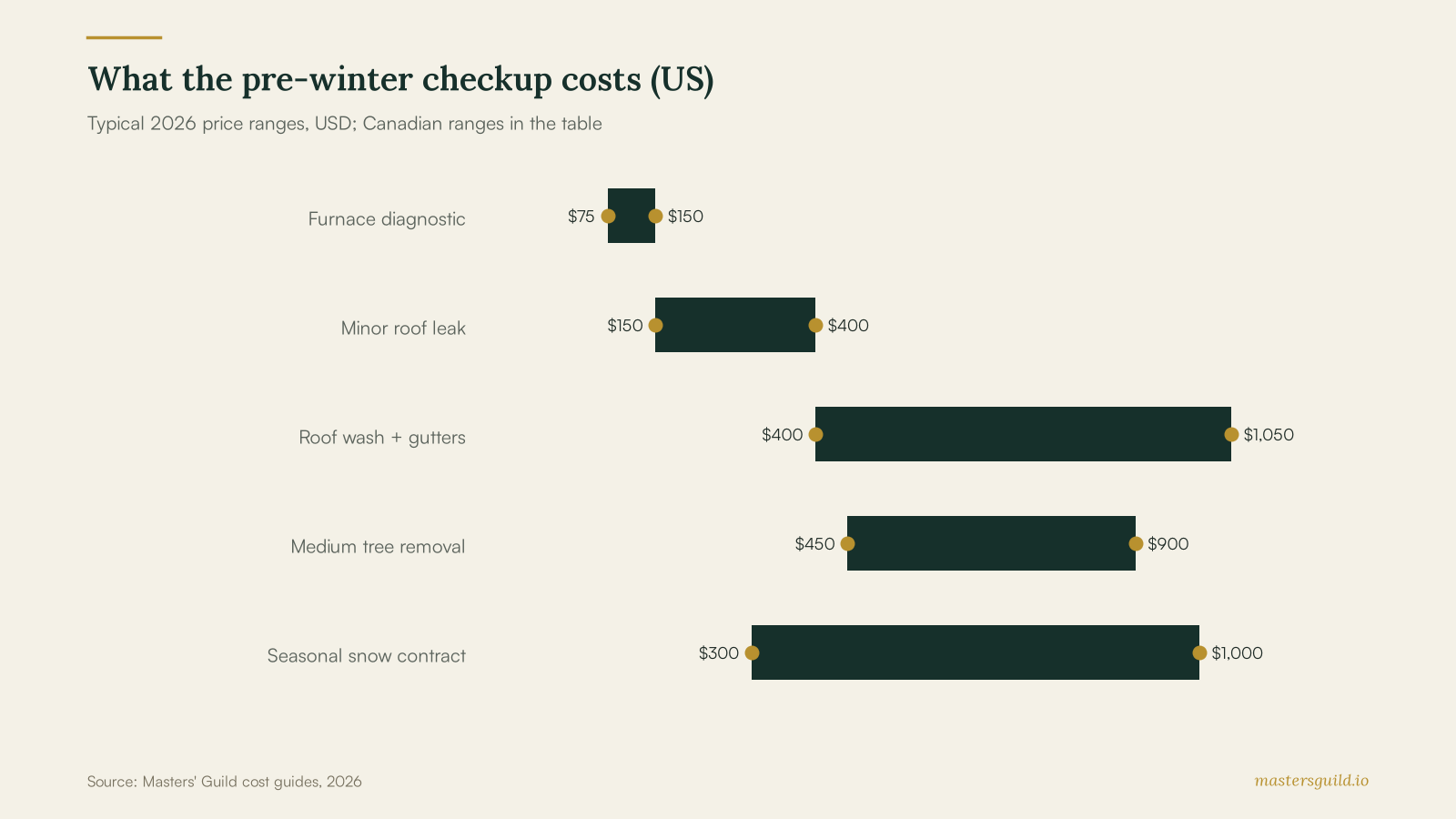
- Book the cheap checks now: furnace diagnostic $75-$150, minor roof leak $150-$400, tree trimming before the ice, and rethink the snow contract
What a Super El Niño Winter Usually Does
El Niño is a warming of the tropical Pacific that shifts the jet stream over North America. CNN’s breakdown of NOAA’s outlook puts the highest odds of above-normal temperatures across the entire northern tier, from the Pacific Northwest to the Midwest, and the highest odds of above-normal precipitation across the southern tier, peaking in the Southeast. The National Weather Service adds that below-average snowfall is favored in the northern Plains and Great Lakes during El Niño, where a drier pattern also cuts lake-effect snow.
The same pattern is why NOAA kept its below-normal hurricane forecast in August: the season has produced only two named storms so far, and forecasters give a 75% chance of a quiet year. El Niño takes storms away from the Atlantic in September and hands them to the Gulf Coast and California in January.
The Wet Side: California, the Gulf Coast and the Southeast
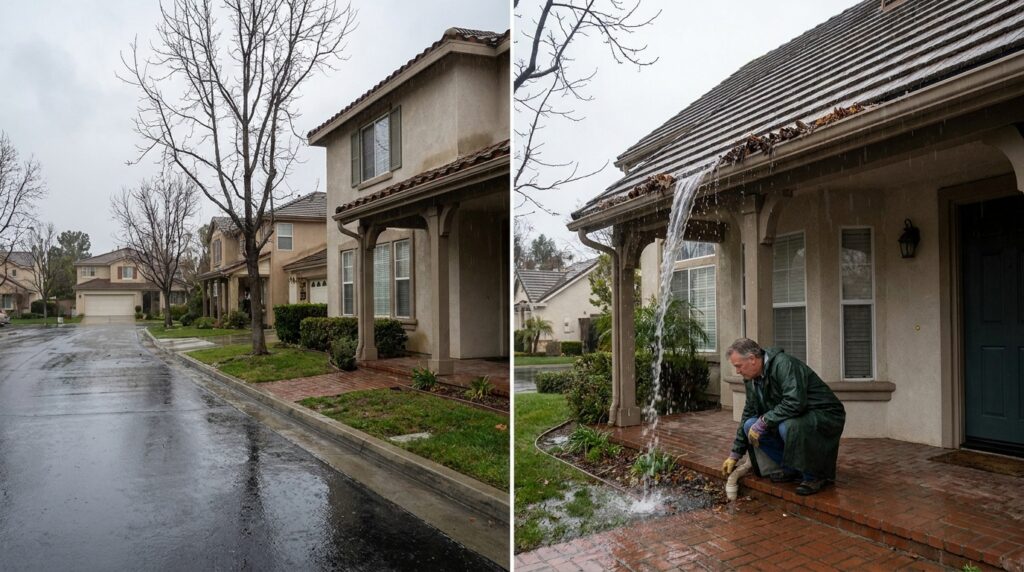
The last record event is the template. In 1997-98, California saw roughly double its normal rainfall and about $850 million in flood and storm damage, and the California Coastal Commission counts at least 27 homes red-tagged in the coastal zone that winter. For a homeowner in Los Angeles, Houston or Jacksonville, that translates into three jobs: a roof and flashing inspection, a gutter and downspout clean-out, and a look at grading and drainage around the foundation.
The cost gap between doing it now and doing it in January is the whole argument. Our roof repair cost guide puts a minor leak fix at $150-$400 and a larger leak with underlayment damage at $1,000-$3,000. A soft-wash roof cleaning with the gutters bundled in runs $400-$1,050 in the US. Roofers book up fast after the first big storm, so the September quote is usually the cheaper one.
The Dry Side: The Northern US and Most of Canada
ClimateData.ca says the pattern tilts the odds toward a milder, often drier Canadian winter, while stressing it does not promise a snow-free season. British Columbia and the Prairies usually see the clearest warm signal; Ontario and Quebec average milder but sit where a southward storm track meets Arctic air, which is ice-storm territory.
That history matters. The January 1998 ice storm dropped up to 100 mm of freezing rain on the St. Lawrence Valley, cut power to 1.4 million customers in Quebec and 230,000 in eastern Ontario, and cost an estimated $5.4 billion. It hit during the last record El Niño winter. Ice does not need a deep snowpack to bring a limb through a roof, so a Toronto homeowner with a mature maple over the house should get it trimmed in the fall; a medium tree removal runs $800-$1,800 CAD, a fraction of the roof and hydro repair it prevents.
Rethink the snow contract
In the northern US, the Prairies and BC, the question is money, not damage. Our snow removal cost guide prices a seasonal plow contract at $300-$1,000 in the US and $500-$1,700 CAD, against $30-$75 US or $50-$150 CAD per visit. At a $50 visit, a $650 seasonal plan only pays for itself around the thirteenth plow-out. In a winter where below-average snow is the favored outcome, a per-visit arrangement or a seasonal plan with a visit cap is the better bet. Ask the snow removal pros near you for both prices, and read the cancellation clause before you sign.
The Pre-Winter Checkup, Priced
| Pre-winter job | United States (USD) | Canada (CAD) | Who needs it most |
|---|---|---|---|
| Furnace diagnostic / tune-up | $75–$150 | $80–$150 | Everyone; milder does not mean off |
| Minor roof leak repair | $150–$400 | $150–$400 | Southern US, BC coast |
| Roof soft wash + gutter clean-out | $400–$1,050 | $520–$1,300 | Southern US, Pacific Northwest |
| Medium tree removal (30–60 ft) | $450–$900 | $800–$1,800 | Ontario, Quebec, Northeast |
| Seasonal snow contract | $300–$1,000 | $500–$1,700 | Northern US, Prairies (compare per-visit) |
The furnace line is the one people skip in a mild forecast. A milder winter still means months of run time, and furnace repair costs climb fast once a $100-$250 flame sensor becomes a $1,000-$3,000 heat exchanger. Book the HVAC service in September, when technicians still have open days.
The Honest Caveat
Seasonal forecasts are odds, not promises. The 2015-16 “Godzilla” El Niño was very strong by ocean temperature and still gave Southern California a below-average rain year, with the storms landing in Northern California and the Pacific Northwest instead. A milder Canadian winter can still include one crippling cold snap. Prepare for the pattern, but keep the furnace serviced and the shovel by the door either way.
Our Take
A super El Niño winter moves the risk around the map rather than removing it. If you are south of the storm track, the roof and the gutters are the September job. If you are north of it, the tree work is, and the snow contract deserves a second look. On both sides, the pros who do this work are cheapest and most available right now, before the first big storm makes every homeowner call at once.