

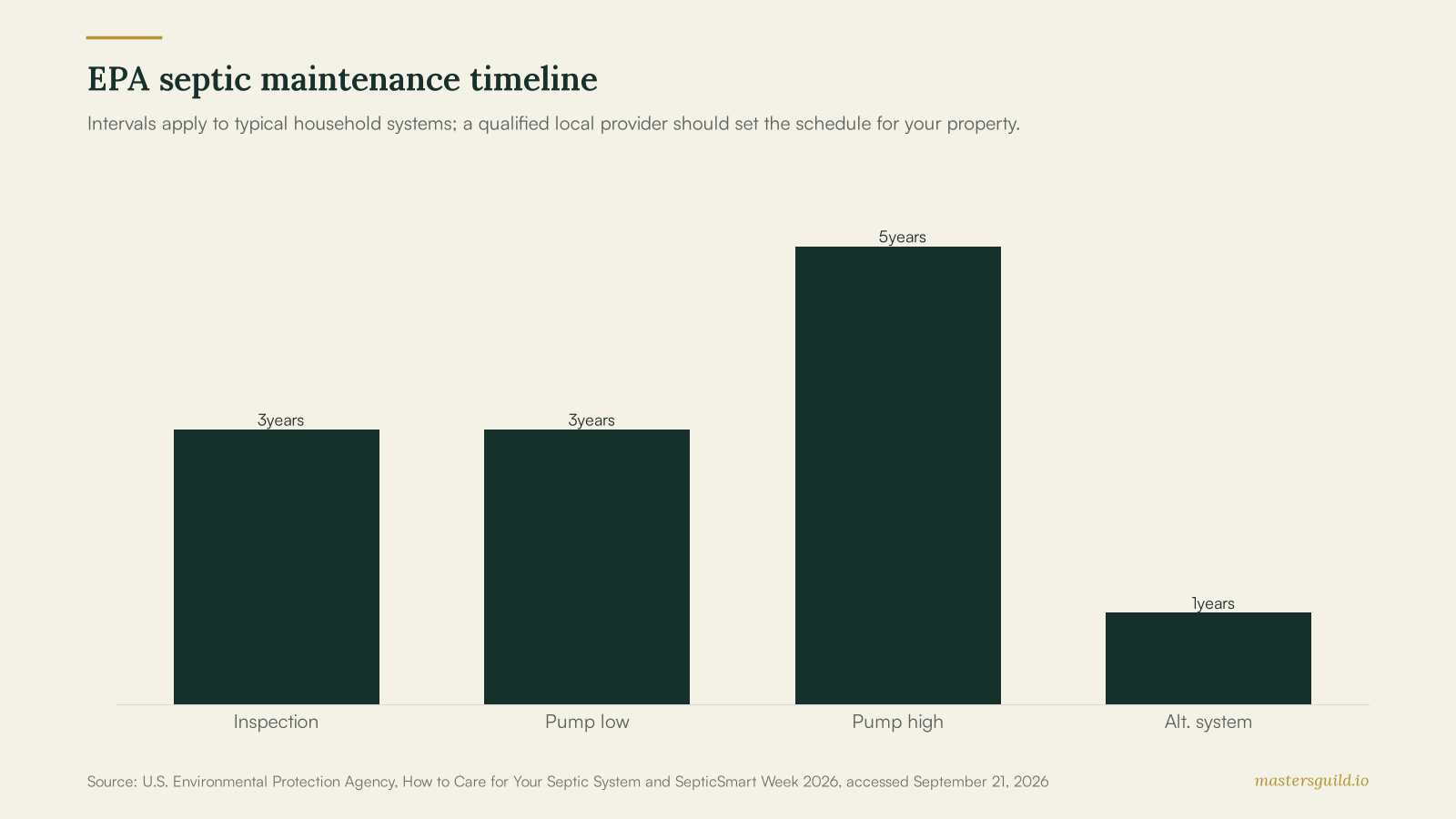
Septic system maintenance matters for one in five U.S. homes, which rely on a septic system. EPA guidance calls for a professional inspection of a typical household system at least every three years and tank pumping every three to five years. EPA’s SepticSmart Week 2026 ran September 14–18 with the same message: find your records and schedule service before a backup forces a rushed choice.
Key takeaways
- EPA says more than one in five U.S. homes relies on a septic system.
- A typical household system needs a professional inspection at least every three years.
- Household septic tanks fall within EPA’s three-to-five-year pumping range.
- Your service record, site plan, and local rules help a septic pro set the right schedule.
Septic records turn a buried system into a planned job
Most homeowners cannot see their septic system, so its records matter. Find the property survey or as-built plan, the last pump-out receipt, any inspection reports, and the permit records held by your local health or environmental office. Give those documents to the pro before the visit.
EPA says the interval changes with household size, tank size, wastewater volume, and the solids in the tank. A service professional can inspect the tank, measure scum and sludge layers, look for leaks, and recommend the next pumping date. EPA’s homeowner guidance also calls for yearly inspections of alternative systems with electrical float switches, pumps, or mechanical components.
| Maintenance item | Typical EPA guidance | Why the record matters |
|---|---|---|
| Professional inspection | At least every 3 years | Documents tank condition and the next service date |
| Household tank pumping | Every 3–5 years | Removes solids before they reach the drainfield |
| Alternative-system inspection | About once a year | Checks pumps, switches, and mechanical parts |
| SepticSmart Week 2026 | September 14–18 | EPA’s annual homeowner-maintenance campaign |
Drainfield care starts inside the house
Water use and waste habits affect the system before wastewater reaches the tank. EPA advises homeowners to use water efficiently, repair plumbing leaks, keep hazardous household chemicals out of drains, and protect the drainfield from vehicles. A pro can explain local requirements and identify details specific to your tank and soil.
Written records help with other maintenance work, too. Our gutter cleaning cost guide helps you scope drainage work before fall weather, while the furnace repair guide explains how a scheduled check differs from an emergency call. Homeowners who document a job early can compare the scope, timing, and exclusions in each offer.
Local pros can make the next service date clear
A qualified septic provider should ask about the household, tank access, prior service, alarms, and any wet areas near the drainfield. Ask the provider to leave a service report that names the work completed, the tank condition, observed levels, recommended repairs, and the next inspection or pumping date. Keep that report with the property records.
Canadian homeowners should check municipal or provincial rules because septic oversight and required service records vary by location. A local pro can confirm permit, inspection, and disposal requirements for the property. A written scope and dated record give homeowners in both countries a better basis for hiring.
The bottom line
Septic system maintenance follows a simple calendar: inspect a typical system at least every three years and plan tank pumping every three to five years, then adjust that plan with a qualified local professional. The next step is finding the last service record and requesting a written inspection scope before the system shows warning signs.
Post your job on Masters’ Guild and get offers from identity-verified pros. Free on iOS and Android.