
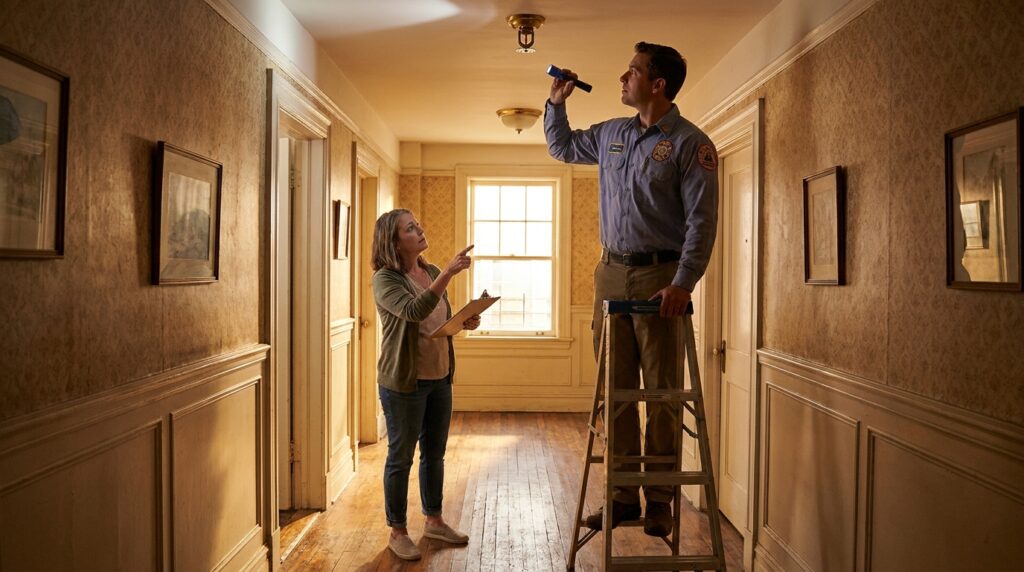
The fire sprinkler recall covers Central Sprinkler heads made from the mid-1970s through June 2001, and the U.S. Consumer Product Safety Commission says older buildings should inspect their systems now. Water minerals and salts can degrade an O-ring seal in these recalled heads, causing a sprinkler to fail to activate during a fire.
Key takeaways
- CPSC renewed its warning on September 24, 2026, for Central Sprinkler heads that may remain in U.S. homes and other older buildings.
- The affected heads were manufactured from the mid-1970s through June 2001 and were first recalled in 2001.
- CPSC calls for an immediate inspection, a review of maintenance records, and replacement by a qualified fire-protection professional.
- Owners should leave sprinkler work to a qualified fire-protection professional.
CPSC renewed a warning for older sprinkler heads
In its September 24 warning, CPSC said recalled Central Sprinkler heads may remain in homes, residential facilities, and commercial buildings. The agency says minerals, salts, and other contaminants in water can damage the rubber O-ring seals and keep a head from activating during a fire.
The heads were originally recalled in July 2001. CPSC says a subsequent recall modification and remediation campaign replaced millions of heads before the program closed in 2007. The renewed warning focuses on buildings where recalled heads may have remained after ownership changes, renovations, or incomplete maintenance records.
| Building record to review | What the owner or manager should confirm | Who should handle it |
|---|---|---|
| Sprinkler inspection log | Whether a qualified inspector identified and removed recalled heads | Property manager and fire-protection pro |
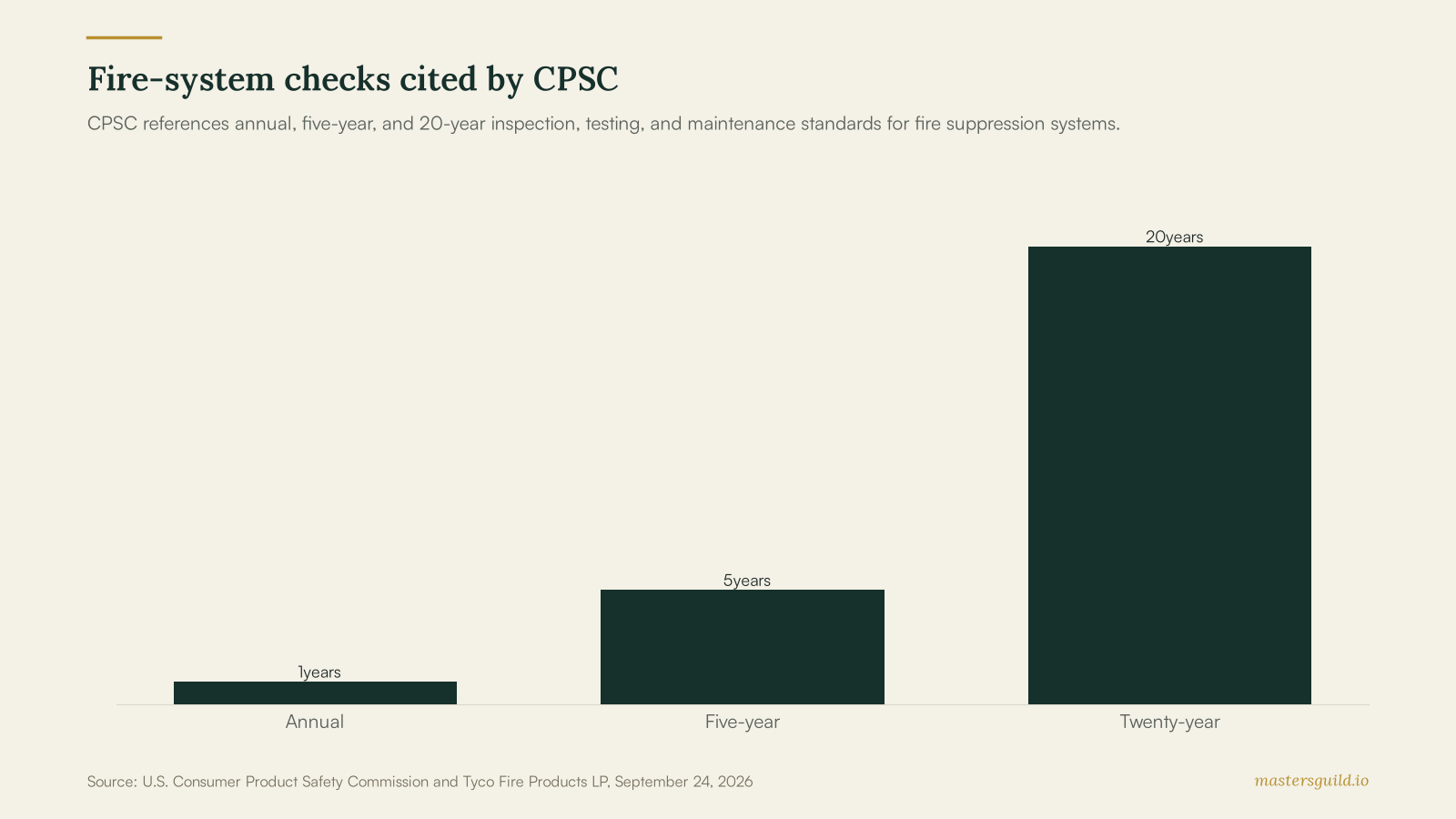
| Maintenance history | Dates of annual, five-year, and 20-year work | Building owner or manager |
| Replacement record | Model details, work date, and contractor documentation | Qualified fire-protection pro |
A maintenance record can determine the next call
Start with the sprinkler inspection log, the last fire-protection service invoice, and records from any renovation. CPSC tells owners, businesses, property managers, and public entities to inspect their building sprinkler heads, check whether past records show recalled heads were identified and removed, and replace recalled units through a qualified fire-protection professional.
For a single-family homeowner, a local fire-protection company can identify the system type and explain whether the building records point to a recall concern. A condo board or landlord should share the inspection finding with residents and retain the service documentation. Owners who need a process for comparing qualified local help can use this guide on choosing a contractor app.
The replacement belongs with a fire-protection professional
Do not remove or swap a sprinkler head as a home repair project. A fire-protection professional can identify the head, confirm the remedy, follow local requirements, and document the work for the next inspection. That paper trail protects the owner and gives the next service pro a clear record.
The CPSC notice links the current warning to a July 2025 fire at an assisted-living facility in Fall River, Massachusetts. CPSC says inspectors had previously identified dozens of recalled heads at the facility. The agency urges managers of older buildings, including homes with sprinkler systems, to act before a fire exposes a missing repair.
If a building needs a qualified pro for a safety-related service task, post the job and compare local offers on Masters’ Guild.