

Builder sentiment fell to 32 in September 2026, and homeowners can use a slower new-home market to plan small repairs before a failure forces a rushed hire. The National Association of Home Builders reported higher mortgage rates, material costs, and labor shortages in its monthly builder survey. Those pressures shape contractor schedules and bids, even when your project involves an older home rather than a new build.
Key takeaways
- 32 was the September builder-sentiment index, below the neutral 50 mark.
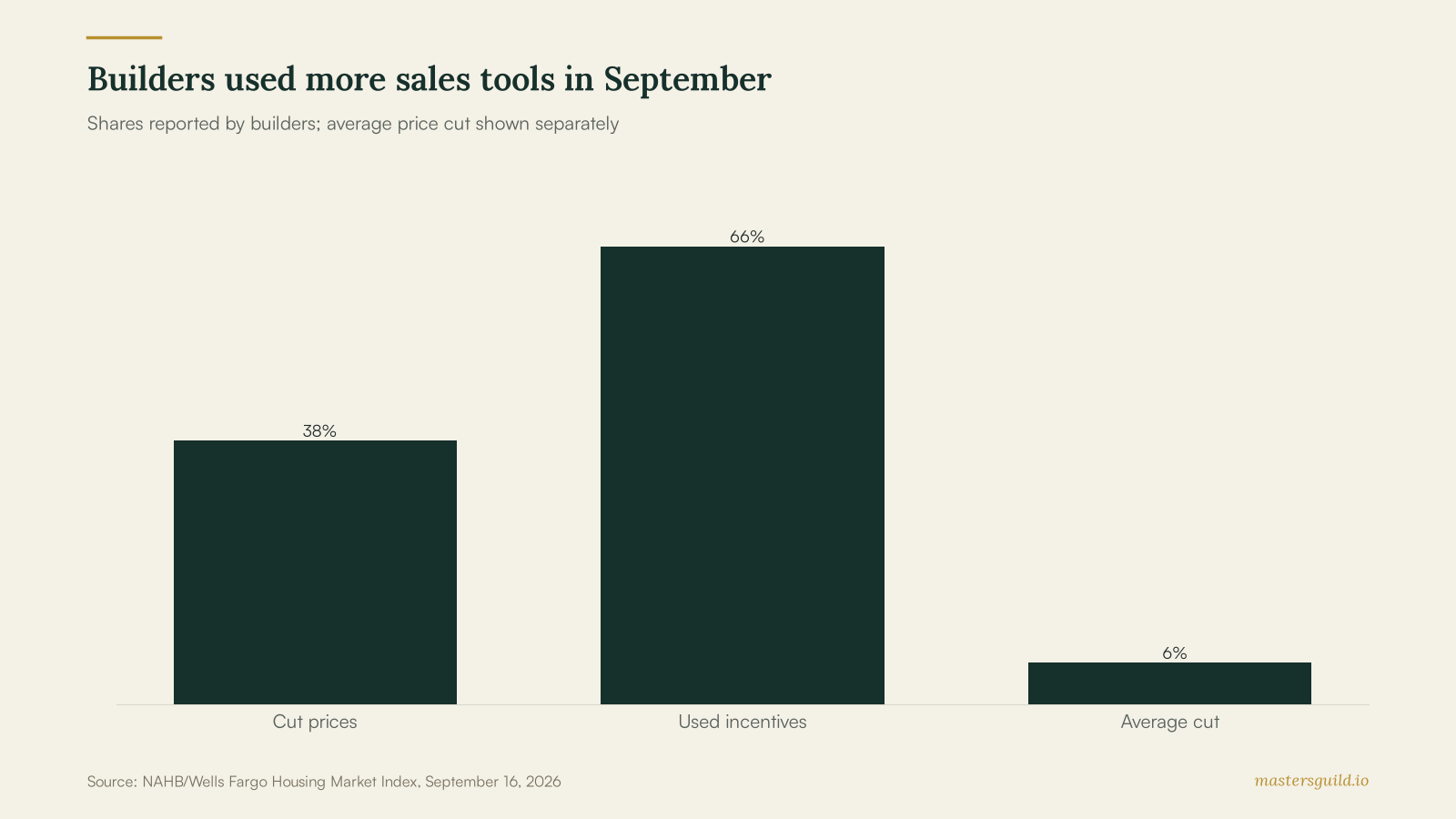
- 38% of builders cut prices during September, while the average cut stayed at 6%.
- 66% of builders used incentives, their highest share since December.
- A written repair scope lets homeowners compare labor, materials, and timing before work starts.
Builder Sentiment Shows a Tougher Sales Season
The NAHB/Wells Fargo Housing Market Index fell three points to 32 in September. NAHB says its index measures builders’ views of current single-family sales, sales expectations for the next six months, and prospective-buyer traffic; a score above 50 means more builders rate conditions good than poor.
The three components also stayed below 50: current sales conditions measured 35, future sales expectations measured 37, and buyer traffic measured 23. The survey does not set the price of a local repair. It does show that builders face a market where buyers are more cautious and where costs still press on project decisions. Homeowners can compare that signal with the U.S. Census August construction release and Statistics Canada’s July building-permits release when they follow the wider market.
| September 2026 NAHB measure | Result | What the result means |
|---|---|---|
| Housing Market Index | 32 | More builders rated conditions poor than good |
| Builders cutting prices | 38% | Builders reported discounts to support sales |
| Average price cut | 6% | Reported average discount held for a sixth month |
| Builders using incentives | 66% | Builders used offers beyond price cuts |
Homeowners Can Turn a Small Repair Into a Clear Bid
Start with the work that affects safety, water, heat, or daily use. Photograph the issue, note the age of the equipment, and write down the result you need. A loose handrail, a leaking faucet, a damaged door, or an unreliable outlet gives a pro enough context to identify the trade and flag a site visit.
Then ask each provider to separate labor, materials, permit work, and disposal. Compare the scope before comparing the total. Our guide to home-service prices can help you set a working budget, while the cost of delaying repairs explains why a small problem can become a larger job.
Local Pros Can Win Work With Useful Detail
Pros can respond to cautious homeowners with a practical offer: describe the repair, list materials, state the earliest work window, and name any condition that could change the price. A homeowner who sees the difference between a minor repair and a replacement can decide with more confidence.
For seasonal work, pair related tasks in one visit when the scope supports it. The fall-maintenance booking guide offers a planning list for homeowners who want to line up heating, exterior, and weatherproofing work before schedules tighten.
A Written Scope Gives You More Control
The September survey measures new-home builders, yet the same cost pressures reach the local trades homeowners hire. Use this period to collect photos, define the repair, and compare complete offers. That preparation makes a repair easier to schedule and easier to evaluate.
Post your repair with photos, timing, and budget on Masters’ Guild to receive offers from identity-verified local pros. Payment is held until the work is complete, so you can review the scope before choosing a provider. Get quotes on Masters’ Guild.