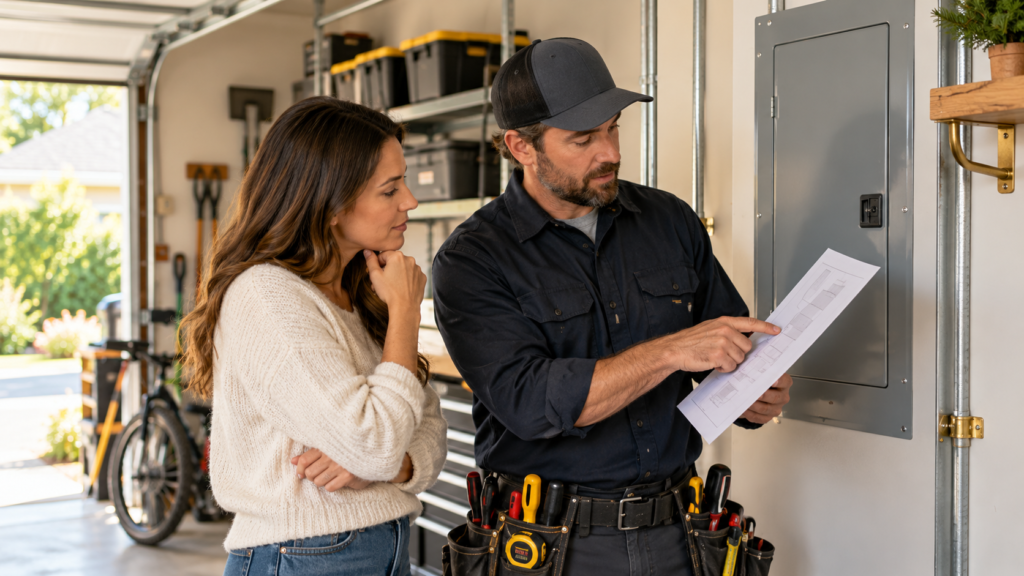
A whole-home surge protector gives an electrician a panel-level layer of protection, while plug-in surge protectors cover electronics connected to them. Ask a qualified electrician to match a listed device to your panel and electrical service, then keep point-of-use protection on equipment that needs it. Electrical Safety Foundation International guidance says 60% to 80% of surges may come from sources inside a home or business.
Key takeaways
- Ask an electrician to assess the panel, service voltage, device location, and local permit requirements.
- Read the device type, voltage protection rating, maximum continuous operating voltage, nominal discharge current, and short-circuit current rating.
- Keep plug-in surge protectors for the electronics connected to them; a power strip does not automatically provide surge protection.
- Photograph the panel label and list sensitive equipment before requesting a quote.
A panel-level device and a plug-in protector cover different equipment
ESFI distinguishes point-of-use surge protection from whole-home protection. A point-of-use device protects electronics plugged into it. A whole-home device protects the electrical system at the panel level and requires installation by a qualified electrician. Neither device type protects a building from a direct lightning strike, according to ESFI’s surge-protection guidance.
Treat the two as layers, not substitutes. Use the panel-level discussion to define an electrician’s scope. Use plug-in protection for electronics connected to a listed surge protector. The U.S. Consumer Product Safety Commission advises shoppers to look for an independent testing-lab label on both the package and the product and to check the product for the manufacturer name and testing-lab mark. Its power-strip and surge-protector guidance also warns against overloading cords.
| Protection layer | Where it belongs | What it covers | Who should handle it |
|---|---|---|---|
| Whole-home surge protective device | At or near the electrical panel, as the selected device allows | The home’s electrical system | Qualified electrician |
| Point-of-use surge protector | At the outlet with connected electronics | Equipment plugged into that device | Homeowner, following the product instructions |
| Panel inspection and repair | Inside the service equipment | Panel condition, compatibility, and wiring concerns | Qualified electrician |
Product labels give the electrician the facts needed for a quote
UL says circuit-breaker surge-protective devices carry Type 1, Type 2, or Type 3 markings that identify the appropriate installation location in the electrical system. UL also identifies the voltage protection rating, maximum continuous operating voltage, nominal discharge current, and short-circuit current rating as device markings. Review UL’s marking guide with the electrician rather than choosing a device from a product photo alone.
Take a clear photo of the panel directory and the manufacturer label with the cover closed. List high-value electronics, large appliances, and any recent electrical symptoms. An electrician can use that information to confirm panel compatibility, device location, scope, permit responsibility, and the final test. Do not remove the panel cover or work on service equipment yourself.
For electrical issues beyond surge protection, use our electrical repair service page to describe the job. Our GFCI outlet test checklist covers a separate outlet-safety check, and our smoke alarm checklist helps you document another part of the home’s electrical safety plan.
A written quote makes the work comparable
Ask each electrician to state the device make and model, listing or certification mark, type designation, compatible panel or mounting location, labor, permit responsibility, testing, cleanup, and warranty terms. A quote should also say whether the electrician found a panel condition that needs separate repair. This format helps you compare the same work across offers.
You can gather photos and make the equipment list. Leave panel access, device selection, installation, and troubleshooting to a qualified electrician. Stop using damaged cords, power strips, or surge protectors and replace them with properly marked equipment; CPSC advises consumers to replace cracked or worn cords.
Post your electrical repair job on Masters’ Guild and compare offers from identity-verified local pros. Include photos of the closed panel label, the equipment you want protected, and any recent electrical symptoms so each pro can price the same scope.
Frequently Asked Questions
Does a whole-home surge protector replace plug-in surge protectors?
No. ESFI says a point-of-use protector covers electronics plugged into that device, while whole-home protection covers the electrical system at the panel level. Use both layers where they fit the equipment and the electrician’s scope.
What should I ask for in a whole-home surge protector quote?
Ask for the device make and model, type designation, electrical ratings, panel compatibility, installation location, permit responsibility, testing, cleanup, and warranty terms. Give the electrician a photo of the closed panel label and a list of equipment you want to protect.
Can I install a whole-home surge protector myself?
Whole-home protection involves electrical service equipment. ESFI says a qualified electrician must install it. Do not remove the panel cover or attempt panel work yourself.
How do I identify a real surge protector?
Look for the manufacturer name and an independent testing-lab mark on the device and its package. CPSC says a power strip and a surge protector are different products, so read the product label before you rely on it for connected electronics.