Storm damage repair is about to become the busiest corner of home services in North America. On July 13, a hailstorm swept through Calgary and caused roughly $92 million in insured damage — and that’s the warm-up act. The US Atlantic hurricane season doesn’t peak until mid-August through October, and in storm-prone regions, roofing, window, and tree crews are already booked 8 to 12 weeks out. If your home needs attention, the cheapest and fastest time to act is before the next system rolls in.
A $92 Million Hailstorm Is Just the Warm-Up
The Calgary storm was no freak event. The same mid-July system dragged a swath of hail from Calgary down to Swift Current, Saskatchewan, generating more than 2,000 crop-damage claims across the Prairies. Alberta has now been hit by at least one major hailstorm every year for two decades, racking up more than $11 billion in insured damage — $6 billion of it in just the past five years. The August 2024 Calgary hailstorm alone cost nearly $2.8 billion, the second-costliest disaster in Canadian history.
South of the border, forecasters are split on the 2026 hurricane season — one major outlook calls for below-normal activity with around nine named storms, while the University of Arizona’s model projects as many as twenty. But as any Gulf Coast roofer will tell you, the forecast doesn’t matter much: it only takes one landfall near your zip code to turn a quiet season into a two-year repair backlog.
Repair Crews Are Already Booked Out
Here’s the part that catches homeowners off guard: the repair rush starts before the storm. In Florida, contractors report one of the busiest preparation seasons in years, with roofers, window specialists, and tree services booking 8–12 weeks ahead. Two forces are driving it — insurers tightening renewal requirements (roof age limits, wind-mitigation upgrades), and homeowners who learned from past seasons that waiting means competing with thousands of insurance claims for the same crews.
Layer that on top of the skilled-trades shortage that already stretches wait times in ordinary months, and the lesson is clear: a storm doesn’t create a contractor shortage, it multiplies one. Our 2026 roof repair cost guide breaks down what proactive fixes cost — spoiler: patching a few lifted shingles now runs a few hundred dollars, while an emergency tarp-and-rebuild after water gets in can run twenty times that.
After the Storm: Watch for the Chasers
Every major storm brings a second wave of damage: storm-chasing repair crews. Some are just overwhelmed and underqualified out-of-towners; others are outright predatory — door-knockers demanding deposits, inflated “free inspections,” and pressure to sign over your insurance claim on the spot. We covered how widespread the problem is in our look at contractor fraud in Canada, and post-storm neighborhoods are where it concentrates.
The defense is boring and effective: verify the license and insurance, insist on an itemized written quote, never pay a large cash deposit, and talk to your insurer before signing anything that assigns your claim. Better yet, find a vetted roof repair pro near you before the storm, so you’re not choosing from whoever knocks first.
What Homeowners Should Do This Week
You can’t control the weather, but you can control your place in the queue:
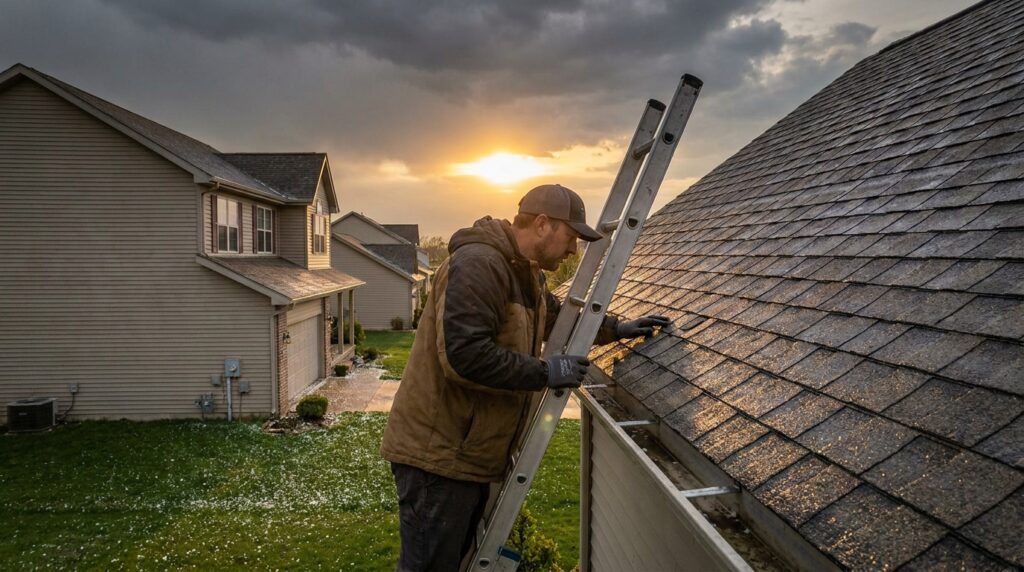
- Book a roof and tree inspection now. Lifted shingles, dead limbs over the roofline, and clogged gutters do most of the damage in a storm. A local arborist can spot the risky limbs in one visit.
- Photo-document your home’s condition. Walk the exterior with your phone — roof, siding, windows, fence. Dated “before” photos make insurance claims dramatically smoother.
- Reread your policy. Wind and hail deductibles have been climbing along with home insurance premiums; many homeowners discover a percentage-based deductible only after the claim.
- Line up your pros in advance. Homeowners in hail country — from Calgary to Texas — increasingly keep a vetted roofer’s number saved before season, not after.
Storm season rewards the prepared. Whether you need a pre-season inspection or a post-storm repair from someone who’ll still answer your calls next month, verified local pros are a few taps away.