
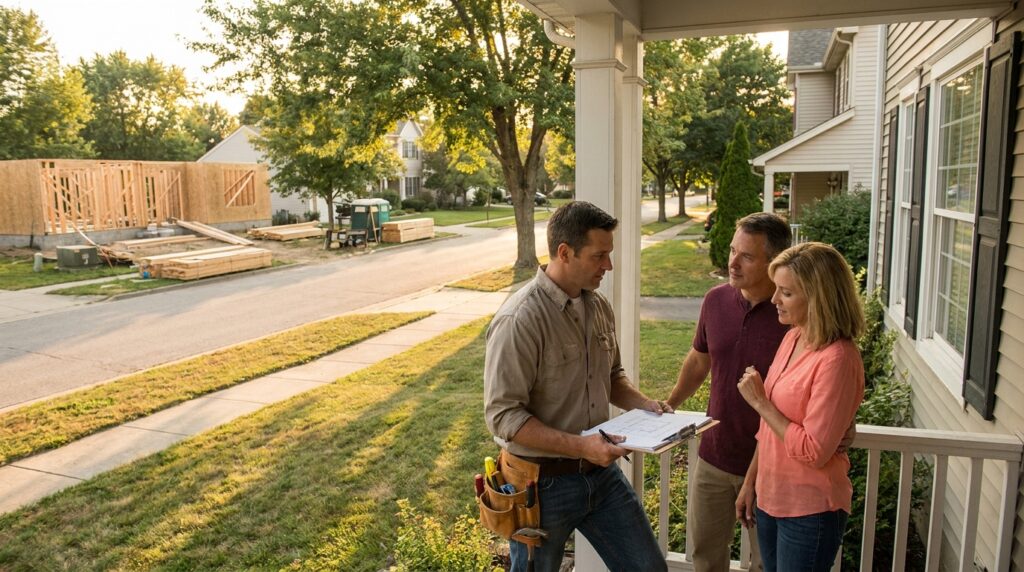
If you’ve been waiting for the right moment to hire a contractor, this month’s numbers are worth a look. The new home construction slump deepened in July: US housing starts fell 12.4% to a seasonally adjusted annual rate of 1.24 million — the lowest level in four years — and in Canada, starts in larger centres were 19% below July 2025. Builders are pulling back, yet the renovation market isn’t following them down. For homeowners, that gap is an opportunity; for the trades, it’s a shift in where the work is.
What the July Housing Data Actually Says
The US Census Bureau’s July report showed single-family starts down 9.9% to an 808,000 annual pace (15.7% below a year ago) and multifamily starts down 16.8%. NAHB blamed “economic uncertainty, rising construction costs, labor shortages and elevated financing expenses.” The one bright spot was permits, up 5% on the month — a sign builders are lining up future projects rather than abandoning them.
Builder mood matches the data. The NAHB/Wells Fargo Housing Market Index ticked up one point to 35 in August, but that’s the sixteenth straight month below 40. Rising gas and diesel prices have joined tariffs on the list of things pushing material costs higher, and spec-home building stays weak because buyers are sitting out 6.6% mortgage rates.
North of the border, CMHC’s July release put the annual pace of starts at 229,074 units, down 5% from June, with actual starts in centres of 10,000+ people down 19% year over year. The six-month trend is flat, and the number of approved-but-unstarted units rose 3% — the same “permits up, shovels down” pattern as the US.
Why Remodeling Isn’t Slumping With It
Here’s the part that matters for your kitchen or basement. While builders retrench, NAHB’s Remodeling Market Index came in at 61 for the second quarter — anything above 50 means more remodelers see conditions as good than poor — and its current-conditions component sat at 70. Remodelers are the most upbeat segment of the entire housing industry.
The reason is the lock-in effect we’ve covered before: owners holding 3–4% mortgages won’t trade up at today’s rates, so they renovate rather than move. That keeps demand for improvement work steady even as new construction cools. The catch is cost: 74% of remodelers told NAHB their suppliers raised material prices since March, by an average of 6.7% — consistent with the rising home service prices we flagged this week.
What the New Home Construction Slump Means for Homeowners
Fewer new builds doesn’t make every contractor suddenly available — NAHB still lists labor shortages among builders’ top headaches, and Canada’s skilled trades shortage hasn’t gone anywhere. But the trades most exposed to new construction — framing, foundations and concrete, roofing, siding, drywall, rough plumbing and electrical — do see their pipelines thin when starts drop 12%. Crews that spent the spring on subdivisions and multifamily jobs are now looking for fall work on existing homes.
Practically, that means:
- More bids, sharper pricing on labor. When subs need to fill their calendars, they quote faster and tighter. This is the moment to post a job and compare three or more offers rather than taking the first one — we’ve seen that the fastest contractor often wins, and right now speed is on your side.
- Structural and exterior projects are the sweet spot. A new roof, a garage, an addition, a deck, a foundation repair or a masonry fix draws from exactly the trades with slack capacity. Finish trades like interior painting and flooring were never tied to new builds and remain busy.
- Don’t expect cheaper materials. Lumber, concrete, fuel surcharges and tariff-hit fixtures are still trending up. A quote you lock in this fall is likely to beat one you get next spring, even if labor gets a little softer.
- Vet harder, not less. A crew pivoting from tract homes to a homeowner’s kitchen may be great at framing and new to working inside an occupied house. Ask for renovation references specifically, confirm licensing and insurance, and use payment protection — on Masters’ Guild, funds are held until the job is done.
What It Means for Trades Pros
If your book has leaned on builder subcontracts, the next two quarters will test it. The demand is moving to existing homes, where the customer is a homeowner, the ticket is smaller, and the decision is made in days, not months. Pros who respond to quote requests within hours, show up with a clear written scope, and carry a portfolio of renovation (not just new-build) work are the ones filling their fall calendars. Canada’s pros face the same shift: CMHC’s data shows completions rising and starts falling, which means crews coming off finished projects with less to step into.
The Bottom Line
A four-year low in US housing starts and a 19% annual drop in Canadian starts are bad news for builders and good news for homeowners with a project in mind. The renovation market is holding up, the trades that build new homes are hungrier than they’ve been since 2022, and material prices are still climbing — so the window to get a strong quote is now, not next year. Post your project, set your budget, and let the pros compete for it: Get quotes on MastersGuild.