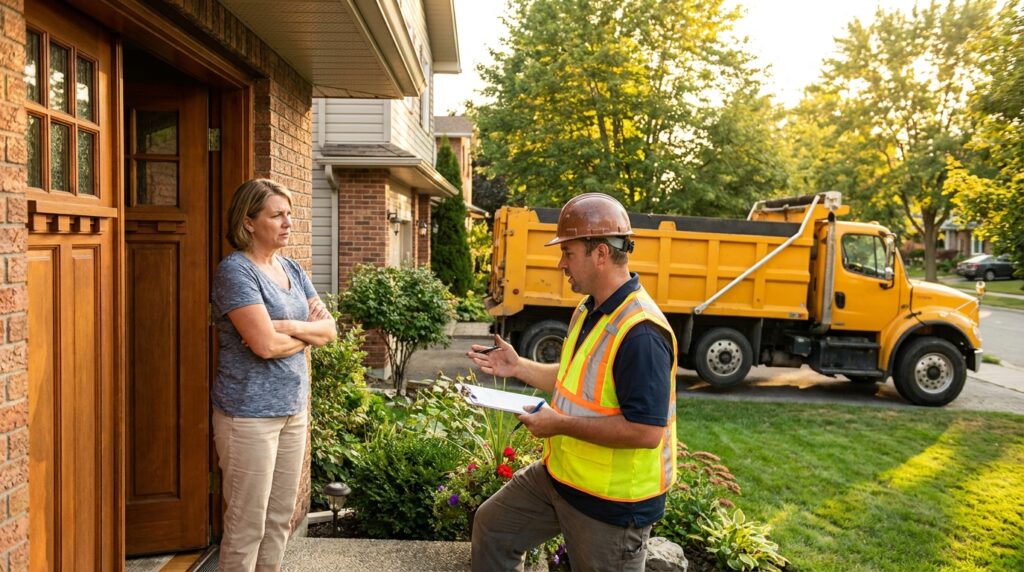
Home improvement scams are the fourth-costliest scam type the Better Business Bureau tracks — and this summer they’re everywhere. U.S. consumers reported 81,925 home improvement scams to the BBB in a single recent year, with a median loss of $1,800, and the bureau says nearly 1 in 10 Americans has experienced one. A wave of warnings hit local news across the US in mid-August, and Canadian police services have spent the season issuing alerts of their own. If you’re hiring anyone to work on your house this fall, this is the moment to slow down and check the paperwork.
Why Scammers Love Late Summer
The timing isn’t random. Late summer and early fall are when homeowners rush to book roof work, paving, gutters, and exterior repairs before the weather turns — the same crunch we covered in why mid-August is the time to book fall maintenance. Busy legitimate contractors mean longer waits, and longer waits make a stranger at the door offering to start “tomorrow, at a discount” sound reasonable.
It’s also a numbers game: with DIY fading and more homeowners hiring pros than a decade ago, there are simply more first-time buyers of contracting work who don’t yet know what a normal quote, deposit, or contract looks like.
The losses go well beyond the median. BBB Scam Tracker has logged driveway-sealing losses up to $9,200 per incident, and the FBI estimates insurers pay over $1 billion a year on fraudulent roof claims alone. In Ontario, three men took $500,000 from homeowners — mostly seniors — in a renovation scheme before being caught, and the Niagara Regional Police Service is warning residents about roofing and paving crews using “high-pressure, urgent fear tactics” this season.
The Five Red Flags Police and the BBB Keep Repeating
- A quote far below everyone else’s. The classic hook. If one bid is half the others, the difference usually comes out of your pocket later — through “surprise” extra costs mid-job or work that’s never finished.
- Door-to-door offers and “leftover materials.” The we-were-just-paving-nearby pitch is the single most reported opener, in both the US and Canada. Reputable crews don’t sell surplus asphalt at your doorstep.
- Today-only pressure. Urgency is the tool that stops you from checking references. A real contractor’s price is still valid tomorrow.
- Big upfront deposits — especially in cash. A deposit of 40% or more before work starts is a warning sign; payment by cash, wire, Zelle, or gift card is a bigger one. Normal deposits cover materials, typically 10–30%, paid by a traceable method.
- No paper. No written quote, no contract, no proof of licence or insurance, out-of-province plates, a phone number that goes nowhere. Any one of these is enough to walk away.
How to Protect Yourself in 2026
The defense hasn’t changed, but almost nobody does all of it: get two or three detailed written quotes, verify licence and insurance directly (not from a photocopy), call at least one recent reference, and tie payments to completed stages of work — never pay in full before the job is done. In the US, the FTC’s cooling-off rule also gives you three days to cancel most door-to-door sales over $25.
Platforms have become part of the answer, too — though as we noted when Angi joined Google’s Gemini, an app listing alone isn’t vetting. What matters is what the platform actually verifies. Masters’ Guild is our platform, so take this with that in mind: every pro on it is identity-verified with a government ID and a live selfie check, and payment is held and only released when the job is completed — which removes exactly the two levers (fake identity, vanished deposit) these scams depend on. If you need a roof repair pro near you this fall, that’s the kind of screening worth insisting on, whoever you hire through.
Scam losses are rising because the tactics work on rushed, stressed homeowners in a busy season. The fix costs nothing but 48 hours of patience — and it’s a lot cheaper than $1,800.