
Local service guide
Warehouse organization in Tampa: hiring and planning
For warehouse organization in Tampa, hire a crew against a written scope that identifies the stock to sort, the locations to label, the equipment operators and the person who approves disposal. Request separate charges for organizing labor, storage supplies and hauling. Arrange cardboard recycling before the reset: the City of Tampa says it does not offer commercial recycling collection and directs businesses to private companies. [1]
Define the work before requesting quotes
Choose the first area you want the crew to finish: receiving, picking shelves, returns or surplus stock. Give bidders photographs, an inventory export if you have one, and a sketch showing receiving and dispatch points. Describe a result your staff can check, such as assigning a location to each retained item or separating returns awaiting a decision.
Ask for a walkthrough before agreeing to a full reset. Identify heavy items, stock on high shelves, restricted areas and equipment access. Ask the provider to name who will move stock and operate equipment. For rack alterations or installation work, request a separate scope and resolve the technical requirements before the organizing crew starts.
Compare bids against the same deliverables. Specify whether the crew will count inventory, reconcile discrepancies, print labels, update your inventory records or sort items into locations you have chosen. Ask for proof of insurance appropriate to the proposed work and clarify responsibility for damaged inventory. Have the provider confirm warehouse equipment handling in writing.
Separate organizing costs from removal charges
Request a written price with separate entries for labor, labels, bins, equipment, transport and disposal. For hourly work, ask for crew size, billable travel, minimum booking and a spending limit that requires your approval. For a fixed price, name the zones and quantities covered, then agree how the provider will charge for additional stock or a second visit.
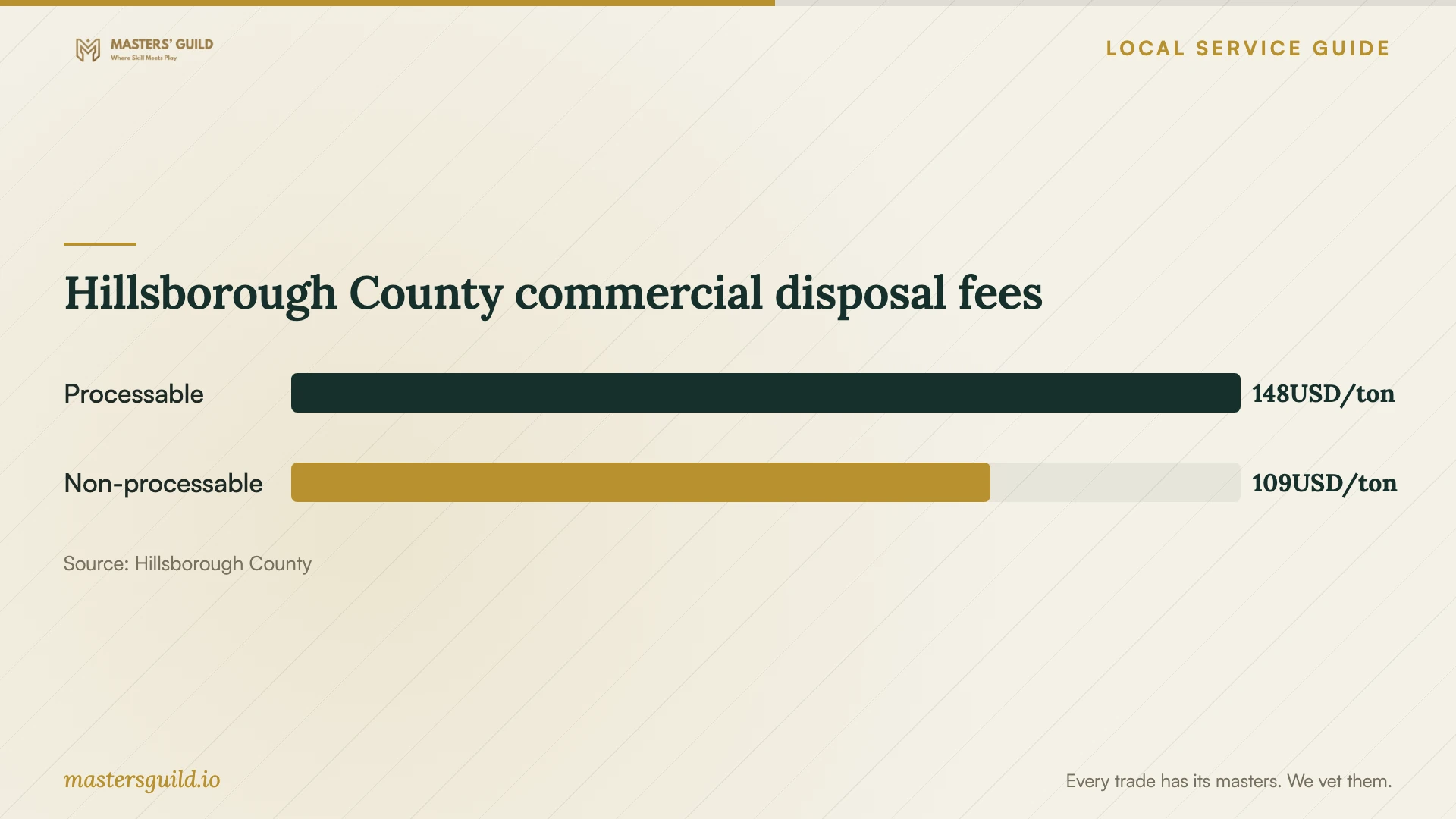
For loads going to Hillsborough County facilities, the county’s commercial rates are $148 per ton for processable waste and $109 per ton for non-processable waste, effective October 1, 2026, through September 30, 2027. The county describes processable waste as material it can process through its Resource Recovery Facility and landfill; it lists construction and demolition debris among non-processable materials. [3]
Ask the hauler to identify the receiving facility, proposed waste classification and disposal charge before comparing totals. Request a scale receipt and agree whether the provider will pass through the facility charge or add a handling fee. The published county rates cover facility disposal rather than an organizer, a truck or a complete cleanout. [3]
Arrange recycling and battery handling before sorting
The City of Tampa directs businesses to contract with a private recycling company because its Department of Solid Waste does not provide commercial recycling collection. Its recycling guidance lists clean, dry corrugated cardboard and paper among recyclable materials. Confirm your chosen collector’s preparation rules and pickup arrangements before the crew creates a recycling pile. [1]
Assign a staging space for flattened cardboard and packaging, then name who will book and supervise pickup. Ask bidders whether they include recycling transport or move material to your designated area. Include the removal date in the work order so you can check both the reorganized stock and the remaining discard piles before approving completion.
If the reset uncovers large batteries from equipment or backup power supplies, arrange recycler acceptance before removal. Hillsborough County says its facilities do not accept batteries exceeding 12 inches in both width and height and prohibits large batteries in garbage or recycling containers. The county advises contacting a dealer, manufacturer or listed recycler for fees and acceptance guidelines. [2]
Keep orders moving and check the finished work
Choose a work window around your receiving and dispatch commitments. Give the crew an area to stage stock and an approval contact who can decide what to keep, return or discard. Mark inventory that must remain available for open orders. Ask the crew to finish one agreed zone before opening another, and record location changes as the work proceeds.
Test the proposed labels with a staff member before printing the full set. Use location names that match your inventory records and distinguish stock ready for sale from returns or items awaiting inspection. Ask the provider to photograph the finished zones and deliver a location list, unresolved inventory questions and removal receipts.
Walk through the finished area with someone who receives or picks orders. Have that person locate a selection of items using the new labels. Check that the crew completed the agreed scope, recorded exceptions and obtained your approval for discarded stock. Assign a staff member to maintain locations and schedule a review after staff have used the arrangement.
Hillsborough County commercial disposal fees
Local details that affect your job
Tampa businesses need private recycling arrangements
The City of Tampa does not offer commercial recycling collection through its Department of Solid Waste. If your reset includes cardboard removal, ask the organizer whether it will contract a private collector or use your existing service. Confirm acceptance, staging and pickup before approving the job. [1]
County facilities exclude large batteries
Hillsborough County says its facilities reject batteries exceeding 12 inches in width and height. It also prohibits large batteries in garbage or recycling containers. If you find equipment or UPS batteries during sorting, contact a dealer, manufacturer or recycler for acceptance instructions and fees before including them in a removal quote. [2]
Confirm the disposal destination and classification
Hillsborough County charges commercial customers by waste category and net weight at its processing and disposal facilities. Ask your hauler to identify the destination and category in writing. These county charges apply to loads accepted at county facilities; they do not establish a City of Tampa collection charge or a warehouse organizing labor rate. [3]
Match the provider’s scope to the work
| Your situation | Scope to request | Confirm before booking |
|---|---|---|
| Retained stock needs sorting and labels | Organization and location-labeling work | Counting, record updates, supplies and completion criteria |
| Heavy stock or stock on high shelves needs moving | Organization with explicit equipment-handling responsibilities | Operators, equipment, insurance and restricted work areas |
| The reset includes cardboard recycling | Organization plus private recycling arrangements | Collector acceptance and pickup; Tampa does not offer city commercial recycling collection |
| The reset uncovers large equipment batteries | Organization plus a separate battery disposal arrangement | Recycler acceptance and fees; Hillsborough County prohibits large batteries in garbage and recycling containers |
| Discarded material will go to county facilities | Hauling with a named destination and waste category | Applicable county tipping rate, transport charge and disposal receipt |
Your hiring checklist
- Photograph each proposed work zone and list stock that must remain accessible.
- Give all bidders the same sorting, counting, labeling and inventory-update scope.
- Name the people responsible for equipment operation and disposal approval.
- Request separate labor, supplies, transport and disposal charges.
- Confirm recycling pickup and obtain acceptance instructions for unusual discards.
- Agree on a spending limit and a process for approving extra work.
- Require a location list, exception record and removal receipts at completion.
Frequently Asked Questions
How much should I budget for a warehouse reset?
Request a quote for your premises that covers sorting, labeling, equipment use and removal. The cited sources establish disposal policies and facility charges, but provide no warehouse organizing labor rate. Compare proposals with the same quantities, deliverables and approval limit. [1] [2] [3]
Can the crew use city collection for business cardboard?
The City of Tampa says it does not provide commercial recycling collection and directs businesses to private companies. Ask your collector about accepted materials and pickup arrangements before booking cardboard removal. [1]
Do county tipping fees cover the whole cleanout?
Hillsborough County lists commercial disposal fees of $148 per ton for processable waste and $109 per ton for non-processable waste. Those are facility disposal charges. Ask the provider to quote organizing labor, loading, transport and supplies as separate items. [3]
Can a hauler take large UPS batteries with general waste?
Hillsborough County prohibits large batteries in garbage and recycling containers and says its facilities reject batteries exceeding 12 inches in width and height. Contact the battery dealer, manufacturer or a recycler to confirm acceptance instructions and fees. [2]
Sources and scope
This guide combines the sources below with practical planning guidance. Figures apply to the stated geography and period; request a written quote for your property.