
Local service guide
Warehouse Organization in Syracuse, NY
Arrange Warehouse Organization in Syracuse, NY by requesting a written scope for sorting, storage locations, labels and inventory updates, with hauling priced separately. Name a staff member who can approve stock movements and disposal. Before booking removal, confirm each destination: OCRRA excludes commercial cardboard recyclables from its transfer stations but separately accepts cardboard mixed with construction and demolition debris. Ask the hauler to confirm your load classification. [1] [2]
Choose a crew for the work you need
Describe the area and the result you want. Your brief might cover sorting a receiving area, assigning shelf locations, labeling bins and placing approved stock. Separate shelving purchases, equipment operation, rack alterations and hauling so providers can quote the same scope.
Ask who leads the crew and who handles heavy or elevated stock. Request insurance documentation and a proposed work method for equipment use. If you want rack changes, ask the provider to explain its qualifications and define that work separately before you approve it.
Start with a limited area if you have not chosen a location system. Have your staff approve the labels and inventory handoff before extending the reset. Give the crew a named contact for unidentified products, damaged goods and customer-owned stock.
Prepare labels and stock decisions
Walk the space with the crew lead. Mark receiving, saleable stock, returns and a hold area for items awaiting your decision. Identify stock and records the crew must leave untouched. Keep the sorting area clear of exit routes and access to building equipment.
Choose a location convention your staff can repeat, such as aisle, bay and shelf. Approve a sample label from the position where staff will read it. If you use scanners, test the barcode with your equipment before ordering labels for the whole area.
Assign responsibility for recording stock movements. At handoff, request changed locations and unresolved items. Have a staff member who did not perform the reset find selected products using the new labels and records, then resolve any mismatches with the crew.
Confirm disposal routes before loading
OCRRA does not accept cardboard, paper or container recyclables from commercial generators at its transfer stations. Its accepted construction and demolition list separately includes cardboard mixed with that debris. Ask the hauler to confirm whether your load qualifies and name the destination for separated commercial recyclables. [1] [2]
OCRRA identifies ion or lead-acid batteries among prohibited materials and directs readers to separate guidance for other battery types. It also prohibits electronic waste, compressed gas cylinders and hazardous wastes at the transfer station. Identify these items during the walkthrough; confirm other battery types and uncertain materials with OCRRA before dispatch. [2]
OCRRA lists untreated wood, including pallets, as acceptable construction and demolition material and limits wood to four feet in any dimension. Have the hauler confirm acceptance, size and load classification before quoting disposal. Ask it to explain the classification of a mixed warehouse load rather than assuming a construction-debris rate. [2]
Compare the full quote and completion terms
Request separate prices for labor, labels and containers, equipment, transport and disposal. Clarify whether labor means worker-hours, crew-hours or a fixed scope. Agree on a spending limit and require approval before extra purchases, work or disposal trips.
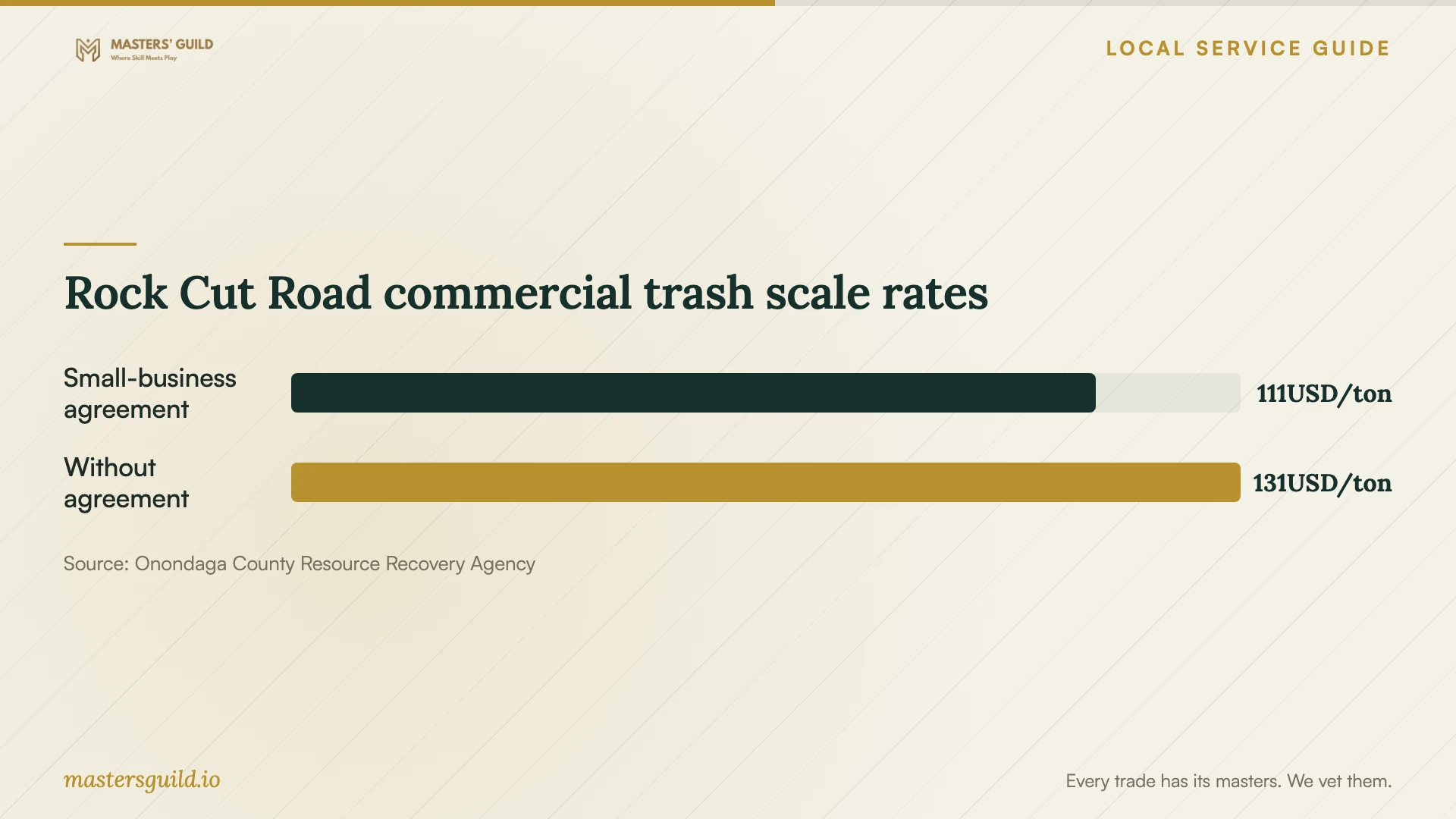
OCRRA's published 2026 commercial trash scale fees at Rock Cut Road are $111 per ton for small-business users with an OCRRA agreement and $131 per ton for users without an agreement. It lists a $30 minimum scale charge. Use these facility fees to question disposal line items; obtain separate quotes for organization and transport. [2]
OCRRA lists a $25 surcharge per trip or use for small business users without an agreement or with an expired agreement. It also lists a $25 surcharge per delivery when proof of insurance is not on file at renewal. Ask the hauler which charges apply and request the disposal receipt. [3]
Write down completion criteria: approved stock locations, readable labels, updated records, authorized waste removal and unresolved items. Agree on how staff will handle deliveries during the reset. Review the finished area with the crew lead before signing off.
Rock Cut Road commercial trash scale rates
Local details that affect your job
Distinguish commercial recycling from mixed debris
For a Syracuse warehouse, confirm the cardboard route before approving hauling. OCRRA excludes commercial cardboard, paper and container recyclables from transfer-station recycling access, while its construction and demolition list accepts cardboard mixed with that debris. Ask the hauler to confirm the actual load classification and acceptance rather than treating these as interchangeable disposal routes. [1] [2]
Book the correct facility and business schedule
OCRRA reports that Ley Creek in Liverpool is closed until further notice. Commercial customers use Rock Cut Road at 5808 Rock Cut Road in Jamesville during separate weekday business hours, including contractors and hired haulers. OCRRA lists winter hours beginning November 23, 2026. Confirm the schedule for your vehicle and unloading method before booking removal. [2]
Check agreement and inbound-scale responsibilities
OCRRA advises commercial customers who deliver materials to Rock Cut Road frequently to obtain a Small Business User Agreement. Drivers must identify their permit number and whether they carry construction and demolition debris or municipal solid waste at the inbound scale. Ask the hauler who handles that paperwork and which agreement-related surcharges it includes in your quote. [3]
Choose the organization and removal scope
| Your situation | Scope to request | Check before booking |
|---|---|---|
| Stock stays on site | Sorting, labels and inventory handoff | Name the staff member who approves stock movements. |
| Commercial cardboard needs removal | Confirm recycling or mixed-debris classification | OCRRA excludes commercial recyclables but accepts cardboard mixed with construction and demolition debris. |
| Accepted commercial trash needs removal | Hauling with itemized disposal | Confirm Rock Cut Road business access, scale charges and agreement status. |
| Ion or lead-acid batteries, electronics or compressed gas cylinders appear | Separate destination planning | OCRRA prohibits these items at the transfer station; confirm other battery types with OCRRA. |
| The job includes elevated stock or rack changes | Separate equipment and work-method proposal | Review provider qualifications and approval responsibilities. |
Your hiring checklist
- Photograph the work area and define the reset boundaries.
- Mark untouched stock and name the disposal approver.
- Approve a sample label and test it with staff and scanners.
- Assign responsibility for updating inventory records.
- Review equipment use and work around operating staff.
- Obtain itemized labor, supplies, transport and disposal prices.
- Confirm waste destinations, load classifications and acceptance before loading.
- Review locations, unresolved items and disposal receipts at handoff.
Frequently Asked Questions
How much should I budget for warehouse organization?
Request a quote for your work areas and deliverables. The published local fees here cover OCRRA disposal, not organization labor. Compare labor, equipment, supplies, transport and disposal as separate line items, and agree on who approves added costs. [2]
Can the crew take warehouse cardboard to OCRRA?
OCRRA excludes cardboard recyclables from commercial generators at its transfer stations. It separately accepts cardboard mixed with construction and demolition debris. Have the hauler confirm your load classification and identify a destination for separated commercial recyclables before loading. [1] [2]
Can a hired hauler use resident drop-off hours?
OCRRA places contractors and hired haulers under its business schedule. Resident access covers household materials delivered by residents, excluding haulers and contractors. Confirm the business hours for the vehicle and unloading method before dispatch. [2]
How do I keep useful stock out of the removal load?
Create a hold area for uncertain items. Require a named staff member to approve disposal and inspect the removal pile before loading. Ask the crew to record unresolved items and stock-location changes so your staff can complete the handoff.
Sources and scope
This guide combines the sources below with practical planning guidance. Figures apply to the stated geography and period; request a written quote for your property.