
Local service guide
HVAC Services in St. John’s: Hiring and Planning
For HVAC Services in St. John’s, arrange a home assessment and get a written installation scope covering equipment, electrical work, outdoor-unit placement and backup heating. takeCHARGE recommends a certified refrigeration and air-conditioning mechanic and a registered electrical contractor working under permit. Check the City’s residential placement rules and any program pre-approval before accepting the quote. [1] [2] [3] [4]
Describe the job before requesting quotes
Tell the contractor whether you need a repair, routine service, improved room comfort or a heating-system replacement. Send equipment model numbers, photographs and a description of the symptoms. Note which rooms feel cold, when the problem started and whether you still have a working heat source. Ask for the diagnostic charge and the approval process for additional work before booking.
For a heat-pump installation, arrange a home visit. takeCHARGE says the installer should assess the home’s size, layout, insulation and air tightness to determine sizing and placement. Ask how the proposed equipment will serve rooms behind closed doors and which rooms will continue to depend on existing heat. [3]
Verify the people doing the installation
Use takeCHARGE’s installer list to check named journeyperson Refrigeration and Air Conditioning Mechanics serving St. John’s or the Avalon region. Confirm who will perform your installation and whose credential you have checked. The utilities verify the listed credentials but do not endorse an individual or company. [2]
Ask who will handle the electrical connection and obtain the electrical permit. takeCHARGE recommends a registered electrical contractor working under permit alongside the certified refrigeration mechanic. Request proof of insurance, written warranty terms and contact details for follow-up service. Keep those documents with the quote. [2] [3]
Compare coverage, backup heat and the full scope
A ductless mini-split serves one room or zone; a multi-split uses multiple indoor units to serve several zones. takeCHARGE says ductless systems require a separate backup heat source. For a central ducted proposal, ask the installer to explain the built-in backup heat, its controls and the condition of the existing ducts before agreeing to remove equipment. [3]
Compare quotes using the same room coverage and equipment scope. Ask each contractor to identify model numbers, indoor-unit locations, electrical work, mounting, drainage, duct alterations, removal of old equipment and exclusions. Request a total payable amount with taxes identified, a payment schedule and written approval for changes. Ask contractors to explain any differences between their proposals.
takeCHARGE describes heat pumps as an investment starting at about $3,000 for a mini-split and reaching $20,000 or more for a central ducted system. These are broad Newfoundland and Labrador guidance figures, not a St. John’s price survey or a quote for your home. The page does not specify a complete inclusion or tax breakdown. Set your budget from a written quote following a home visit. [3]
Plan for winter operation and service
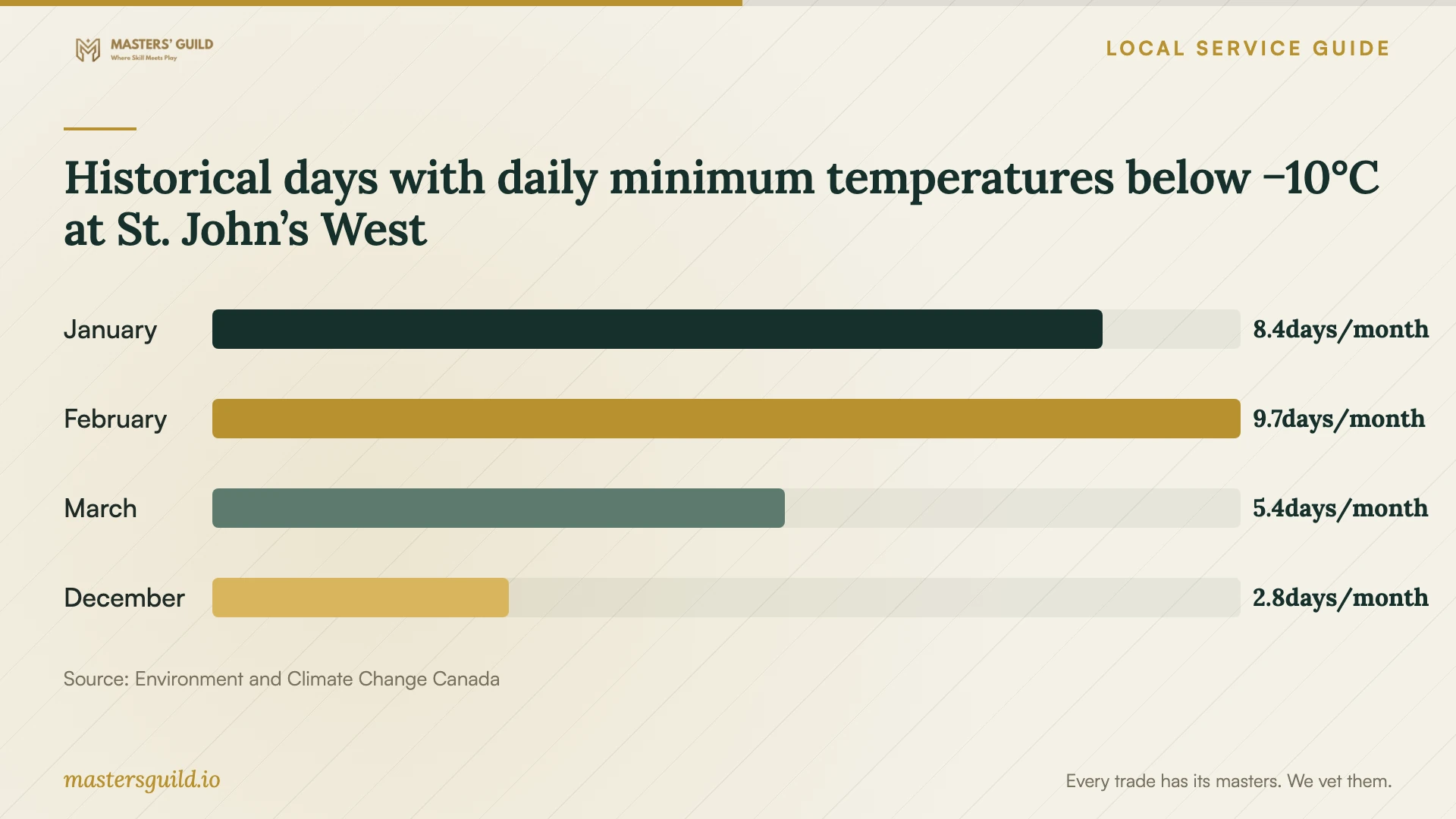
Ask for the proposed model’s heating performance at low outdoor temperatures and an explanation of when backup heat should operate. takeCHARGE notes that cold-weather performance varies between models. The climate chart shows the historical frequency of days with minimum temperatures below −10°C at St. John’s West; ask your installer to explain how the proposed system and backup heat will meet your home’s needs. [3] [5]
Discuss snow clearance, access for service and where water from the outdoor unit will drain. takeCHARGE advises clearing snow from the outside unit and cleaning or changing filters. Follow the equipment manual for homeowner maintenance, and ask a certified installer which tasks require a service visit. [3]
Keep a service record for existing heating equipment as well as the new heat pump. Section 36.12 of the City’s residential property standards requires annual inspection by qualified service personnel of chimneys, fuel-burning appliances, fireplaces and heating equipment used or intended for use in a dwelling. Ask for a dated report you can retain. [1]
Historical days with daily minimum temperatures below −10°C at St. John’s West
Local details that affect your job
Confirm the outdoor location before accepting the layout
The City’s online residential bylaw includes July 14, 2026 amendments. Section 36.1 sets a side- or rear-yard location and at least 2.4 metres from the side lot line. Section 36.2 provides a side-yard exception for a ductless heat pump serving no more than two indoor coils: no part may extend beyond the front building line, the equipment may not restrict the required side yard by more than 50%, and placement must meet manufacturer requirements. Other provisions address discretionary permissions and heritage properties. Ask the contractor for a location drawing, then ask the City to confirm which provision applies. The City identifies this online copy as unofficial. [1]
Resolve drainage above another person’s access area
Section 36.4 addresses residential equipment on balconies, decks, platforms or mounts above areas that another person uses. Where discharge could pass through, between or off the mounting surface onto that area, the bylaw requires a drainage collection and discharge system. If your proposed unit sits above a neighbour’s patio or shared walkway, ask the contractor to show the collection method and discharge destination in the quote. [1]
Get program approval before arranging eligible work
On October 10, 2026, the province-wide TakeCharge Greener Homes Program page stated that it was accepting applications for a limited number of income-eligible no-cost upgrades. The process starts with an application, assessment approval, an energy assessment, participating-contractor quotes and project approval before work. Only projects completed after October 5, 2026 are eligible, subject to pre-approval. Heat-pump support covers one eligible single-head mini-split per property; households that already have a heat pump cannot receive the heat-pump rebate. Confirm eligibility, available support and approval with your utility before authorizing installation. [4]
Choose the next step for your heating or ventilation job
| Your situation | Next step | What to clarify |
|---|---|---|
| Existing equipment has a fault | Request a diagnostic visit before deciding on replacement. | Ask for findings, a repair scope and approval before extra charges. |
| You want heat in one main area | Request a mini-split assessment. | Confirm the room or zone it will serve and the separate backup heat source. |
| You want several rooms served | Compare multi-split and central ducted proposals after a home visit. | Identify room coverage, duct requirements and backup heating. |
| The outdoor unit would drain onto an area another person uses | Request a drainage collection and discharge plan. | Confirm how the proposal meets the City’s residential drainage provision. |
| You may qualify for income-based assistance | Apply to TakeCharge before arranging eligible installation. | Confirm participating contractors, assessment steps and project pre-approval. |
Your hiring checklist
- Record equipment model numbers, symptoms and rooms needing attention.
- Ask for the diagnostic charge and approval terms before booking a repair visit.
- Arrange a home assessment before accepting an installation proposal.
- Check the named refrigeration mechanic’s credential and identify the electrical contractor.
- Get a location drawing with mounting, drainage and service access.
- Confirm program eligibility and obtain required approval before eligible work.
- Compare written scopes, exclusions, taxes and payment schedules.
- Collect operating instructions, warranty documents and service reports.
Frequently Asked Questions
Does takeCHARGE’s installer list guarantee good workmanship?
No. takeCHARGE verifies the listed individuals’ journeyperson credentials, but the utilities do not endorse a particular company or installer. Check the named person, insurance, written scope, warranty and follow-up arrangements before hiring. [2]
Can I remove my baseboard heaters after adding a mini-split?
Keep a separate backup heating source when adding a ductless system. takeCHARGE explains that mini- and multi-splits serve areas around their indoor units and require backup heat for cold conditions. Ask the installer to document coverage and thermostat coordination before changing existing heat. [3]
Can the installer put the outdoor unit wherever it fits?
The City’s residential bylaw sets placement requirements, exceptions, drainage provisions and heritage obligations. Ask the contractor to identify the provision supporting the proposed location, and confirm any required permission with the City before work. [1]
Can I install first and apply for Greener Homes support afterward?
Follow the program’s approval sequence before installation. TakeCharge requires assessment and project pre-approval, participating contractors and eligible equipment. Completion after October 5, 2026 alone does not establish eligibility. [4]
Sources and scope
This guide combines the sources below with practical planning guidance. Figures apply to the stated geography and period; request a written quote for your property.