
Local service guide
HVAC Services in Portland, OR: Hiring and Permits
To arrange HVAC Services in Portland, OR, choose a contractor with an appropriate Oregon CCB license and request a written scope covering diagnosis, equipment, permits and inspections. Portland requires residential mechanical permits for heating and cooling work and electrical permits for most mechanical equipment projects. Before approving a replacement, settle the outdoor-unit location and confirm any incentive eligibility. [1] [2]
Start with a diagnosis and a defined scope
For a system that stops heating, cools unevenly or makes an unfamiliar sound, book a diagnostic visit and ask what the visit fee includes. Describe the symptoms, when they began and which rooms you notice them in. Send photographs of the equipment labels and thermostat, plus any service records you have. Ask the technician to explain the fault and give you a repair proposal before you authorize additional work.
For a planned replacement, ask the contractor to assess your rooms, existing ducts, equipment access and proposed outdoor location. Request an explanation of how they selected the equipment size. To compare a furnace, ducted heat pump and ductless system, ask each bidder to address the same comfort goals and identify proposed changes to ducts, wiring or gas piping.
Check the contractor and compare complete quotes
Oregon requires a license for compensated construction work involving improvements to real property and lists heating and air conditioning as examples. Contractors must carry an endorsement appropriate to the structures they work on. Ask for the business’s legal name and CCB number, check its license status through the CCB, and request evidence of current liability insurance. [2]
Compare written proposals using equipment model numbers, included labor, removal of old equipment, duct changes, electrical work, permit costs and warranty terms. Ask who handles work outside the HVAC contractor’s scope. For a repair, request the diagnosis, proposed parts and the charge for returning if the same symptom persists. For replacement, ask for separate equipment and workmanship warranty details.
Set a payment schedule and agree on how the contractor will price changes before signing. Ask for the full project price and any proposed incentive as separate figures. Keep financing terms separate from the installation scope so you can compare the work itself. Request a written explanation of any exclusions or allowances that could change the final bill.
Plan permits and inspection access
Portland’s residential mechanical guidance covers one- and two-family homes, townhouses and ADUs. The city lists furnaces, heat pumps, air-conditioning condensing units, mini-splits, ductwork and gas piping among projects requiring a mechanical permit. A mechanical permit can remain necessary even when you do not need a building permit. Most mechanical equipment projects also require an electrical permit. [1]
Ask the installer to identify the permits for your scope and put the application responsibility in writing. Portland offers online mechanical applications through DevHub. For permit questions, call Residential Inspections at 503-823-7388. If your property falls outside the residential categories covered by this guidance, confirm the applicable process with the city before using it as your project plan. [1]
For new ductwork and gas piping, schedule the rough-in inspection before finishing the walls; the city tells applicants to leave the work uncovered until approval. For the final inspection, the city requires a fully installed, connected and operational system. Portland requires inspection code 699, Final Mechanical Permit, to approve and close the permit. Ask for the final result and retain it with your invoice. [1]
Choose outdoor placement before equipment
Have the contractor show you the proposed condenser or heat-pump location on a site sketch. Portland prohibits outdoor mechanical equipment in the required front zoning setback. In most residential zones, the city allows it within side or rear setbacks. Equipment within a setback must meet a five-foot height limit and screening requirements using walls, fences or vegetation. Confirm your property’s zoning requirements before accepting that location. [1]
Discuss nearby bedroom windows, neighboring homes, vibration control and access for future service. Ask the installer to explain the proposed equipment’s sound information and how they will assess compliance at the chosen location. Portland’s Noise Program includes HVAC equipment among its enforcement concerns. You can contact the program at 503-823-7350. [3]
Check incentives and year-round comfort
Energy Trust’s residential incentive application lists Oregon single-family and manufactured homes served by participating utilities, including Portland General Electric, Pacific Power and NW Natural. It instructs owners of individual condominium units, townhomes, duplexes, triplexes and fourplexes in Oregon to review multifamily eligibility details. Check your utility, property category, existing heating system and proposed equipment before relying on an incentive. [4]
The application describes replacement conditions: ductless heat pumps must replace electric resistance heat, while the listed heat-pump category must replace an electric furnace. Homeowner-submitted applications require a contractor-signed 350CC Consent Form and supporting documents such as the invoice. Submit within 60 days of completion. Ask who will prepare the paperwork and confirm the applicable equipment requirements and incentive amount before committing. [4]
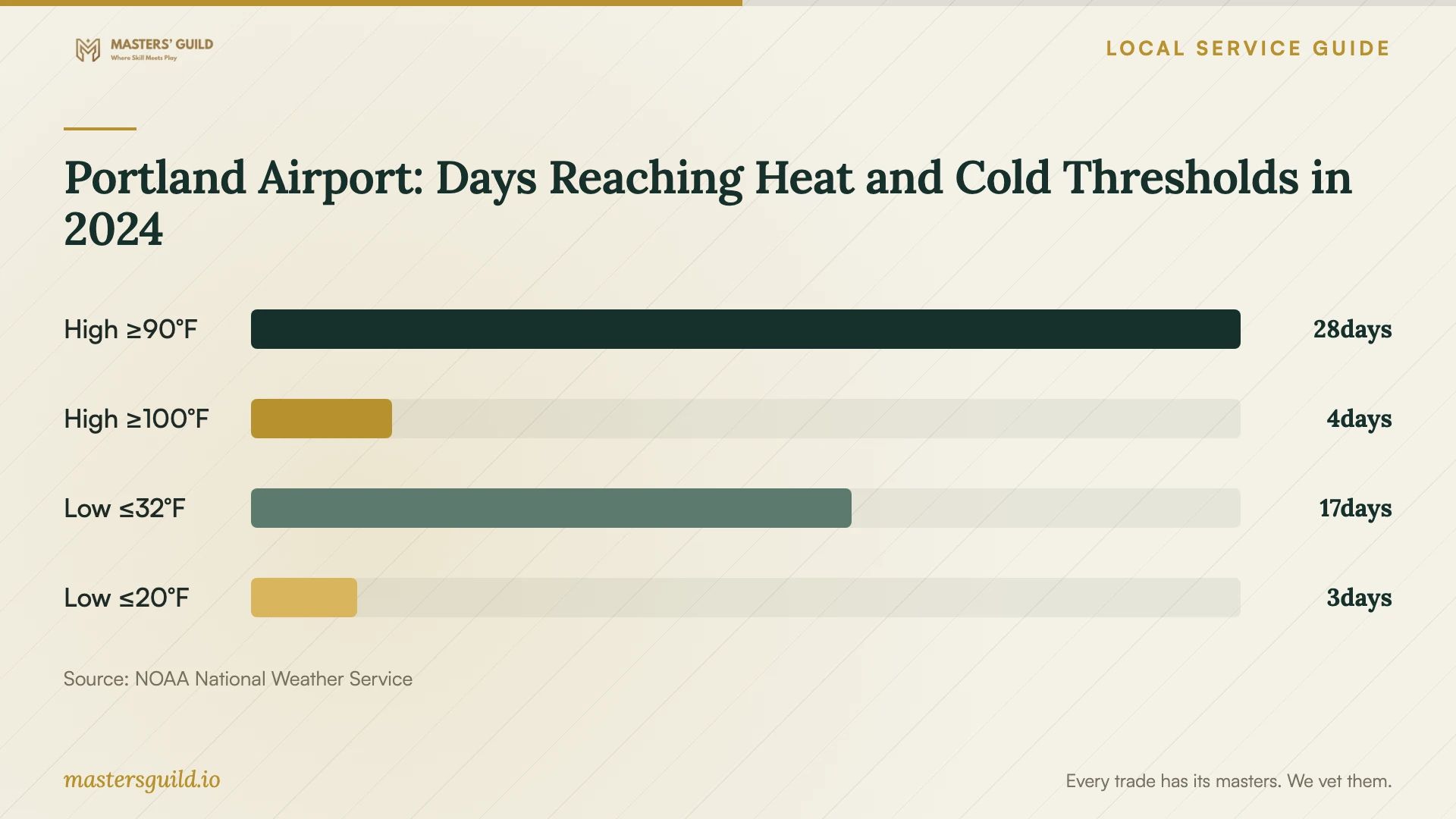
Discuss heating and cooling performance together. At Portland International Airport in 2024, observers recorded 28 days with maximum temperatures of at least 90°F and 17 days with minimum temperatures at or below 32°F. Use these historical observations to start a discussion about comfort in both seasons. They do not determine the equipment size or performance your home needs. [5]
Portland Airport: Days Reaching Heat and Cold Thresholds in 2024
Local details that affect your job
Confirm permit closure after the final inspection
Portland requires the 699 Final Mechanical Permit inspection before approving and closing a residential mechanical permit. Ask your installer to schedule it, provide inspection access and resolve any corrections. Use DevHub to review inspection results, and request confirmation of permit closure along with the installation invoice. [1]
Check setbacks before accepting a condenser location
Portland bars outdoor mechanical equipment from the required front zoning setback. Its side- and rear-setback allowances in most residential zones include height and screening conditions. If your proposed location depends on those allowances, confirm them with General Inquiries at 503-823-7300 before signing. [1]
Match incentive paperwork to your property
Energy Trust instructs owners of individual Oregon condominium units, townhomes, duplexes, triplexes and fourplexes to review multifamily eligibility details. For eligible homeowner-submitted applications, arrange the contractor-signed 350CC Consent Form and invoice before the 60-day submission deadline. Ask the contractor to identify the requirements that apply to your property and equipment. [4]
Choose the next step for your project
| Your situation | Next step | Ask before authorizing work |
|---|---|---|
| Existing system has a fault | Book a diagnostic visit | What does the visit cost, and what repair do you recommend? |
| You plan a furnace or heat-pump replacement | Request a site assessment and written scope | Who handles mechanical permits, any electrical permit and final inspections? |
| You need an outdoor unit near a property boundary | Confirm placement before choosing equipment | How will you check the applicable setback, screening and noise requirements? |
| You hope to claim an Energy Trust incentive | Confirm utility, property and replacement eligibility | Who supplies the invoice and contractor-signed consent form? |
| You own an individual Oregon townhome or condominium unit | Review Energy Trust’s multifamily eligibility details | Which eligibility requirements apply to this property and proposed equipment? |
Your hiring checklist
- Record symptoms, affected rooms and equipment model numbers before requesting service.
- Ask for the diagnostic fee and the approval process for additional work.
- Request the contractor’s CCB number, then check license status, property endorsement and insurance.
- Compare bids using the same equipment, ductwork, electrical and removal scope.
- Ask for a site sketch showing the outdoor unit, proposed screening and service access.
- Assign permit applications, inspections and corrections in the contract.
- Ask the incentive program to confirm eligibility and agree on who prepares supporting documents.
- Request the final inspection result, permit-closure confirmation, invoice, warranties and operating instructions.
Frequently Asked Questions
Do I need a permit to replace a heat pump or furnace?
Portland lists furnaces and heat pumps among residential projects requiring a mechanical permit. Most mechanical equipment projects also need an electrical permit. Ask the contractor to identify the permits for your exact scope and include their responsibility in the agreement. [1]
Can I put an outdoor unit in my side yard?
Portland allows outdoor mechanical equipment within side or rear setbacks in most residential zones, with height and screening conditions. Ask the contractor to check your property’s zoning and proposed location. The city prohibits placement within the required front zoning setback. [1]
Does every heat-pump installation qualify for an incentive?
Confirm eligibility before signing. Energy Trust’s application distinguishes utility service, property type, equipment requirements and the heating system you replace. It requires supporting documents and submission within 60 days of completed work. Ask the program to confirm the amount and applicable conditions. [4]
How should I compare repair and replacement proposals?
Ask the technician to explain the fault, repair scope and warranty. Request a replacement proposal covering equipment, installation changes, permits and removal. Compare the full scope against your comfort goals and budget, and ask each contractor to explain the assumptions behind the recommendation.
Sources and scope
This guide combines the sources below with practical planning guidance. Figures apply to the stated geography and period; request a written quote for your property.