
Local service guide
Warehouse Organization in Nashville, TN
Arrange Warehouse Organization in Nashville by hiring a crew for a defined inventory zone, agreeing on labeling and stock-record updates, and separating sorting from racking alterations or equipment work. Before booking, check storage-related Fire Marshal requirements and name a commercial disposal destination. Metro convenience centers reject commercial waste, so household drop-off arrangements cannot cover your warehouse cleanout. [2] [3]
Define the reset before requesting offers
Give each prospective organizer the same brief: the storage area, inventory categories, photographs, receiving schedule, and the problem you want to solve. Choose a concrete result, such as labeled pick locations, a separated returns area, or a reconciled stock-location list. Ask the crew to explain how it will deliver that result without disrupting orders.
Mark the boundaries of the job. Include sorting, counting, labeling, and placement in existing approved storage locations if those are your needs. Identify racking changes, electrical work, fire-system changes, and waste removal as separate tasks for review. Do not give a sorting crew open-ended authority to alter the building or discard inventory.
Assign one employee to approve stock movements and disposal. Prepare keep, return, review, and discard lists before the crew arrives. Ask for a location map and a record of unresolved items at handover so your staff can continue the system after the organizer leaves.
Check storage approvals before setting the date
Nashville's Fire Marshal lists separate operational-permit categories for high-piled storage, miscellaneous combustible storage, aerosols, and hazardous materials. The high-piled category covers an area exceeding 500 square feet that qualifies as high-piled storage. That area threshold alone does not establish whether your shelves qualify; ask the office to review your goods and proposed layout. [3]
The operational-permit page warns that officials are updating its table following adoption of a newer Fire Code edition. Confirm the applicable requirements and fee before authorizing the layout. The Fire Marshal FAQ says most operational permits require an inspection and requires applications at least 15 business days before the event or operation starts. [3] [4]
If the project includes construction, Metro's commercial process directs applicants to a building permit. If the business type changes, it directs applicants to a use and occupancy permit. Send the proposed scope to Codes rather than assuming the organizer's quote includes approvals. Ask who will submit documents, arrange inspections, and keep the approved plans on site. [1] [4]
Compare crew capability and the full quote
Ask providers to describe their experience with your inventory type, stock records, and warehouse equipment. Request insurance documentation for the proposed work and identify who will supervise the crew. Have them explain how they will separate workers on foot from equipment movements and handle heavy or elevated stock.
TOSHA's warehouse-safety training covers powered industrial trucks, material handling, lifting, hazard communication, walking-working surfaces, and fire protection and evacuation. Use those subjects to structure your hiring questions. The seminar description is a training resource; it does not establish a provider's qualifications or authorize that provider to operate your equipment. [5]
Request an itemized quote with crew size, working hours, minimum charges, supplies, equipment, hauling, and exclusions. For hourly work, set a spending limit and require approval before the crew exceeds it. For a fixed quote, specify the completed zones and handover documents. Compare offers against the same scope rather than choosing by the headline amount.
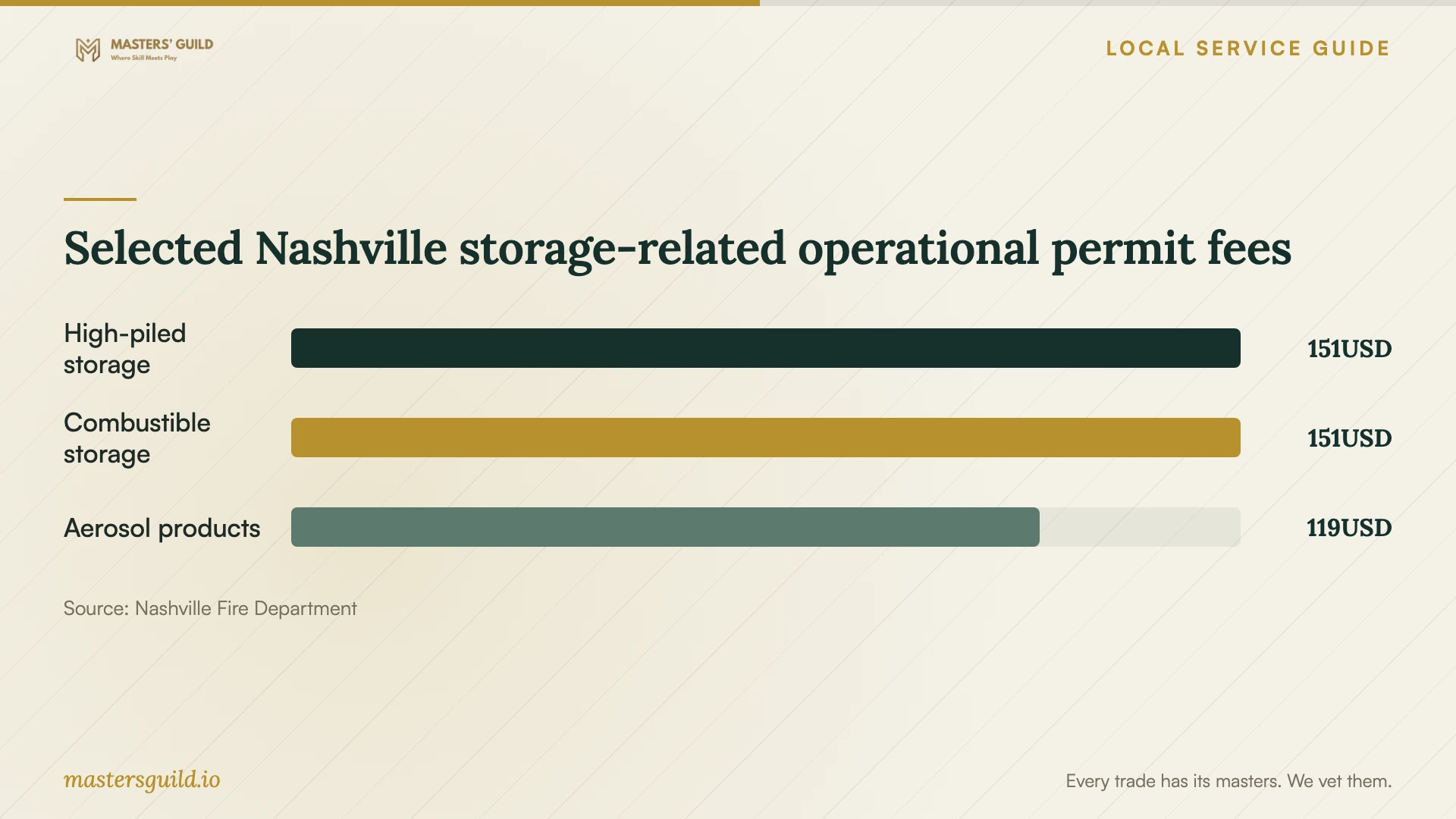
The sources used here do not establish a Nashville warehouse-organizing labor rate. The fee chart covers selected Fire Marshal operational permits only. Ask each provider for an on-site or photograph-based assessment, and keep permit charges separate from labor and disposal costs. [3]
Arrange disposal and protect daily operations
Metro convenience centers serve residential disposal needs. They reject commercial waste and waste brought in commercial vehicles, including vehicles with commercial advertising or commercial tags. They also list pallets as unacceptable materials. Require your hauler to name a destination that accepts the actual business materials before including removal in the contract. [2]
Ask for separate handling plans for packaging, pallets, electronics, and any chemicals. Require disposal receipts where available, and tell the crew who must approve rejected or uncertain materials. Do not use the city's residential convenience-center fee table to budget a business cleanout. [2]
Choose a pilot zone before committing to the whole warehouse. Agree on a temporary receiving area, a protected order-picking route, and a pause procedure if the crew encounters damaged stock or an uncertain storage condition. Walk the finished zone with your staff, test the labels against the stock records, and approve the next zone after correcting problems.
Selected Nashville storage-related operational permit fees
Local details that affect your job
Allow time for operational-permit review
The Nashville Fire Marshal FAQ requires operational-permit applications at least 15 business days before the operation starts and says applications inside that window will be denied. If your reset introduces a regulated storage operation, confirm permit responsibility before booking a start date. Most operational permits require inspection. [4]
Choose a commercial disposal route
Davidson County convenience centers reject commercial waste and commercial vehicles, and their excluded-material list includes pallets. Ask the organizer to identify an accepting commercial facility or recycling outlet and include hauling terms in the quote. [2]
Ask Codes about changes beyond sorting
Metro distinguishes construction requiring a building-permit application from a change in business type requiring a use and occupancy permit. For scope questions, contact the Zoning Help Desk at 615-862-6510 with the property address and proposed work. [1]
Choose the scope and next step
| Proposed work | Who to involve | Before booking |
|---|---|---|
| Sort and label stock in existing locations | Organizer and your inventory lead | Agree on zones, disposal authority, and stock-record handover. |
| Create or expand high-piled storage | Fire Marshal and a provider suited to the proposed storage work | Confirm whether the high-piled storage permit category applies; Metro lists areas exceeding 500 square feet. |
| Alter the building or change the business type | Metro Codes and the relevant project professionals | Confirm the building-permit or use and occupancy process. |
| Remove business waste or pallets | Commercial hauler or appropriate recycler | Name an accepting destination; Metro convenience centers reject commercial waste and pallets. |
Your hiring checklist
- Photograph the target zone and list inventory categories, equipment, and unresolved stock.
- Define the finished layout, label format, and required stock-record updates.
- Identify who may approve disposal, stock movements, and additional spending.
- Confirm applicable storage approvals with the Fire Marshal before setting the start date.
- Request crew supervision details, insurance documentation, and equipment responsibilities.
- Compare itemized offers that cover the same zone and deliverables.
- Name an accepting commercial disposal destination in the hauling agreement.
- Inspect a pilot zone and test its labels before approving the remaining work.
Frequently Asked Questions
Can the organizer take our waste to a Metro convenience center?
Metro convenience centers reject commercial waste and commercial vehicles. They also exclude pallets. Require a commercial disposal or recycling destination suited to your materials, with hauling and disposal charges identified in the quote. [2]
Does reorganizing shelves require a permit?
Describe the actual changes to Codes and the Fire Marshal before deciding. Metro lists storage-related operational permits, including high-piled storage areas exceeding 500 square feet, and directs construction through its building-permit process. Do not treat the area threshold as a complete definition of high-piled storage. [1] [3]
How much notice should I allow for an operational permit?
The Fire Marshal requires applications at least 15 business days before the operation starts and says late applications will be denied. Most operational permits require inspection. Confirm the sequence with the office before committing the crew to a date. [4]
What should the organizer leave at handover?
Request a location map, a label convention, updated stock-location records, and a list of items awaiting decisions. Walk the area with the crew and your inventory lead. Include these deliverables in the quote so you can check completion against the agreed work.
Sources and scope
This guide combines the sources below with practical planning guidance. Figures apply to the stated geography and period; request a written quote for your property.