
Local service guide
Warehouse Organization in Minneapolis, MN
Arrange Warehouse Organization in Minneapolis by asking a provider with commercial inventory experience to quote a defined storage zone, stock reconciliation, labels and staff handoff. Separate sorting from rack alterations, equipment operation and chemical disposal in the written scope. Before booking a cleanout, review hazardous-material storage and hazardous-waste obligations, then confirm permits for any street container. [1] [2] [4]
Define the reset before asking for quotes
Choose a work area you can describe and photograph: a receiving zone, returns area, parts room or group of storage bays. Give bidders the inventory list, approximate carton and pallet counts, operating hours and access arrangements. Identify who can approve disposal and who can resolve an unidentified item.
Request a written scope covering sorting, proposed locations, label installation, stock-record updates and cleanup. Ask the provider to explain their experience with commercial inventory and how they will coordinate with your staff. Request insurance documentation and name the person who will supervise the crew.
List rack installation or alteration, access to high shelves, forklift work and chemical handling as separate tasks for review. Ask who will perform each task, what equipment they will use and which approvals they will confirm. Resolve those questions before the sorting crew starts.
Compare complete quotes and control downtime
Ask bidders to separate assessment, labor, labels, storage products, equipment, hauling and follow-up visits. For an hourly quote, confirm whether the rate covers one worker or the whole crew, the minimum booking and the spending limit that requires your approval. For a fixed quote, identify exclusions and the process for changes.
Obtain a quote for your commercial site. Ask the provider to walk the space before committing to a schedule or total. Include the cost of updating inventory records and moving stock back into service, so you can compare the same completed job across bids.
Agree on the areas that must remain available for receiving, picking and dispatch. Start with a trial zone to test the proposed labels and stock-location method. Define completion as an agreed layout, reconciled records and a staff walkthrough, with unresolved items on a separate exception list.
Review chemicals before approving disposal
Minneapolis requires a permit to store, use or handle hazardous materials and requires annual renewal. The City's list includes aerosols, compressed gases, flammable and combustible liquids, corrosives and stationary battery systems. The City directs permit holders to update their permit when material types or quantities change. [2]
Hennepin County distinguishes materials you can and will use from materials you intend to discard. The County says businesses that produce hazardous waste must obtain a license, and anyone producing or managing waste must evaluate whether it is hazardous. Review proposed chemical disposal before approving a dumpster load. [4]
Prepare separate lists for retained products, proposed disposal and unidentified containers. Assign a staff member to resolve unidentified items and ask the provider to exclude them from general hauling until you approve a handling plan. Give your waste specialist the available product information and request disposal documentation in the quote.
Test the layout with the people who use it
Ask staff to demonstrate receiving, picking and returns before you approve new locations. Discuss item weight, reach, carrying distance and the equipment used for each task. Request an ergonomics review when you want help assessing repetitive handling or awkward access.
Minnesota DLI identifies warehouse distribution center employers with 100 or more employees as covered by the state's ergonomics statute. Its Workplace Safety Consultation service provides businesses with ergonomics assistance. Contact that service for help evaluating handling tasks before buying storage equipment. [3]
At handoff, have staff locate sample items, process a return and identify the overflow area. Request a location map and label convention that your staff can maintain. Assign responsibility for updating locations after the crew leaves, and agree on how to report missing stock or damaged goods.
Hennepin County hazardous-waste base fees for VSQGs
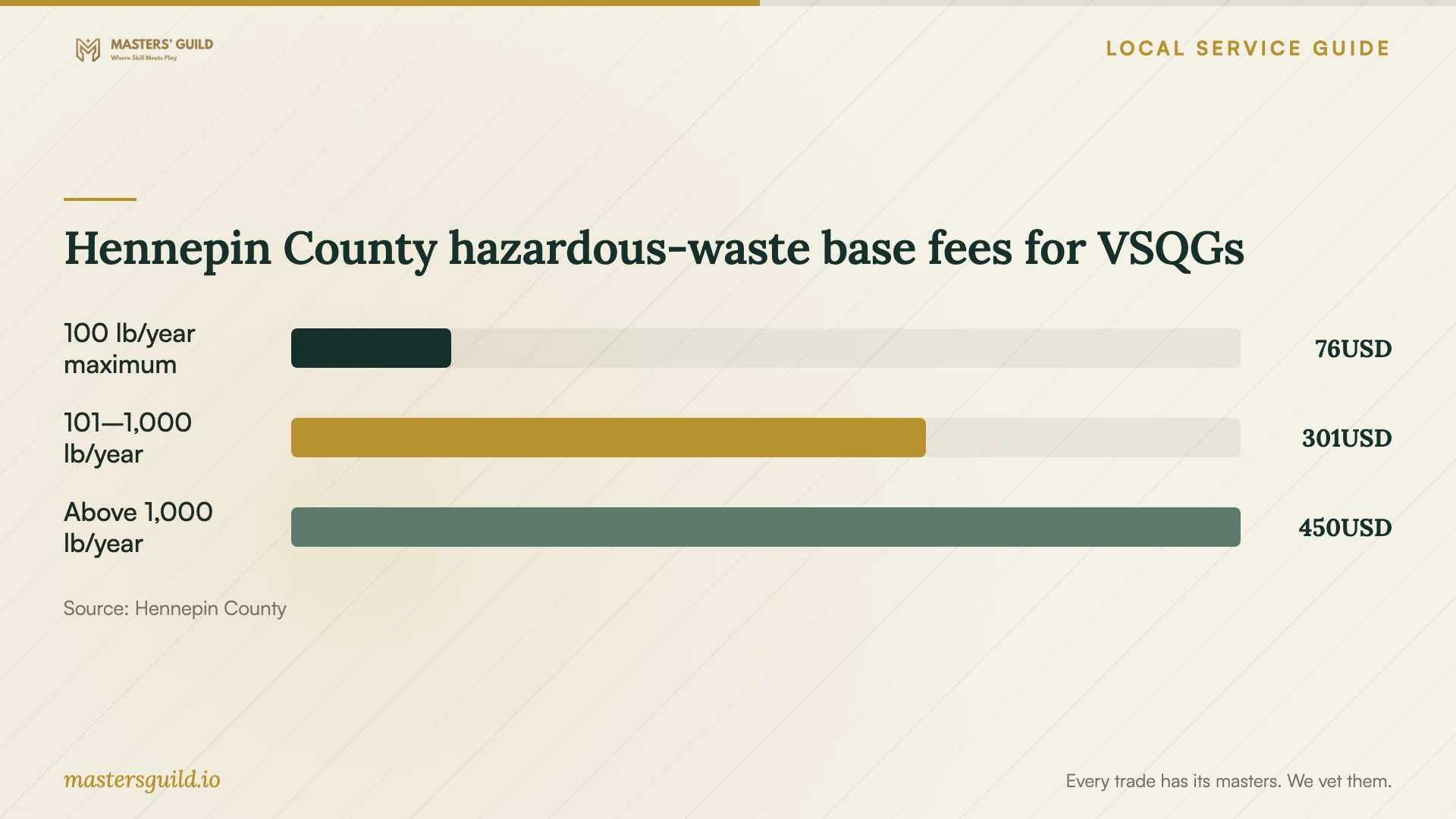
Local details that affect your job
Street staging needs a licensed applicant
For a street dumpster or storage container, Minneapolis requires a licensed contractor to apply and Public Works to approve the permit. The City directs applicants to work with City-licensed solid waste haulers, wrecking contractors or storage container companies. Street use permits are invalid during street cleaning or snow emergencies. Ask your provider who will obtain approval and where they will stage materials if street placement becomes unavailable. The City's driveway exemption concerns residential property you own; ask the City about your commercial loading area. [1]
Allow time for hazardous-material approval
For new hazardous-material permits and annual renewals, Minneapolis requests an application and inventory list 30 days before use or storage. The City gives an expected permit turnaround of about 30 business days after application and requires an inspection for new permits. If your reset introduces regulated inventory, confirm the process with Fire Inspections before committing to its arrival date. [2]
Update County waste records after the cleanout
Hennepin County's hazardous-waste portal lets businesses add waste streams with supporting documents and make streams inactive when they stop generating them. For the annual schedule covering very small, small and large quantity generators, management plan summaries are due December 15 and license payments March 31. Ask your portal administrator to review the cleanout records before the renewal submission. Contact County hazardous-waste staff at 612-348-3777 for help identifying your next step. [4]
Choose the scope before booking a crew
| Your situation | Arrange | Question before approval |
|---|---|---|
| Labels and light stock need a reset | A defined sorting and inventory-handoff scope | Who reconciles the location records? |
| The plan includes rack changes or stock on high shelves | Separate review of equipment and specialist work | Who performs these tasks and confirms approvals? |
| You need a street dumpster or container | A City-licensed company and street use approval | Who applies, and where can you stage materials if street access becomes unavailable? |
| You store regulated hazardous materials | City permit and inventory review | Do changes in material types or quantities require a permit update? |
| You intend to discard chemicals | Waste evaluation and County licensing review | Who evaluates the waste and documents its disposal? |
Your hiring checklist
- Photograph the work area and provide inventory counts, dimensions and access arrangements.
- Identify one staff contact for stock questions and one person authorized to approve disposal.
- Give bidders the same sorting, labeling, record-update and handoff requirements.
- Separate rack work, access to high shelves, equipment operation and chemical handling in the scope.
- Confirm staging space and ask who will check any street-placement permits.
- Prepare retained-product, proposed-waste and unidentified-material lists.
- Agree on working hours, operational access, spending limits and change approvals.
- Test the finished locations with staff and retain the map, exception list and disposal records.
Frequently Asked Questions
How should I budget for the organization crew?
Request a quote after a site walkthrough. Compare labor, products, equipment and hauling separately, and confirm whether an hourly rate covers one person or the crew. Ask for a spending limit and written approval before extra work.
Can the provider put a dumpster outside the warehouse?
Confirm the proposed location before delivery. Minneapolis requires street use approval for a dumpster in the street or public right-of-way, with a licensed contractor applying. Ask the City about your commercial-site arrangement before relying on the residential driveway exemption. [1]
Does a hazardous-material permit cover discarded chemicals?
Review both obligations. Minneapolis regulates hazardous-material storage, use and handling. Hennepin County requires businesses producing hazardous waste to obtain a license and directs waste producers or managers to evaluate their waste. Ask the County about the materials you intend to discard. [2] [4]
Can a small business get help reviewing lifting tasks?
Minnesota OSHA Workplace Safety Consultation provides businesses with ergonomics assistance. Ask about that help before approving a layout. DLI identifies warehouse distribution center employers with 100 or more employees as covered by the ergonomics statute. [3]
Sources and scope
This guide combines the sources below with practical planning guidance. Figures apply to the stated geography and period; request a written quote for your property.