
Local service guide
Warehouse Organization in Miami, FL: Hiring Guide
Arrange Warehouse Organization in Miami, FL by requesting a site assessment and a written proposal for sorting stock, assigning storage locations, labeling shelves and handing over an updated location list. Ask bidders to price labor, storage products and removal separately. Before approving chemical handling or recycling changes, confirm the requirements for your business address with the responsible authority.
Define the work around stock movements
Describe how employees receive deliveries, find stock, pick orders and handle returns. Ask the organizer to map those activities before moving goods. Identify stock that must remain accessible during the work, and choose a holding area for items awaiting a decision.
Give bidders photographs, a stock list and your operating hours. Specify whether you want counting, sorting, cleaning, labeling or inventory-system updates. Name the employee who can approve disposal, stock write-offs and changes to item records. Include any restrictions on moving pallets or entering storage areas.
Approve a pilot zone before extending the work. Have an employee locate an order using the proposed shelf names and labels. Compare the physical stock with the location list, then resolve confusing names or missing information before the crew repeats the system elsewhere.
Check the crew and its responsibilities
Ask bidders to describe a warehouse or commercial stockroom project they have handled. Request insurance documentation relevant to your proposed work and identify the supervisor. Clarify who supplies lifting equipment, who operates it and who handles goods beyond the organizing crew’s agreed scope.
List rack alterations, upper-shelf access and chemical handling as separate scope decisions. Ask for an equipment assessment before approving rack dismantling or installation. For a sorting job, put the boundaries in writing so the supervisor knows which changes require your approval.
Agree on delivery windows, staging space and the operations you need to maintain. Ask the supervisor to explain how employees will find stock during the reset and how the crew will identify unfinished work at the end of a shift.
Compare quotes and removal allowances
Request the charging basis, minimum booking, crew size and materials allowance. For an hourly proposal, ask whether the rate covers each worker or the whole crew. Set an approval limit for extra hours and purchases. Compare proposals against the same work zones and deliverables.
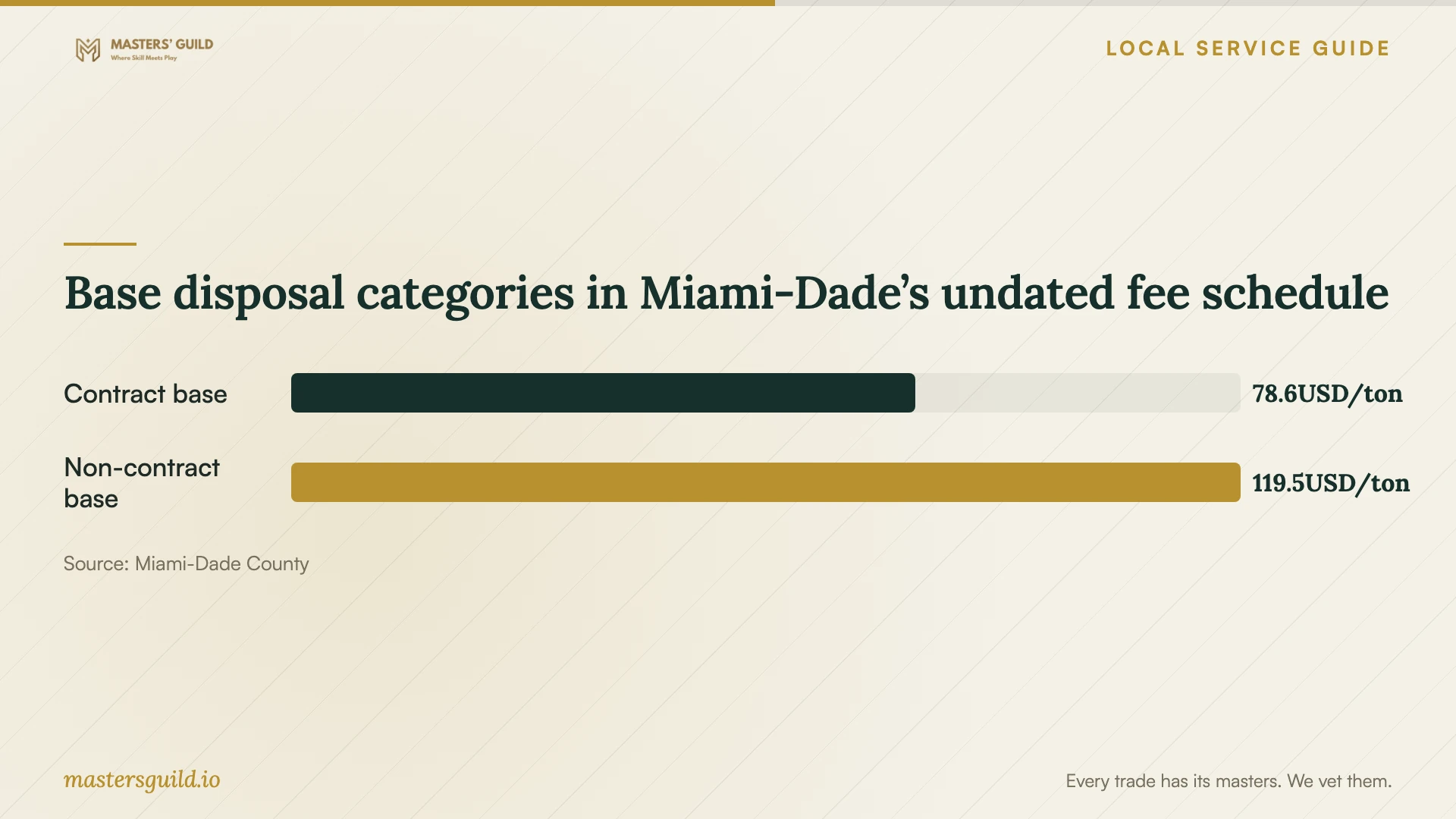
Miami-Dade County’s undated disposal schedule lists base contract disposal at $78.56 per ton and base non-contract disposal at $119.51 per ton. The page gives an October 1 effective date without a year. These published figures do not establish the applicable October 2026 rates or an organizer’s labor price. [2]
The county also lists regional transfer-station additions of $17.20 per ton for contract waste and $17.86 per ton for non-contract waste, alongside material-specific rates and special-handling charges. Ask the hauler to identify the destination, waste category, applicable schedule and supporting disposal receipts before you approve an allowance. [2]
Inspect the handover with your staff
Walk the completed zone with the supervisor and the employee responsible for stock. Check label readability, locations and the treatment of returns or damaged goods. Resolve discrepancies between shelves and records before employees start using the new arrangement.
Request a maintenance procedure for incoming goods, overflow stock, label replacement and disposal approvals. Keep photographs with the location list. Assign responsibility for reviewing the holding area and updating records when employees move an item to another shelf.
Base disposal categories in Miami-Dade’s undated fee schedule
Local details that affect your job
Confirm recycling jurisdiction before changing collection
Miami-Dade County’s recycling page states that business owners must provide employee and tenant recycling through a permitted or private recycling hauler. It does not explicitly establish that requirement’s application within the City of Miami, and its listed collection-service coverage excludes the city. Confirm obligations and collection arrangements for your address with the city and your commercial hauler. Ask about accepted materials, bin placement and pickup access before buying containers or moving the collection area. [3]
Contact DERM before approving chemical-storage changes
The county’s hazardous-waste guidance says many storage requirements also apply to unused chemicals. It describes separation of incompatible materials, impervious surfaces and containment away from drains. It also calls for covered secondary containment for hazardous-material and hazardous-waste storage, with Department approval of design and construction details. The page contains older regulatory references and says its summary is noncomprehensive. Give DERM your chemical inventory and proposed layout, and ask it to confirm current requirements and facility-specific permit conditions before authorizing changes. [1]
Confirm hazardous removal and onsite recordkeeping
County guidance describes permitted hazardous-waste transporters and federally approved treatment or disposal destinations. It says facilities should retain disposal receipts and applicable manifests at the generating facility for at least three years, available for inspection; manifest obligations depend on generator classification. Because the page uses legacy classifications and agency names, confirm current classification, transport and recordkeeping requirements with DERM before arranging removal. Assign an employee to collect the documents and keep them at the facility. [1]
Choose the scope before accepting a proposal
| Your situation | Work to request | Approval step |
|---|---|---|
| Employees cannot find usable stock | Sorting, shelf labels and a stock-location list | Test a pilot zone with an employee |
| You want rack or upper-shelf changes | Separate equipment assessment and work proposal | Agree on access, equipment and crew responsibilities |
| Recycling bins obstruct stock movement | Collection-area planning with your hauler | Confirm City of Miami obligations; the county page leaves jurisdiction unresolved |
| You find chemicals or suspect hazardous waste | Separate storage and removal assessment | Ask DERM to confirm current rules, classification and permit conditions |
| You need unwanted stock removed | Itemized loading, transport and disposal proposal | Verify the fee year and waste category; county base rates omit other charges |
Your hiring checklist
- Photograph work areas and list stock, returns and items awaiting disposal approval.
- Sketch receiving, picking, holding and recycling areas for bidders.
- Specify access windows, equipment restrictions and operations that must continue.
- Request separate labor, labels, storage-product and removal prices.
- Flag chemical containers and seek current storage and disposal guidance before handling them.
- Confirm recycling arrangements for your address before moving bins.
- Test labels and the location list in a pilot zone.
- Inspect the completed layout and assign ongoing maintenance responsibilities.
Frequently Asked Questions
How much should I budget for the organizing work?
Request a site-based proposal with labor, materials and removal separated. Specify work zones, inventory updates and the handover you expect. The county disposal page supplies no warehouse-organizing labor rates, and its fee schedule omits the effective year. Ask the hauler to verify current charges before budgeting removal. [2]
Can the organizing crew remove chemical waste?
Ask DERM to confirm current transport, disposal and documentation requirements before including that work. Its published guidance describes permitted transport and federally approved destinations but acknowledges that the summary is incomplete. Request a separate removal proposal identifying who will handle the waste and retain records. [1]
Does the county recycling rule apply to my city warehouse?
The county page states a business-recycling requirement without explicitly resolving its application within the City of Miami. Confirm the rule for your address with the city. Coordinate accepted materials, collection containers and pickup access with your commercial hauler before changing the layout. [3]
How can employees keep filling orders during the reset?
Identify stock needed for upcoming orders and agree on a phased work sequence. Assign an employee to answer inventory questions. Ask the supervisor to maintain a temporary location list and identify unfinished sorting before the crew ends each shift.
Sources and scope
This guide combines the sources below with practical planning guidance. Figures apply to the stated geography and period; request a written quote for your property.