
Local service guide
Warehouse Organization in Indianapolis, IN
Arrange Warehouse Organization in Indianapolis by defining which stock, bays and work areas the crew will handle, then request a written quote covering labor, labels, equipment, inventory updates and removal. Ask how the provider will coordinate receiving and picking during the reset. Before scheduling construction or changes to storage height or configuration, have a design professional assess filing and fire-protection needs. [3]
Define the work before comparing providers
Describe the result you need: labeled pick locations, a returns area, separated obsolete stock or a reset of selected storage bays. Mark those areas on a floor sketch. Identify inventory that must stay available and name the person who can approve relocation, write-offs and removal.
Ask bidders about commercial stock handling, inventory reconciliation and work around your equipment. Request proof of insurance and clarify who supplies lifting equipment and operators. Require a separate scope for rack installation, alterations or repairs so you can assess those tasks with the appropriate specialist.
Request a quote you can check
Give each provider the same photographs, bay count, stock description and access window. Ask for crew size, hourly or fixed pricing, minimum charges and included materials. For hourly work, request an estimate of total crew-hours and a spending limit that requires your approval to exceed.
Separate labor, labels and bins, equipment rental, hauling and specialist work in the quote. Ask whether the provider includes counting stock and updating your inventory system. Agree on who pays for replacement labels or rework if the crew uses the wrong location codes.
Build your budget and schedule from quotes for your actual scope. Ask bidders to state their assumptions about stock volume, access and disposal.
Plan the reset around warehouse operations
Choose a pilot zone and approve its labels before the crew repeats the system elsewhere. Use a location format your staff can follow, with a written rule for overflow, returns and stock awaiting a decision. Keep a record of old and new locations during the changeover.
Agree on working boundaries, temporary staging and the route staff will use for receiving and picking. Tell the provider which areas and equipment require your staff’s authorization. Schedule a handover in which an employee finds sample items using the new labels and inventory records.
Check storage changes before adding capacity
Discuss proposed height, commodity and storage configuration with your design or fire-protection professional before approving a capacity increase. IDHS requests those details in its fire-suppression submission guidance, including whether stock uses racks, solid piles or pallets. [3]
For uncertainty about state filing, IDHS asks applicants to email its plan-review staff with a detailed work description and the city and county. Its guidance states that work exempt from state filing may still require local permits. Ask your provider to identify who will resolve these questions before physical alterations begin. [3]
Approve removal by waste stream
Create separate decisions for reusable stock, ordinary discards, electronics and waste requiring identification. Indiana’s e-waste guidance prohibits small businesses from putting covered electronics in the trash and requires recycling. Include a recycling destination and pickup responsibility in the removal scope. [1]
Ask your business’s responsible manager to identify unwanted chemicals and other uncertain materials before authorizing removal. IDEM requires waste generators other than households to determine whether waste they generate, store or send off-site is hazardous. Keep that determination separate from the organizer’s decision about where to place inventory. [4]
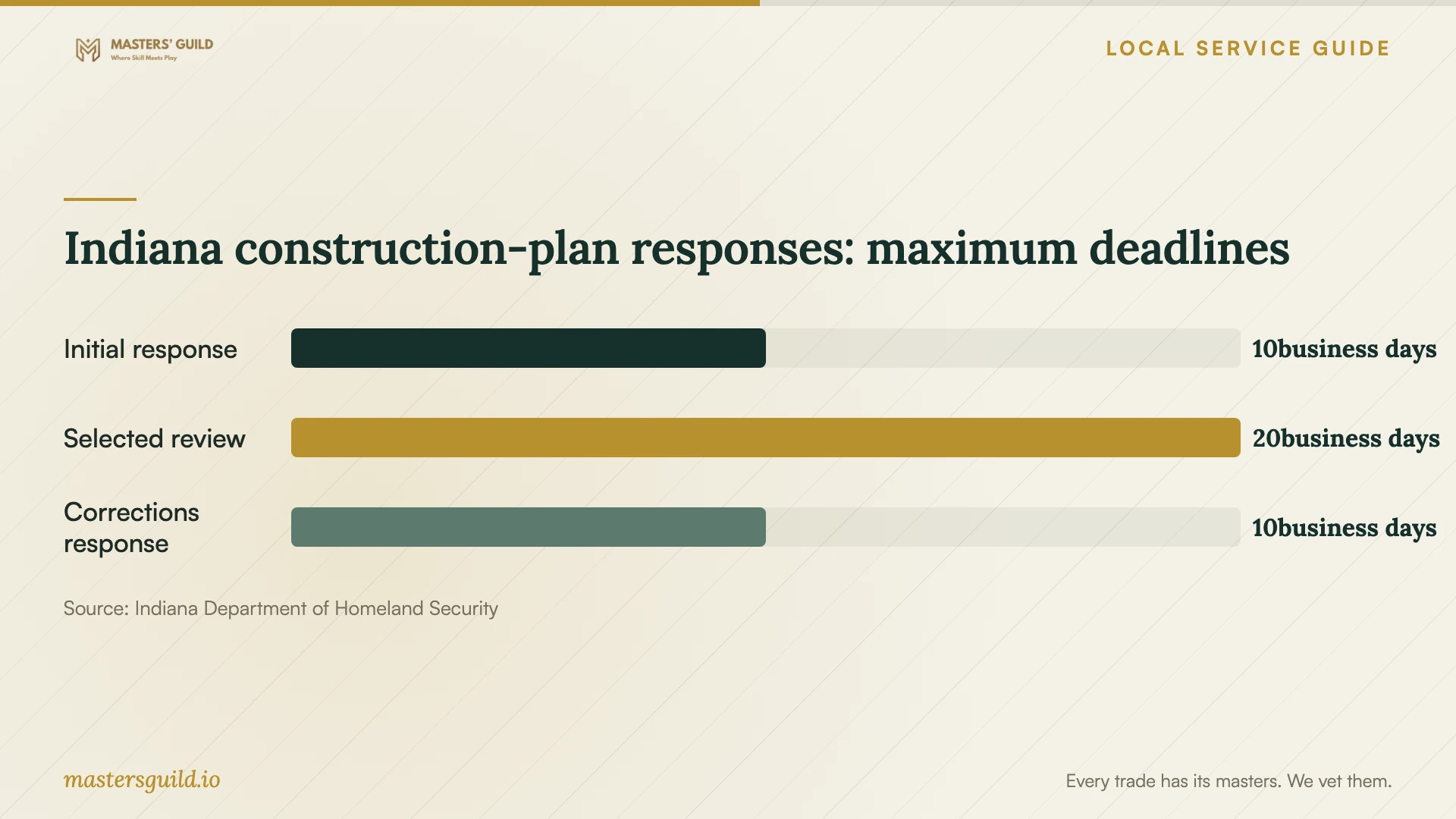
Indiana construction-plan responses: maximum deadlines
Local details that affect your job
Indianapolis remodels may qualify for release without review
Under its policy effective July 1, 2026, IDHS lists Indianapolis remodel, renovation or repair plans without a change of use among plans potentially eligible for release without review. Applicants must still submit the plans, and IDHS may select them for review. If your reset expands into construction, ask your design professional about eligibility before committing to an installation date. [2]
Indiana electronics rules change the hauling scope
Indiana prohibits small businesses from putting covered e-waste in the trash and requires recycling. For an Indianapolis warehouse cleanout, ask bidders to separate obsolete electronics from ordinary discards and name the recycling destination. Confirm pickup responsibility before accepting a combined organization-and-hauling price. [1]
Your business must resolve uncertain waste
Indiana’s waste-determination duties apply to non-household generators, including waste they store or send off-site. Before a crew removes unidentified chemicals or uncertain materials, assign someone to complete the business’s determination and arrange suitable disposal assistance. Ask the organizer to list excluded materials in the quote. [4]
Match the scope to the help you need
| Your proposed work | Help to arrange | Before approval |
|---|---|---|
| Sorting and labels within the existing layout | Organization crew | Approve zones, label format and inventory updates. |
| Higher storage or a different storage configuration | Design or fire-protection professional | Review commodity, height and storage type against the proposed work. |
| Remodeling or physical alterations | Design professional and relevant permitting authority | Resolve state filing and local permit requirements. |
| Obsolete electronics | Electronics recycling assistance | Specify the recycling destination and pickup responsibility. |
| Unidentified chemicals or uncertain waste | Waste-identification assistance | Complete the business’s waste determination before removal. |
Your hiring checklist
- Mark the included bays and work areas on a floor sketch.
- Photograph stock and note items that need special handling.
- Name the person who approves relocation, write-offs and removal.
- Confirm crew size, equipment responsibility and proof of insurance.
- Agree on location codes and inventory-update responsibility.
- Set work windows, staging areas and access arrangements.
- Resolve filing questions and waste destinations before affected work starts.
- Check sample picks and receive a final location map at handover.
Frequently Asked Questions
Can my staff prepare the warehouse before the crew arrives?
Have staff identify active stock, approve obsolete items and gather existing location records. Ask them to flag uncertain items for a manager’s decision. Agree with the provider on any handling your staff should complete before the scheduled reset.
Does an organization project need state plan review?
Ask IDHS about the actual scope if you propose construction or a change in use. Send a detailed work description with the city and county to its plan-review staff. IDHS notes that state filing exemptions do not remove possible local permit requirements. [3]
Can the organizer take away old computers with the trash?
Indiana prohibits small businesses from disposing of covered e-waste in the trash and requires recycling. Arrange separate recycling and ask the provider to identify the destination before pickup. [1]
How should I accept the finished work?
Walk the agreed zones with the crew lead. Check sample stock locations against labels and inventory records, review unresolved items and confirm approved removals. Request the final location map and assign someone on your team to maintain it.
Sources and scope
This guide combines the sources below with practical planning guidance. Figures apply to the stated geography and period; request a written quote for your property.