
Local service guide
Warehouse Organization in Houston, TX
Arrange Warehouse Organization in Houston by defining the stock, work zones, and operating hours before requesting a written quote. Choose a crew that can explain its inventory controls, equipment responsibilities, and handover process. For a clear-out, check the waste hauler’s city franchise; before changing storage height or materials, discuss applicable storage permits with the Houston Fire Department. [1] [3]
Define the work before comparing crews
Write a scope around the problems your staff needs to solve: mixed receiving stock, unidentified bins, slow picking, returns awaiting decisions, or surplus material occupying working space. Give the provider photographs, a location sketch, an inventory export if available, and a list of items that require your approval before anyone moves or discards them.
Separate sorting and labeling from equipment work. Ask each bidder to identify who will move pallets, supply handling equipment, and address rack changes. For heavy or elevated stock, ask for relevant commercial experience, proof of insurance, and a named person responsible for coordinating movement with your warehouse staff.
Request a proposed location scheme before buying labels or bins. Test it on a working area: have an employee locate an item, record a stock movement, and return a misplaced carton. Approve the naming convention after that test, then use the same convention in your stock records.
Ask for a quote you can reconcile
Request separate amounts for planning, sorting labor, labels and containers, equipment, haul-away, and handover. For hourly work, ask for the crew size, billable hours per worker, minimum charge, and a spending limit that requires your approval to exceed. For a fixed quote, name the zones and deliverables it covers.
Ask the bidder to list assumptions about stock volume, access, working hours, and your staff’s involvement. Agree on how the provider will price discoveries such as unidentified inventory or material awaiting disposal approval. Use the same scope when comparing offers; leave out an hourly budget drawn from household organizing work.
Agree on payment milestones tied to work you can inspect. Suitable checkpoints include approval of the layout, completion of a trial zone, and acceptance of the location list. Record who pays for materials and who owns unused supplies.
Keep operations and inventory under control
Choose a work sequence with the warehouse lead. Mark the active work area and agree on receiving, picking, and dispatch access during the reset. Set aside a hold area for unidentified, damaged, or disputed stock, and name the employee who can release it for sale, return, or disposal.
Choose how staff will record movements while the crew works. You might pause transactions in the affected zone or keep a movement log for reconciliation. Require approval before the crew removes an existing location label, and retain a cross-reference between old and new locations.
At handover, walk the completed area with the provider and an employee who uses it. Check sample locations against your records, review unresolved items, and collect the layout, label convention, and disposal documentation. Assign someone on your team to maintain the system after the crew leaves.
Schedule dock work around conditions
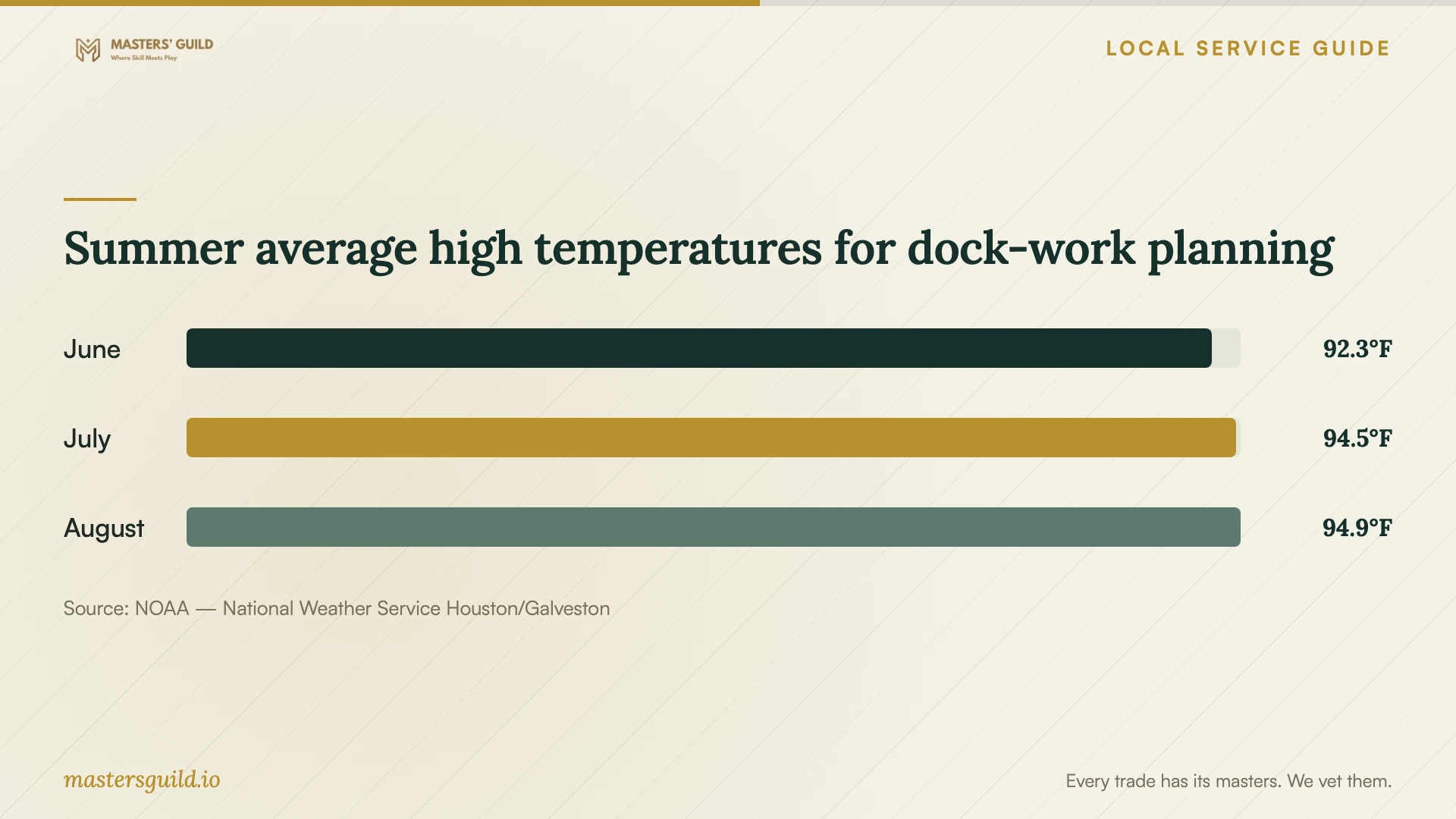
For a warehouse without climate control, discuss heat exposure and work breaks before setting the schedule. Houston Intercontinental’s 1991–2020 normal average highs are 92.3°F in June, 94.5°F in July, and 94.9°F in August. Use those historical figures as planning context for dock and handling work. [4]
Arrange covered staging before moving cartons outside. Agree on who can pause the job when weather affects the loading area and where the crew will place stock during a pause. Check the forecast near the work date; historical monthly averages do not describe conditions inside your building or on the scheduled day. [4]
Summer average high temperatures for dock-work planning
Local details that affect your job
Check the commercial waste hauler
Within Houston city limits, the city requires a franchise for commercial operators collecting, hauling, or transporting solid or industrial waste from commercial properties. Ask the organizer to name its haul-away subcontractor and confirm franchise status before approving removal. For franchise questions, contact Administration and Regulatory Affairs at 832.393.6910. Keep the disposal scope distinct from inventory you intend to retain. [1]
Resolve dumpster permits before delivery
Houston requires a Combustible Waste Storage Permit for a dumpster exceeding 50 cubic feet or a dumpster of any size that remains on-site for more than 60 days. The city handles applications, payments, and renewals through the Houston Permitting Center and requires inspections for new permits. Confirm responsibility with the property owner: permits do not transfer between owners. Ask Dumpster Permitting at 832.393.0459 about your proposed container and placement period. [2]
Review storage changes with the fire permit office
Houston Fire Department lists High Piled Storage, Misc. Combustible Storage, and Hazardous Materials among its permit categories. Before approving taller storage or a different material mix, ask its Permit Office at 832-394-8811 which requirements apply. Prepare a proposed layout, storage heights, and material inventory for that discussion; the department’s category list alone does not establish whether your particular reset requires a permit. [3]
Match the proposed work to the next step
| Proposed work | Next step | Put in the scope |
|---|---|---|
| Sort and label existing stock | Test a location scheme with your staff | Zones, label format, stock-record updates, and acceptance checks |
| Remove discarded commercial stock | Confirm the hauler’s Houston franchise | Named hauler, approved discard list, and disposal documentation |
| Bring in a dumpster | Check the 50-cubic-foot and more-than-60-day permit triggers | Container size, delivery and removal dates, and permit responsibility |
| Change storage height or material mix | Ask HFD which storage permit categories apply | Proposed heights, materials, and responsibility for permit coordination |
Your hiring checklist
- Send bidders photographs, a zone sketch, and the inventory information you can share.
- Name the employee who can approve stock movements and disposal.
- Specify who supplies handling equipment and who operates it.
- Request separate labor, materials, equipment, and disposal charges.
- Confirm local waste and storage requirements before arranging removal or changing storage.
- Approve a trial zone and label convention before expanding the work.
- Inspect the location records and unresolved stock list before accepting completion.
Frequently Asked Questions
How much should I budget?
Request a site-specific written quote with labor, supplies, equipment, and disposal shown apart. Set an approval limit for hourly work and ask what could change a fixed price. Compare bids against the same stock volume, zones, and handover requirements.
Does a short dumpster rental avoid the permit requirement?
Houston lists size and duration as separate triggers. A container exceeding 50 cubic feet requires a permit under the city’s published guidance even for a short placement; any size staying more than 60 days also triggers the requirement. [2]
Can the organizing crew haul away unwanted stock?
Ask who will perform the hauling. Houston requires a city franchise for commercial operators hauling solid or industrial waste from commercial properties within city limits. Confirm the named operator’s status and approve the discard list before loading. [1]
Can we approve taller storage during the reset?
Discuss the proposed arrangement with HFD before authorizing the change. The department lists high-piled storage as a permit category, but its forms page does not supply a threshold for deciding whether your arrangement qualifies. [3]
Sources and scope
This guide combines the sources below with practical planning guidance. Figures apply to the stated geography and period; request a written quote for your property.