
Local service guide
Long-distance moving in Halifax: hiring and planning
Long-distance moving in Halifax starts with at least three written estimates based on the same household inventory. Choose a mover that identifies who will transport your goods, states delivery commitments and explains loss or damage protection. Before booking, resolve truck access, any harbour crossing and electricity service dates alongside your possession date. [1] [2] [3]
Compare written quotes for the same move
Give each bidder a room-by-room inventory and show the mover everything you want transported. Include garage contents, outdoor furniture and items that need special handling. The Office of Consumer Affairs recommends estimates from at least three reputable movers and a written quote with costs, payment terms, service timing and delivery commitments. [1]
Request separate entries for packing, unpacking, disassembly, storage and access charges. Describe stairs, elevator access and the distance between the proposed truck parking place and your door. Ask whether the mover expects to use a smaller transfer vehicle and what that would cost. Keep the same scope when comparing offers.
Treat a phone estimate as a starting point. Before committing, obtain a quote on company letterhead signed by a representative. Check the deposit amount, cancellation terms, refund conditions and accepted payment method. Federal guidance identifies a large upfront deposit and failure to provide a written estimate as warning signs. [1]
Confirm who handles your belongings
Establish whether you are contracting with the mover or a broker. A broker arranges transportation through subcontractors. The Office of Consumer Affairs warns that subcontracting can complicate responsibility during a dispute and that many brokers do not accept responsibility for lost or broken items. [1]
Write down the company responsible for pickup, transport, storage and final delivery. Request a contact for each handoff and ask whom you should notify if the shipment misses its delivery commitment. Keep those answers with the contract so you can reach the responsible business while travelling.
Set delivery terms around possession and access
Have the mover put its delivery commitment in writing. Confirm whether it promises a specific date or an arrival window, how much notice you will receive and what happens if you cannot accept delivery. Plan your travel and essential supplies around the commitment the mover makes. [1]
Coordinate access at both homes. Federal moving guidance recommends booking elevators, notifying the building manager, arranging street parking and considering snow removal. Ask the property manager to confirm loading access and reservation hours before you agree to a delivery appointment. [1]
If possession and delivery do not align, request written storage terms before pickup. Ask where the mover will keep your belongings, how it protects them from theft, fire and water, whether it heats the facility in winter and which protection applies during storage. [1]
Choose protection before packing
Ask your household insurer what it covers during transport and storage, then compare that answer with the mover’s replacement value protection. The Office of Consumer Affairs gives a general liability reference of $0.60 per pound per item when you do not buy replacement value protection. Confirm the terms for your shipment before assuming reimbursement will match replacement cost. [1]
Declare valuable artwork and other high-value goods, and ask about exclusions for furniture that needs disassembly. Confirm responsibility for boxes you pack yourself. Federal guidance cautions that movers generally do not accept liability for owner-packed goods and advises checking claim procedures and deadlines before moving. [1]
Check the shipment at pickup and delivery
Obtain your copy of the mover’s inventory before departure. The Office of Consumer Affairs says provincial transportation regulations require an inventory for long-distance moves and recommends that movers tag and list items. Keep the inventory accessible during travel. [1]
At delivery, check items against the inventory and record missing goods or damage before signing for receipt. Photograph damage, inspect the route through the home and check the vehicle for anything left aboard. Send unresolved issues to the mover in writing and file claims without delay because deadlines can be strict. [1]
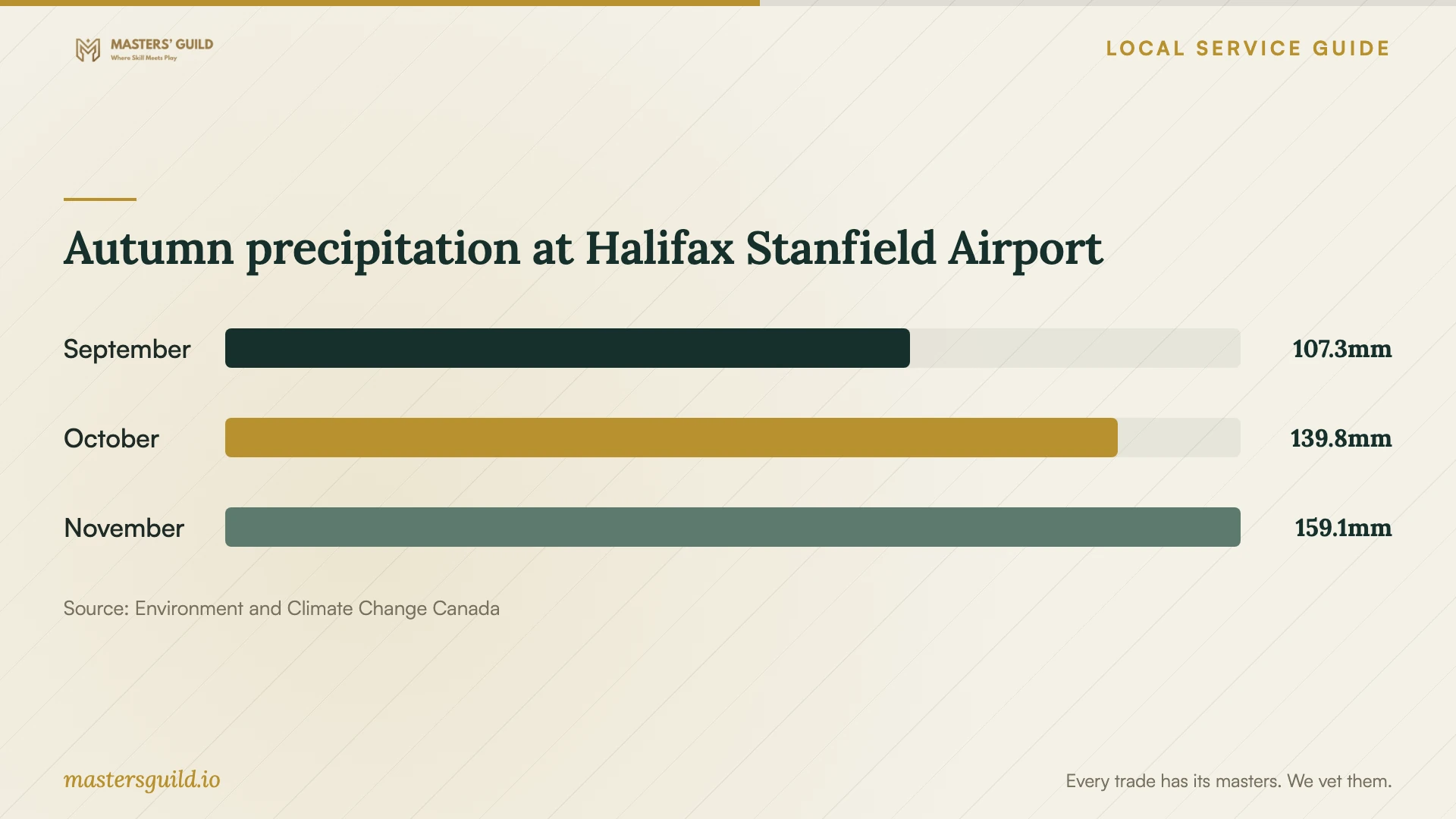
Autumn precipitation at Halifax Stanfield Airport
Local details that affect your job
Match the harbour route to the truck
If your move involves crossing Halifax Harbour, ask the dispatcher which bridge the truck will use. Halifax Harbour Bridges prohibits vehicles over 3,200 kg on the Macdonald Bridge, except buses, and directs them via the MacKay. It also lists high-sided vehicle restrictions on the MacKay at winds of 85 km/h and defines high-sided vehicles as exceeding 2.2 metres in height, including racks. Ask how a restriction would affect delivery notice, waiting charges and your loading reservation. [2]
Arrange electricity before arrival
Nova Scotia Power requests 10 days’ notice for starting, stopping or moving service and directs customers to call 1-800-428-6230. Confirm your possession date and service address before calling. For a move out, choose the stop date around your remaining access needs; for a move in, confirm the start date separately from the mover’s arrival window. [3]
Prepare autumn loading protection
Environment and Climate Change Canada reports average total precipitation of 107.3 mm in September, 139.8 mm in October and 159.1 mm in November at Halifax Stanfield Airport for the 1991–2020 normals. For an autumn move, ask who supplies floor runners and rain protection and who clears the loading path. These airport averages describe historical conditions, not the weather at your home on moving day. [4]
Resolve these questions before choosing an offer
| Your situation | Ask before booking | Get in writing |
|---|---|---|
| A broker arranges the move | Who transports the goods and accepts responsibility? | Carrier names and responsibility for subcontracted services |
| You need delivery around possession | What delivery commitment can you make? | Delivery date or window and arrangements if access falls through |
| The truck must cross the harbour | Does its weight require the MacKay route? | Route plan and terms for delays or waiting |
| Your belongings need storage | Where will you keep them and what protection applies? | Storage location, charges, security and coverage |
| You plan to pack fragile goods | How does owner packing affect liability? | Packing exclusions and protection terms |
Your hiring checklist
- Send each bidder the same inventory, addresses, access details and packing requirements.
- Obtain signed written terms covering price, payment, cancellation and delivery.
- Record the carrier, subcontractors and contact responsible for each handoff.
- Confirm truck access, harbour routing and the plan for weather restrictions.
- Reserve building access and settle storage arrangements before pickup.
- Arrange electricity dates around possession and final access.
- Carry valuables, documents and essential supplies with you.
- Keep the inventory available and record damage or missing items at delivery.
Frequently Asked Questions
How much should I budget for a long-distance move?
Request written estimates for your inventory, route and service scope. Compare packing, access, storage, payment and delivery terms alongside the total, and ask how the mover will authorize and price changes. Use the same inventory for each estimate so you can compare the offers. [1]
Does the mover’s insurance cover replacement cost?
Confirm that before signing. Federal guidance distinguishes the mover’s Certificate of Insurance from protection for your goods and recommends asking about replacement value options. Check exclusions, owner-packed boxes, storage protection and claim deadlines with both the mover and your household insurer. [1]
Can a moving truck use the Macdonald Bridge?
Halifax Harbour Bridges prohibits vehicles weighing over 3,200 kg, except buses, and directs them via the MacKay Bridge. Have the mover confirm the truck’s suitability and route before choosing a crossing based on a passenger-car journey. [2]
How far ahead should I arrange power?
Nova Scotia Power requests 10 days’ notice to start, stop or move service. Call 1-800-428-6230 and confirm the service dates against possession and your access needs at both properties. [3]
Sources and scope
This guide combines the sources below with practical planning guidance. Figures apply to the stated geography and period; request a written quote for your property.