
Local service guide
HVAC Services in Halifax: Hiring and Installation
To arrange HVAC Services in Halifax, describe your heating system and the problem, check the worker’s trade credentials, and request a written scope before authorizing repairs or replacement. Nova Scotia treats refrigeration and air-conditioning mechanic work as a compulsory certified trade. For a heat pump installation, ask who will handle electrical work and the applicable wiring permit. Compare quotes with the same equipment, installation tasks and exclusions. [1] [2]
Book the appointment around the problem
For a repair visit, give the contractor your equipment make and model, symptoms, displayed error codes and when the problem started. Describe whether the whole house lacks heat or one room feels uncomfortable. Confirm that the contractor services your equipment before agreeing to a visit.
Ask what diagnosis costs, what the visit includes and whether the contractor credits any diagnostic charge toward a repair. Set a spending limit for work beyond diagnosis. Ask the technician to explain the fault, proposed repair and parts availability before you authorize additional work.
For replacement, request a home assessment before accepting an equipment recommendation. Identify the rooms you want to heat and cool, your current heating arrangement and comfort problems. Ask the installer to explain the proposed capacity, room coverage and backup heating plan in writing.
Check credentials for each part of the job
The Nova Scotia Apprenticeship Agency lists refrigeration and air-conditioning mechanic, construction electrician, oil heat system technician and sheet metal worker among its compulsory certified trades. A person performing work in a compulsory trade must hold a certificate of qualification, registered-apprentice status, an Agency temporary permit or a certificate recognized by the Agency’s Director. [1]
Ask which workers will perform refrigeration, electrical and any oil-heating work. The Agency advises homeowners to ask about qualifications and see the worker’s identification card. You can contact an Agency Compliance and Enforcement Officer to confirm whether a person is certified. [1]
If the contractor uses subcontractors, request their names and assigned tasks. Ask for proof of insurance and identify who will approve changes and handle warranty calls. Keep those responsibilities with the written quote.
Choose equipment around your existing heating
Nova Scotia Power describes ductless mini-splits as an option for homes heated with baseboards, hot water, wood heat or older hot-water radiators that lack ductwork. It describes ducted heat pumps as an option for homes with traditional oil forced-air heating, using existing ducts to distribute heating and cooling. [3]
Ask a ductless installer to mark each proposed indoor unit location and explain which rooms it will serve. Include bedrooms, closed doors and rooms on other floors in the discussion. For a ducted proposal, ask the installer to assess the existing ducts and identify alterations in the quote.
Nova Scotia Power states that heat pumps provide heating, cooling and dehumidification. Ask your installer how the proposed system will address these needs in your home. Request an explanation of drainage arrangements and an operating demonstration at handover. [3]
Compare the complete installation quote
Request an itemized quote with equipment model numbers, indoor unit locations, electrical work, mounting, drainage, duct alterations, removal of old equipment and taxes. Ask the contractor to identify exclusions and explain how they will price changes discovered during installation. Compare the complete scope before choosing a contractor.
Nova Scotia Power states that certified electricians secure wiring permits when building or renovating homes or businesses. Its online application includes heat pumps, added electrical load and inspection information. Ask the contractor to name the electrician and include applicable permit and inspection coordination in the scope. [2]
Before accepting the quote, confirm work dates, payment stages, cleanup and handover. Request separate explanations of equipment warranty and installation workmanship coverage. Keep manuals, model and serial numbers, maintenance instructions and the final invoice together.
Discuss winter heating performance
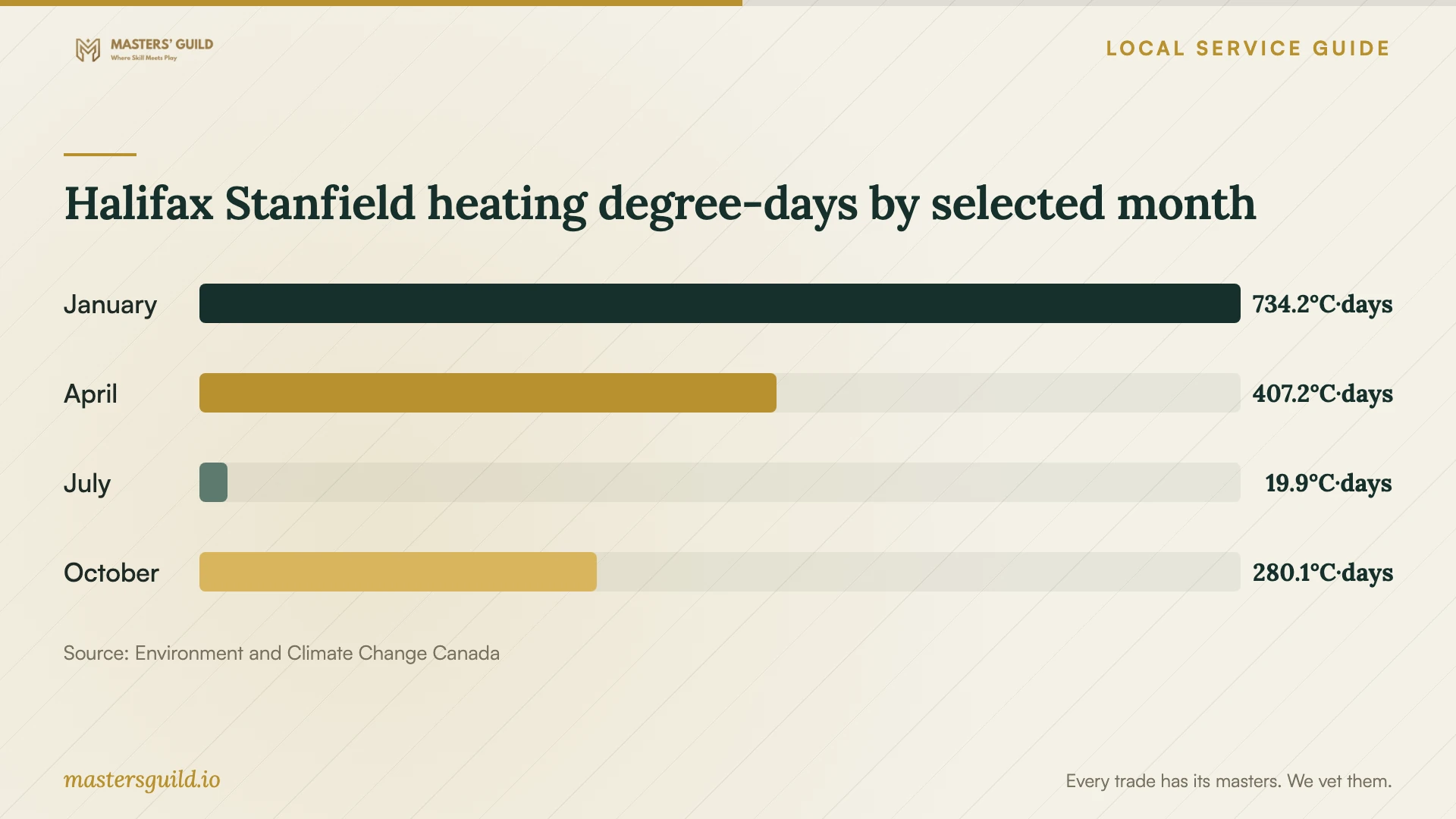
Environment and Climate Change Canada publishes heating degree-days below 18°C for Halifax Stanfield Airport. For the 1991–2020 normal period, January has 734.2 compared with July’s 19.9. These station observations give seasonal context for a heating discussion; they do not establish your home’s equipment size or energy bill. [4]
Ask the installer to explain heating output at the outdoor temperatures used in their sizing assessment. Request a backup heating plan and a proposed outdoor unit location. Describe any snow accumulation or drainage problems you have observed there, and ask how you will reach the equipment for maintenance.
Halifax Stanfield heating degree-days by selected month
Local details that affect your job
Use Nova Scotia’s worker credential check
For work in Halifax, check the individual worker’s authorization under Nova Scotia’s compulsory-trade rules. Refrigeration and air-conditioning mechanics, construction electricians and oil heat system technicians appear on the Agency’s list. Ask to see identification. If you need confirmation of certification, contact an Agency Compliance and Enforcement Officer before booking the work. [1]
Record who submits the wiring permit
Nova Scotia Power provides an online wiring permit application and states that certified electricians secure permits for home renovations. The form asks about heat pumps, added load and inspections. Before accepting an installation quote, identify the electrician and ask who will submit the applicable application and coordinate inspection. Record that responsibility in the scope. [2]
Choose the right first appointment
| Your situation | Request | Question to settle |
|---|---|---|
| Existing equipment has stopped heating or cooling | A diagnostic visit before authorizing replacement | What does diagnosis cost, and what repair spending requires my approval? |
| Baseboard or hot-water heating with no ducts | An assessment of ductless heat pump options | Which rooms will each indoor unit serve? |
| Oil forced-air heating with existing ducts | An assessment of a ducted heat pump and the existing ducts | Which duct alterations and backup heating arrangements does the quote include? |
| Heat pump installation involving electrical work | A scope naming the electrician and applicable wiring permit responsibility | Who will coordinate electrical work and inspection? |
| Repair and replacement proposals are available | Written scopes for both choices | What work, exclusions and warranty responsibilities does each price cover? |
Your hiring checklist
- Record the equipment make, model, symptoms and error codes.
- Confirm that the contractor services your equipment and ask for the diagnostic charge.
- Identify workers and subcontractors, then check qualifications for their assigned work.
- For replacement, request a home assessment and written explanation of sizing and room coverage.
- Include electrical work, applicable permits, drainage, mounting and removal in the quote.
- Set a repair authorization limit and require approval for scope changes.
- Confirm warranty responsibilities and request handover documents and an operating demonstration.
Frequently Asked Questions
How do I check an HVAC technician’s qualifications?
Ask about the person’s qualifications and request their identification card. Nova Scotia lists refrigeration and air-conditioning mechanic work as compulsory certified. The Agency recognizes certification, registered apprenticeship and other specified authorization routes. Contact an Agency Compliance and Enforcement Officer to confirm whether a person is certified. [1]
Who handles the electrical permit for a heat pump?
Nova Scotia Power states that certified electricians secure wiring permits for home renovations. Its application includes heat pumps. Ask the installation contractor to identify the electrician and record responsibility for applicable permits and inspection coordination in your quote. [2]
Can I use existing oil-furnace ducts for a heat pump?
Nova Scotia Power describes ducted heat pumps as an option for homes with oil forced-air heating, using existing ducts. Ask the installer to assess your ducts and list required alterations before you approve the proposal. [3]
How much should I budget for HVAC work?
Request a written price for your specific scope. For repairs, separate diagnosis from authorized parts and labour. For replacement, include equipment, electrical work, installation, removal, taxes and exclusions. Ask contractors to quote the same requirements so you can compare totals.
Sources and scope
This guide combines the sources below with practical planning guidance. Figures apply to the stated geography and period; request a written quote for your property.