
Local service guide
HVAC Services in Fremont, CA: Hiring and Replacement
Arrange HVAC Services in Fremont by defining whether you need diagnosis, repair, or replacement, then ask for a written scope before approving work. For a new system, CSLB advises hiring a contractor with an active C-20 license in good standing. Ask replacement bidders to assess your ducts and explain the Bay Area furnace requirements that apply to your proposed equipment and installation date. [1] [2]
Choose the scope before requesting offers
For a system that has stopped heating or cooling, request a diagnostic visit with a stated fee and a separate approval step for repairs. Describe the symptoms: which rooms feel uncomfortable, whether the equipment starts, and any sounds or thermostat messages. Ask the technician to explain the diagnosis, proposed repair, and remaining uncertainty before you authorize parts.
For replacement, ask each bidder to visit the property and quote the same scope. Request equipment model numbers, proposed capacity, duct work, electrical work, removal, startup checks, and warranty terms. Ask who will confirm permit requirements with the city and who will handle any application and inspection. Keep those responsibilities in the written offer.
Check the installer and the duct scope
CSLB tells consumers planning a new HVAC system to verify an active C-20 Warm-Air Heating, Ventilating, and Air-Conditioning license in good standing. Request the business name and license number, then check that they match the contractor named in your agreement. [2]
CSLB also emphasizes installation quality and correct duct sealing as factors in achieving the expected efficiency and savings. Ask the bidder to describe how they will assess the existing ducts, which sealing or alterations they include, and how they will check the completed installation. [2]
Keep a list of exclusions beside each offer. Ask whether the quoted total includes access work, thermostat changes, disposal, and any subcontracted work. If a bidder leaves an allowance rather than a fixed amount, ask what must happen before they can confirm the price.
Plan around Bay Area furnace rules
The Bay Area Air District’s building-appliance rules cover residential and commercial furnaces and water heaters in the region. Its rule-development page identifies 2029 as the furnace compliance date under Rule 9-4. For a Fremont replacement project, ask the contractor to explain how the proposed furnace meets the requirements applicable to your installation. [1]
The Air District says the new requirements apply upon burnout of current equipment and also cover equipment manufactured after the implementation date. If your furnace still works, separate the decision to repair or replace it from future equipment standards. Ask for a condition assessment and a written explanation of any claim that you must replace it now. [1]
As of October 10, 2026, the Air District plans a November 4, 2026 board consideration of changes to Rule 9-6 for water heaters. The agency describes exemptions and a compliance-date extension as changes that depend on approval. Ask bidders to distinguish those water-heater proposals from furnace requirements when discussing a combined project. [1]
Compare heat pump specifications
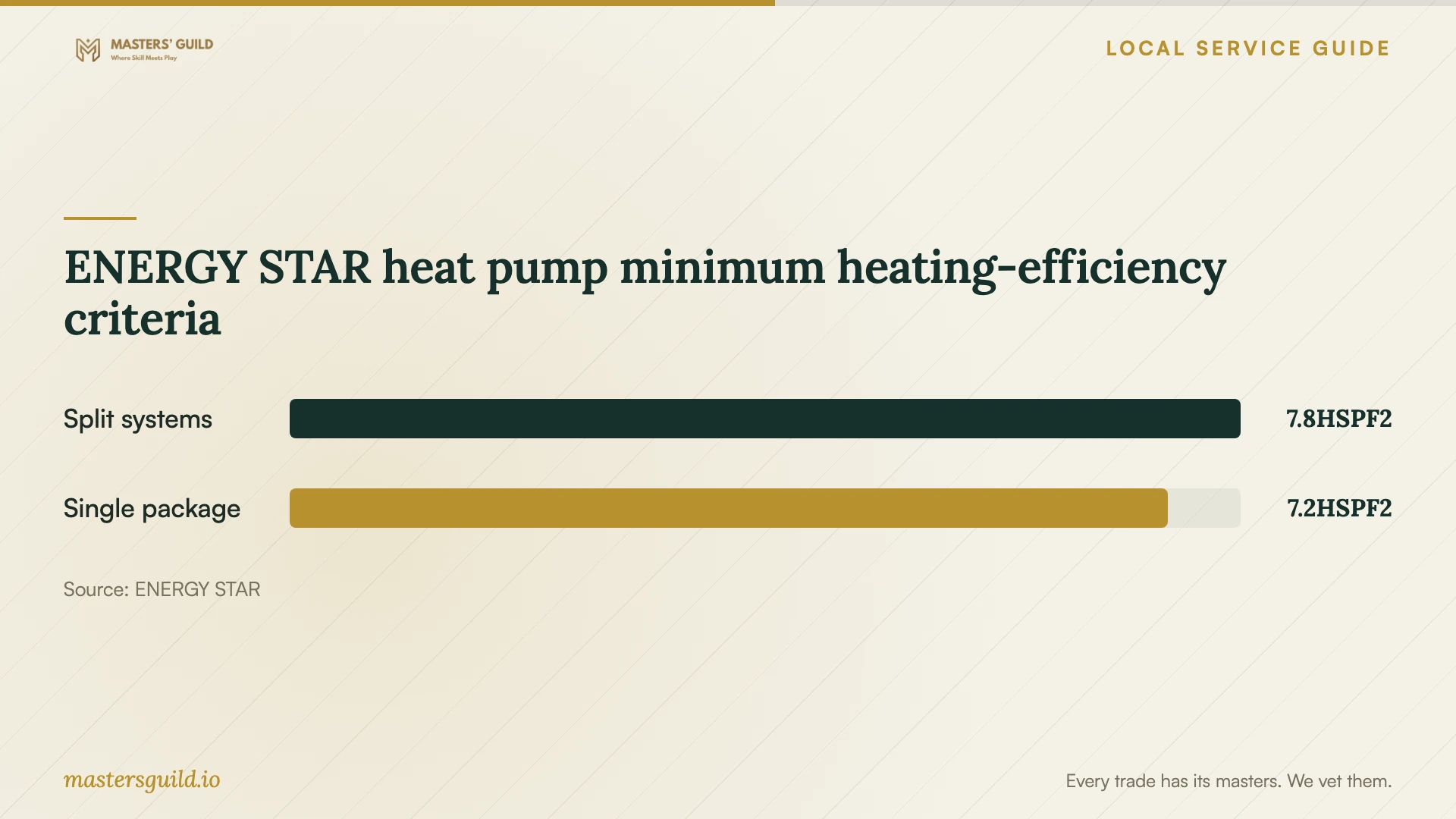
ENERGY STAR uses HSPF2 for seasonal heating efficiency and SEER2 for seasonal cooling efficiency. Its published general heat pump criteria specify a minimum HSPF2 of 7.8 for split systems and 7.2 for single-package equipment. Both categories have a minimum SEER2 of 15.2. These are national product criteria, rather than a sizing recommendation for your home. [3]
Use the chart to check which heating-efficiency threshold corresponds to a quoted equipment category. Ask the bidder to provide the proposed system’s ratings and explain the capacity selection. ENERGY STAR states that an indoor unit alone or an outdoor unit without a match must be tested and rated as an indoor-and-outdoor combination. [3]
Before choosing between offers, ask each contractor to explain the proposed equipment location, indoor access, controls, and electrical scope. Request a separate explanation of any claimed operating-cost savings, including the energy prices and usage assumptions. Choose an offer you can compare without guessing what the contractor included.
ENERGY STAR heat pump minimum heating-efficiency criteria
Local details that affect your job
A replacement planned near 2029 needs an equipment check
The Bay Area Air District identifies 2029 as the furnace compliance date for Rule 9-4. If you are planning a later replacement in Fremont, ask the contractor to confirm the applicable standard again before ordering equipment. Put the proposed model and compliance explanation in the offer rather than relying on an earlier conversation. [1]
A functioning furnace does not trigger replacement by date alone
The Air District describes its new equipment requirements as applying upon burnout of current equipment. For a working furnace, ask for a repair and condition assessment before accepting a replacement recommendation based on regional rules. Require the bidder to identify the specific requirement if they say immediate replacement is mandatory. [1]
Water-heater proposals need a separate explanation
The Air District’s scheduled November 4, 2026 consideration concerns Rule 9-6 water-heater changes, including possible exemptions and a compliance-date extension. As of this page’s October 10 review, those changes remain proposals. For a combined furnace and water-heater job, request an equipment-by-equipment explanation instead of accepting one deadline for the whole project. [1]
Match your next step to the job
| Your situation | Request | Before approving |
|---|---|---|
| Heating or cooling has stopped | A diagnostic visit with a stated fee | A diagnosis and separate repair authorization |
| You want a new HVAC system | A written replacement scope | An active C-20 license check and a duct assessment |
| You are planning a furnace replacement near 2029 | An explanation of applicable Rule 9-4 requirements | Confirmation for the proposed model and installation date |
| You are comparing heat pumps | System ratings and the equipment category | A capacity explanation and the proposed indoor-and-outdoor combination |
| You are replacing a furnace and water heater together | Separate rule explanations for each appliance | A clear distinction between furnace requirements and proposed water-heater changes |
Your hiring checklist
- Record symptoms, thermostat messages, equipment model numbers, and the rooms affected.
- Agree on the diagnostic fee and the repair-approval process before the visit.
- Request the contractor’s business name and license number for your hiring check.
- Ask replacement bidders to quote equipment, ducts, electrical work, removal, and startup checks as separate scope items.
- Assign responsibility for confirming city permit requirements and handling any application or inspection.
- Request the proposed equipment combination, capacity explanation, and efficiency ratings.
- Ask for a written explanation of the regional rules applicable to each appliance.
- Confirm exclusions, warranty terms, payment stages, and the process for approving additional work.
Frequently Asked Questions
Which license should I check for a new HVAC system?
CSLB advises checking that the contractor holds an active C-20 Warm-Air Heating, Ventilating, and Air-Conditioning license in good standing. Match the checked business name and license number to the contractor in your agreement. [2]
Do Bay Area rules require me to remove a working furnace now?
The Air District describes the new requirements as applying upon burnout of existing equipment and identifies 2029 as the furnace compliance date. Ask a bidder who claims immediate replacement is mandatory to identify the specific requirement and explain its application to your equipment. [1]
How should I compare heat pump efficiency?
Compare the equipment category and both heating and cooling ratings. ENERGY STAR defines HSPF2 as a seasonal heating-efficiency measure and SEER2 as a seasonal cooling-efficiency measure. Ask for the ratings of the proposed system combination and a separate explanation of capacity. [3]
What should a replacement quote include?
Request model numbers, capacity, duct and electrical scope, equipment removal, startup checks, warranty terms, and exclusions. Assign responsibility for confirming permit requirements. Ask the contractor to explain any uncertain costs before you sign.
Sources and scope
This guide combines the sources below with practical planning guidance. Figures apply to the stated geography and period; request a written quote for your property.