
Local service guide
Warehouse Organization in Fredericton
Arrange Warehouse Organization in Fredericton by asking for a site assessment and a written scope covering sorting, stock locations, labels, equipment, disposal and handover. Choose a crew whose proposed work matches your inventory and operating hours. For forklift work, confirm competent operators and pedestrian controls; consult City Building Inspections before committing to significant building alterations. [2] [3]
Define the work before comparing providers
Prepare a brief that names the zones you want organized and the result you expect. For example, ask for a receiving area, assigned pick locations, a separate returns area and an inventory-location list. Specify whether the crew will count stock, reconcile discrepancies, print labels or enter locations into your existing system.
Walk prospective providers through a normal receiving and picking task. Show them the largest loads, awkward items and stock that staff struggle to find. Ask each provider to explain their proposed sequence and identify what your staff must approve before they move anything.
Keep racking relocation, repairs and building changes as distinct tasks in the proposal. Fredericton’s permit page requires permits for significant alterations and encourages applicants to discuss project details and required plans with Building Inspections before applying. Ask the City about your actual scope rather than assuming an organization quote settles permit requirements. [3]
Check the plan for moving heavy stock
Ask who will operate each forklift or powered pallet truck, who supplies the equipment and who manages traffic through the work area. WorkSafeNB identifies powered pallet trucks as industrial lift trucks. Its guidance requires competent operators, daily equipment inspections and loads within the posted manufacturer’s capacity. [2]
Measure aisles against the equipment and loads the crew proposes to use. The legislation reproduced by WorkSafeNB requires a one-way aisle at least as wide as the vehicle or load, whichever is wider, plus 600 mm. For two-way traffic, it requires at least twice that vehicle-or-load width plus 900 mm. Treat these as minimum lift-truck traffic requirements and assess the rest of the layout with the provider. [2]
Plan pedestrian routes before the reset starts. New Brunswick requires designated pedestrian walkways where circumstances permit. Where they do not, employers must implement at least one specified collision-control procedure, such as traffic control, enforced speed limits or mutual acknowledgement between pedestrians and operators. [2]
Compare written costs and disruption
Request an itemized quote for labour, equipment, labels, storage products, hauling and disposal. For hourly work, clarify whether the rate applies to each worker or the whole crew. Ask for an estimated total, an approval limit for extra work and a description of the conditions that could change the price.
Agree on which zones staff can use during the job and where deliveries will go. Ask the provider to propose staged work if you need to keep fulfilling orders. Set an inventory cutoff for each zone and choose one person to record stock movements while the crew works.
For a cleanout, ask the provider to identify disposal categories before pricing removal. Capital Region Service Commission’s 2026 schedule lists regular garbage at $109 per metric tonne, construction and demolition material at $45, and tires at $100. These are facility tipping fees; request a separate price for the crew’s transport and handling. [1]
Keep ventilation accessible during the reset
Keep proposed storage locations clear of ventilation openings. WorkSafeNB’s air-quality guidance prohibits material or equipment from obstructing ventilation systems. Include these openings in the site walk and ask the crew to check them before handing back each zone. [4]
If the provider proposes combustion-engine equipment indoors, ask how they will address exhaust exposure. New Brunswick requires employers to assess potential exposure and maintain engines to minimize exhaust contaminants. Equipment manufactured after April 1, 2024 and operated indoors on a regular basis must meet the applicable emission-control requirements. Have the provider identify the equipment and its suitability before work starts. [4]
Agree on a usable handover
Ask for a final location list, label convention and list of unresolved inventory questions. Test the arrangement with a staff member: receive an item, find its storage location, pick an order and process a return. Record any changes before the crew leaves.
Name the employee who will maintain locations and approve future layout changes. Agree on how staff will handle overflow and unidentified stock. If you want follow-up help, define the tasks and price separately so you can decide after using the new arrangement.
Published regional landfill tipping fees for 2026
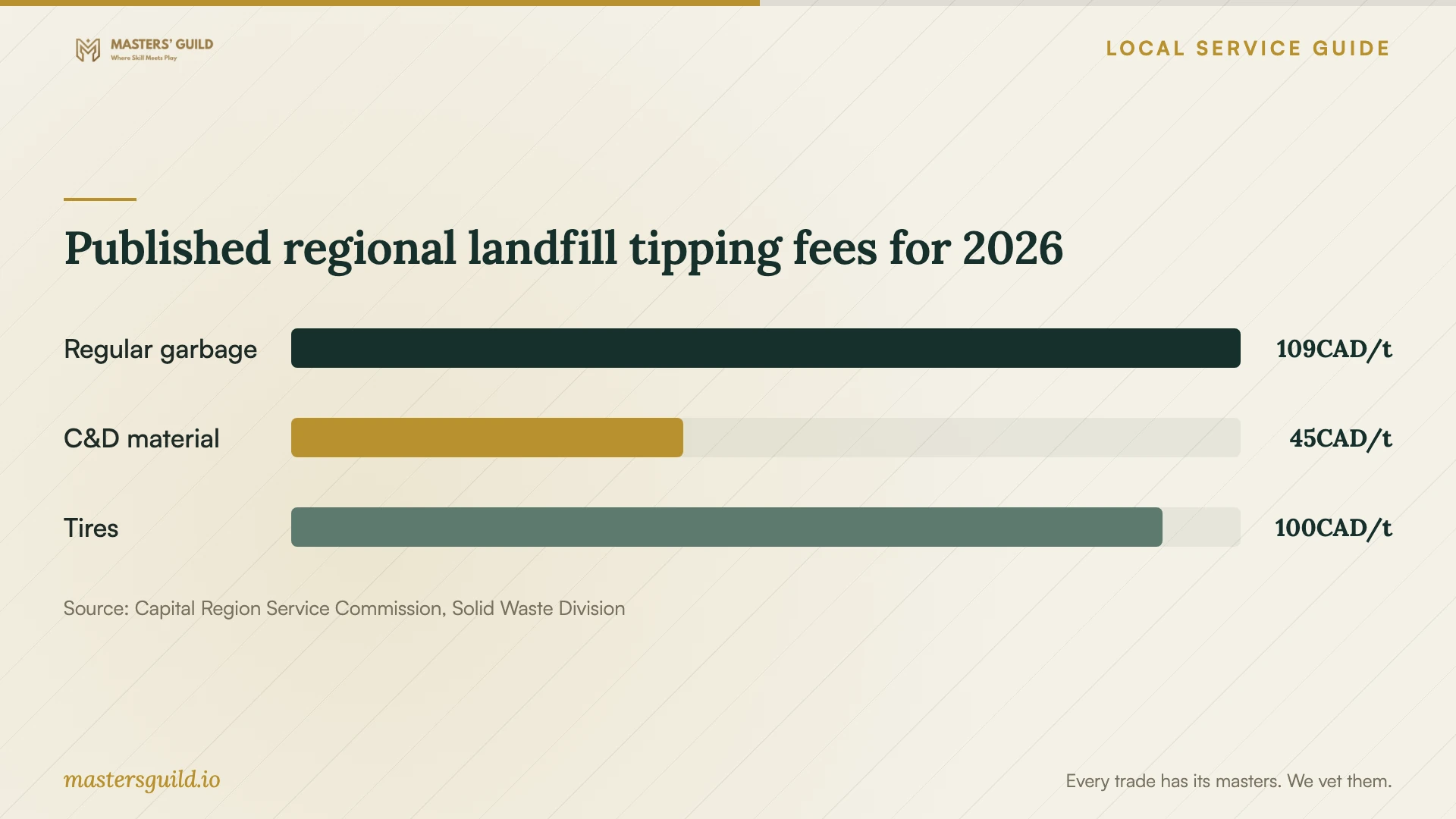
Local details that affect your job
Discuss alterations at Fredericton City Hall
For significant alterations, contact the Building Inspection Division or visit the Building Inspections Counter on City Hall’s ground floor before applying. The City encourages this discussion to establish required documentation and plans. Its process also requires a final inspection requested by the owner. Include responsibility for applications and inspections in any alteration scope. [3]
Separate regional disposal from hauling
Capital Region Service Commission lists its solid-waste facility at 1775 Alison Boulevard. Its 2026 fee notice says materials deposited at the recycling facility remain free of charge. Before approving a cleanout, confirm accepted materials and sorting requirements with the facility, and ask the hauler to document disposal charges. [1]
Match the provider to the work
| Your scope | Provider capability to confirm | Next step |
|---|---|---|
| Sorting and labels | Inventory handling and a clear location convention | Approve a sample zone before extending the work. |
| Forklift or powered pallet-truck movement | Competent operators, inspections and pedestrian controls | Review the equipment and traffic plan before booking. |
| Stock cleanout | Separate hauling and material-category disposal charges | Confirm facility acceptance and request receipts. |
| Significant building alterations | A defined scope for municipal review | Discuss plans and documentation with Fredericton Building Inspections. |
| Combustion-engine equipment indoors | Equipment suitability and an exhaust-exposure plan | Review indoor-use requirements before approving the equipment. |
Your hiring checklist
- Send providers a zone list, inventory summary and photographs before the site visit.
- Identify stock that requires owner approval before disposal.
- Confirm crew size, equipment responsibilities and the method for pricing extra work.
- Agree on delivery access, temporary stock locations and staff responsibilities.
- Ask for the traffic plan and operator qualifications for powered stock movement.
- Separate alteration work from sorting and labeling in the written scope.
- Request disposal categories, hauling charges and receipts.
- Test the final locations with staff and collect the handover records.
Frequently Asked Questions
How much should I budget for the organization work?
Obtain a site-specific quote that separates labour, equipment, supplies and removal. The published regional tipping fees cover disposal categories, not the full organization service. Compare providers using the same zone list and deliverables. [1]
Can my business stay open during the work?
Ask for staged work and agree on receiving, picking and pedestrian routes before booking. If lift trucks will operate, the employer must provide pedestrian separation where circumstances permit or implement specified collision-control procedures. [2]
Do I need a building permit?
Fredericton requires permits for significant building alterations. The supplied City guidance does not resolve every storage-layout scenario. Describe any proposed physical changes to Building Inspections and ask what documentation or approvals your project needs. [3]
What should I ask about forklift work?
Ask who operates and inspects the truck, how the crew checks load capacity and how they protect pedestrian routes. WorkSafeNB requires competent operators, daily inspections and loads within the manufacturer’s rated capacity. [2]
Sources and scope
This guide combines the sources below with practical planning guidance. Figures apply to the stated geography and period; request a written quote for your property.