
Local service guide
HVAC Services in El Paso: Hiring and Upgrade Guide
To arrange HVAC Services in El Paso, ask for a diagnosis of your existing system, check the contractor's Texas license and insurance, and request a written scope before approving work. For an upgrade, confirm El Paso Electric's Texas residential program eligibility before signing. The utility lists evaporative cooling, refrigerated-air conversions, refrigerated-air upgrades, mini-splits and duct sealing among eligible projects. [1] [2] [4]
Start with a diagnosis and a defined job
Tell the contractor whether you need a fault diagnosed, seasonal service, a replacement or an evaporative-to-refrigerated conversion. Photograph the equipment label, thermostat and accessible indoor and outdoor units. Describe which rooms feel uncomfortable, when the problem occurs and what you have tried. Include previous repair invoices.
For a repair visit, ask about the diagnostic charge, what the technician will inspect and whether the company credits that charge toward approved work. Request the diagnosis and repair price before authorizing parts. If the contractor recommends replacement, ask them to explain the fault, the repair option and the reason for recommending new equipment.
Compare cooling paths before selecting equipment
El Paso Electric's Texas residential eligible-project list includes evaporative coolers, evaporative-to-refrigerated conversions, refrigerated-air upgrades and high-efficiency mini-splits. It also includes duct sealing. Use those categories to request alternatives that fit your existing setup. [1]
For a conversion, ask the contractor to itemize equipment, ductwork changes, electrical work, removal of the old cooler and any roof or wall repairs. Ask who will handle each part and what the price excludes. For a room-specific project, request a mini-split option and an explanation of how the contractor would address the remaining rooms.
If you have refrigerated air, request separate findings for the equipment and ducts. Compare repair and replacement proposals using the same comfort goals. Ask the contractor to document how they selected equipment capacity and what checks they will perform after installation.
Check Texas credentials and permit responsibilities
The Texas Department of Licensing and Regulation states that a Class A air conditioning and refrigeration contractor license covers units of any size. A Class B license covers cooling systems of 25 tons and under and heating systems of 1.5 million BTUs per hour and under. The environmental air conditioning endorsement covers temperature, humidity, cleanliness, ventilation and circulation for human comfort. [4]
Ask for the responsible contractor's license number and check its status through TDLR's license search. Have the company identify the class and endorsement that cover your project. TDLR requires active contractor license holders to maintain commercial general liability insurance; request a current certificate identifying the license holder and business. [4]
Before signing a replacement or conversion contract, contact the building or permitting office responsible for your address. Describe the equipment replacement and any proposed ductwork, electrical or structural changes, then ask which permits and inspections apply. Have the contractor put responsibility for applications, fees and inspections in the written scope.
Plan cooling and heating work around your household
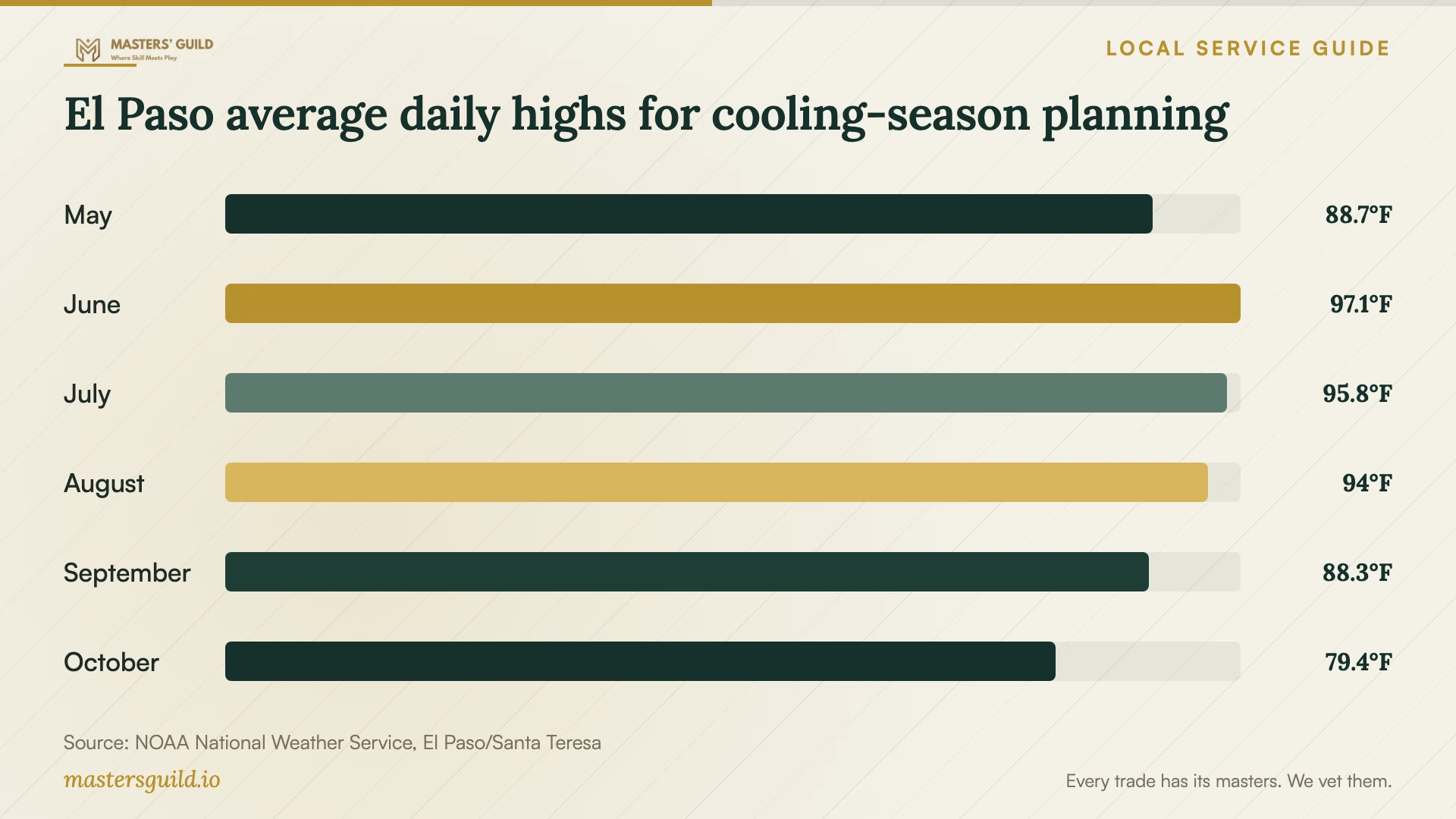
The National Weather Service's 1991–2020 El Paso climate normals give average daily highs of 97.1°F in June, 95.8°F in July and 94.0°F in August. October's average daily high is 79.4°F, while December's average daily low is 34.4°F. Use this historical seasonal context to discuss cooling performance and heating preparation. [3]
For an October appointment, ask the contractor to review your heating setup and unresolved cooling problems. For a planned replacement, request the installation sequence, equipment lead time and expected interruption to household heating or cooling. Tell the company about any household needs that affect scheduling and agree on how you will manage the interruption.
Compare complete proposals and confirm utility eligibility
Ask each bidder to price the same scope and list equipment model numbers, labor, removal, ductwork, electrical work, permit handling and cleanup. Request separate terms for equipment and workmanship warranties. Record who you should contact if the completed installation does not meet the agreed comfort goals.
El Paso Electric describes discounts or rebates for qualifying products and directs residential customers toward participating contractors. It offers Residential Solutions and Income Qualified Solutions, with enhanced rebates for qualifying households through the income-qualified route. Ask the utility which route applies to you before committing to a purchase. [2]
Confirm customer eligibility, equipment qualification, application timing and the incentive amount with the utility or participating contractor. Keep the installation price and proposed incentive separate in your comparison. Ask who will submit the application and which documents you should retain.
Obtain written bids for your address and equipment needs. Before paying a deposit, agree on payment stages, change-order approval and the documents you will receive at completion. Ask each bidder to identify exclusions so you can compare the total proposed work.
El Paso average daily highs for cooling-season planning
Local details that affect your job
Compare EPE's project categories and program routes
El Paso Electric's Texas residential program lists evaporative coolers, evaporative-to-refrigerated conversions, refrigerated-air upgrades, mini-splits and duct sealing. Its residential program page also identifies an income-qualified route for enhanced rebates. Before selecting equipment, ask a participating contractor to quote the relevant cooling path and ask the utility which program route applies to your household. Confirm eligibility and the incentive amount before including a rebate in your budget. [1] [2]
Match Texas license scope to your installation
Texas licensing rules apply to the contractor scope you should check in El Paso. TDLR distinguishes Class A licenses, which cover any size unit, from Class B licenses, which cover cooling systems up to 25 tons and heating systems up to 1.5 million BTUs per hour. Ask the responsible contractor to identify the class and environmental air conditioning endorsement for your proposed equipment. Request a current insurance certificate; TDLR requires active license holders to maintain commercial general liability insurance. [4]
Choose the scope to request
| Your situation | Scope to request | Question before approval |
|---|---|---|
| Existing system has a fault | Diagnosis and written repair option | What failed, what will the repair address, and what does it cost? |
| Considering an evaporative cooler replacement | Compare an evaporative option with a refrigerated-air conversion; EPE lists both categories | What additional work does each option require at this home? |
| Considering refrigerated-air replacement | Equipment assessment and a separate duct assessment; EPE lists refrigerated-air upgrades and duct sealing | Which work addresses the comfort problem, and how did you select capacity? |
| Planning a room-specific upgrade | Ask about a high-efficiency mini-split, which EPE lists among eligible projects | How will this proposal address the target room and the rest of the home? |
| Seeking help with the upgrade budget | Check EPE's residential and income-qualified program routes | Which route applies, and what must I confirm before purchase? |
Your hiring checklist
- Photograph equipment labels and write down the rooms, times and conditions associated with the problem.
- Ask about the diagnostic fee and require approval before the contractor performs additional work.
- Request the responsible contractor's Texas license number and current insurance certificate.
- Compare repair, replacement and conversion options against the same household comfort goals.
- Confirm utility eligibility, including the income-qualified route, before signing.
- Contact the permitting office responsible for your address and describe the proposed work.
- Require itemized equipment, ductwork, electrical work, removal and permit responsibilities.
- Agree on installation dates, payment stages, change orders and completion checks.
Frequently Asked Questions
Should I repair my system or replace it?
Request a written diagnosis and a priced repair option before deciding. Ask the contractor to explain what replacement would address beyond the current fault. Compare the full scope, warranty terms and household comfort goals alongside equipment prices.
Can I get help paying for an evaporative-to-refrigerated conversion?
El Paso Electric lists evaporative-to-refrigerated conversions among its Texas residential eligible projects. Ask the utility or a participating contractor to confirm your customer and project eligibility, qualifying equipment and incentive amount before signing. Ask whether the income-qualified program applies to your household. [1] [2]
What contractor credentials should I check?
Ask for the responsible contractor's TDLR license number, class and endorsement, then check the license status. TDLR defines equipment limits by class and requires active license holders to maintain commercial general liability insurance. Request a current insurance certificate with the license holder and business names. [4]
How do I confirm permit requirements?
Contact the building or permitting office responsible for your property address. Describe the replacement or conversion, including any ductwork, electrical or structural changes, and ask which permits and inspections apply. Have your contractor include application responsibility, fees and inspection arrangements in the written contract.
Sources and scope
This guide combines the sources below with practical planning guidance. Figures apply to the stated geography and period; request a written quote for your property.