
Local service guide
Warehouse organization in Edmonton: hiring and planning
Arrange warehouse organization by agreeing on the stock to sort, locations to label and person who approves inventory moves or disposal. Compare written quotes that separate labour, equipment, supplies and hauling. Check Edmonton’s permit review triggers before adding rack installation. For pallet moves, agree who operates equipment and how you will protect staff working nearby. [1]
Define the stock decisions and finished result
Walk the space with your warehouse lead and mark the areas included in the job. Plan separate locations for receiving, saleable stock, returns, damaged goods and packing supplies. Name someone who can decide whether unidentified stock stays, moves or leaves. Ask the crew to hold uncertain items for that person’s review.
Specify whether the crew will count inventory, update your system or relocate items using records you provide. Agree on a location naming scheme before printing labels. Include the location list, completed-bay photographs and staff handover in the scope, if you want those deliverables.
Choose a crew for the handling involved
Ask providers to describe how they would handle your stock dimensions, weights and pallet moves. Request proof of insurance appropriate to the work and clarify responsibility for inventory damage. Identify subcontracted hauling, equipment operation and rack work in the written quote.
For equipment work, ask who trains the operator, assesses competency, supplies operating instructions and authorizes use. Alberta’s March 2023 OHS consolidation describes these provisions and includes a supervised-trainee exception. It also describes designated pedestrian walkways where practicable, or protective procedures where separation is impracticable. Treat these as historical provisions and confirm current requirements before finalizing procedures. [4]
Ask your warehouse lead to review rack capacity information and flag damage before the crew redistributes stock. Alberta’s March 2023 consolidation describes rack load support, supporting foundations and prompt damage reporting. Pause work in a questionable bay and arrange an assessment; ask an appropriate specialist to resolve structural questions. [3]
Assign permit and engineering responsibilities
Tell the provider whether you intend to keep existing racks, install new ones or alter the arrangement. Edmonton includes storage racking among equipment changes affecting a building and identifies specific installation review triggers. Discuss the proposed work with City staff before authorizing installation or alterations. [1]
For an installation meeting those triggers, Edmonton requests a product list using National Fire Code (Alberta Edition) classifications and a sprinkler engineer’s confirmation of NFPA 13 conformance for the intended products and configurations. Ask who will classify your stock and obtain the sprinkler review. [1]
The City also requests a scaled floor plan showing compliant exit paths, emergency lighting and exit lighting; structural engineer-authenticated rack design and connections to the floor and other attachment points; and a structural engineer’s letter confirming floor capacity for the racks and contents. Assign each document to a named party in the scope. [1]
Compare quotes and confirm the waste route
Give each provider the same stock list, zone plan, handling tasks and handover requirements. Request crew size, charging basis, equipment rental, labels, containers, travel and hauling as separate items. For hourly work, agree on a spending limit and who may approve extra time. Record how the provider will price changes.
Edmonton classifies waste from businesses and junk-removal companies as non-residential. At the Edmonton Waste Management Centre, staff calculate fees from weight and material type. They apply minimum charges unless an exception applies and charge the most expensive material’s rate to an entire mixed load. Ask the hauler to identify the destination, separate materials and supply disposal receipts. [2]
Identify unusual waste before loading. EWMC lists empty industrial drums and pails, eligible expired food, and feed pellets or animal-food waste as requiring a manifest. Its expired-food category excludes liquids and frozen liquids; the facility prohibits liquid waste and frozen liquids. It also prohibits non-residential automotive fluids and oily rags. A manifest does not guarantee acceptance: confirm the actual materials with facility staff. [2]
Schedule the reset and test the handover
Choose a work window with your warehouse lead and agree which receiving and dispatch activities can continue. Mark a temporary stock holding area, record transfers and assign someone to answer inventory questions. Test the proposed labels and layout in a representative zone before extending the work.
At handover, ask a staff member to locate an item using the new records and put a delivery into its assigned place. Resolve unclear labels before accepting the work. Assign responsibility for returns, overflow and damaged stock, then choose a review date to check the arrangement with staff.
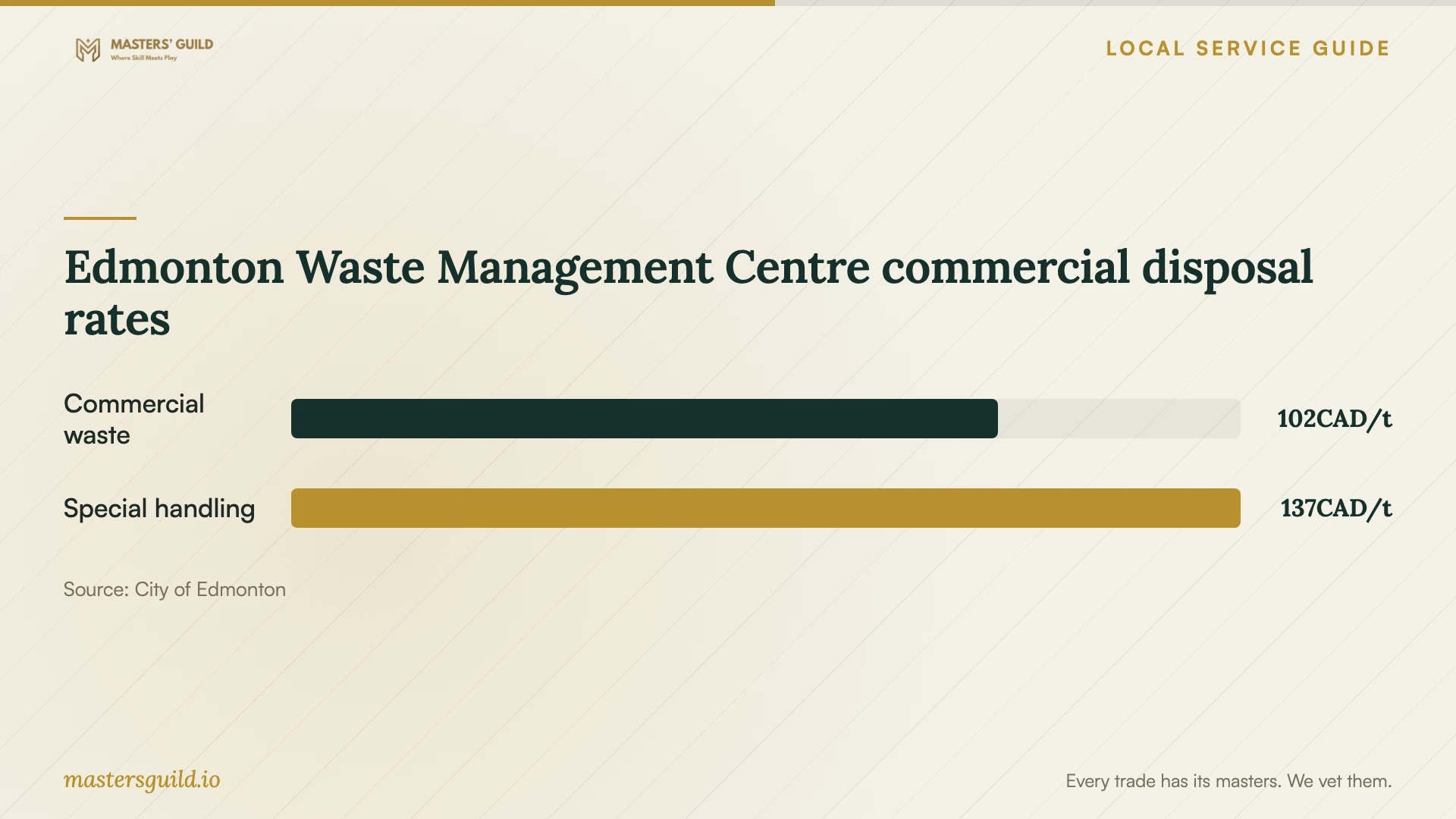
Edmonton Waste Management Centre commercial disposal rates
Local details that affect your job
Measure product height and check the complete rack arrangement
Edmonton requires building permit review for rack installation when the top of stored product exceeds 3.6 metres, racks will hold rubber tires or Group A plastics, racks sit off a slab on grade, or a multi-level system has intermediate work platforms for access without ladders. Measure the intended product height, rather than rack height alone. Give City staff the product types, supporting floor and platform details. [1]
Prepare for an Edmonton Service Centre appointment
The City offers appointments to discuss permit requirements and suggests bringing site and proposed floor plans. Ask your landlord for a site plan and mark the proposed changes. Staff provide preliminary information based on your details and may request more during application review. Under the existing-building application process, City staff complete development permit review before building permit review begins. [1]
Check special waste before booking collection
EWMC lists materials requiring special handling at CAD 137 per tonne with a CAD 137 minimum. Certain materials need pre-approval, a manifest or a Waste Identification Number. Facility staff have the final say on acceptance and charges. Have your hauler confirm the classification and destination before collecting unusual stock or industrial containers. [2]
Match the proposed work to the support you need
| Proposed work | Support to arrange | Question before approval |
|---|---|---|
| Light stock sorting and labels | Organizing crew with an agreed inventory scope | Who approves stock decisions and updates records? |
| Forklift pallet moves | Named operator; use March 2023 OHS provisions as background and confirm current requirements | Who confirms competency, authorizes use and protects pedestrians? |
| Rack installation meeting Edmonton’s review triggers | Rack specialist with structural and sprinkler engineering support | Who obtains the permit and each required document? |
| Mixed commercial waste removal | Hauler with a confirmed destination and material classification | How will you separate waste and document charges? |
Your hiring checklist
- Mark the zones and stock categories included in the job.
- Name the person who approves inventory moves and disposal.
- Provide stock dimensions, weights and rack capacity information.
- Confirm equipment operators and procedures for nearby staff.
- Assign permit applications and engineering documents before rack work.
- Agree on the work window and temporary holding area.
- Separate labour, equipment, supplies, hauling and disposal in the quote.
- Define the labels, location records and staff handover.
Frequently Asked Questions
How much should I budget for the organizing crew?
Obtain comparable written quotes for the same stock volume, handling tasks and handover. Ask each provider to separate labour, equipment, storage supplies, hauling and disposal. Agree on a spending limit for hourly work and a process for approving changes.
Does staying below 3.6 metres avoid racking review?
Height is one trigger. Edmonton also requires review for installations involving rubber tires or Group A plastics, racks off a slab on grade, and specified multi-level systems with intermediate work platforms. Discuss the complete arrangement with City staff. [1]
Can the organizing crew use our forklift?
Confirm the individual operator and employer authorization before assigning the task. Alberta’s March 2023 OHS consolidation describes training, demonstrated competency, familiarity with instructions and authorization, with a supervised-trainee exception. It also addresses pedestrian protection. Confirm current workplace requirements before agreeing on procedures. [4]
Does a small commercial waste load avoid the minimum fee?
EWMC lists a CAD 40 minimum for standard non-residential waste alongside its CAD 102 per tonne rate. Confirm the material category before collection because special-handling charges and item surcharges may apply. Ask your hauler to quote transport separately. [2]
Sources and scope
This guide combines the sources below with practical planning guidance. Figures apply to the stated geography and period; request a written quote for your property.