
Local service guide
Warehouse Organization in Des Moines, IA
Arrange Warehouse Organization in Des Moines by defining the stock zones, handling tasks and inventory records you want the crew to deliver. Ask for a written quote that separates sorting and labeling, equipment, disposal and any construction work. If your cleanout includes discarded chemicals, arrange a separate disposal route: Iowa DNR requires special handling for business hazardous waste. [1]
Define the work before requesting quotes
Write down the problem you want to solve. You might need to find stock without opening cartons, separate returns from saleable inventory, or match shelf locations to your stock records. Give bidders photos, a layout sketch and a list of the zones included. Identify the receiving area, packing stations and routes your staff must keep available during the work.
Specify what the crew should leave you: a location map, consistent shelf labels, an updated inventory file and a list of unresolved items. Decide who can approve disposal, write off damaged stock and change item locations in your system. Ask the crew to place uncertain items in a review area for your decision.
Choose a crew for the handling tasks
Ask bidders to describe their approach to commercial inventory and your equipment. State whether the work involves cartons at floor level, pallets, stock on upper shelves or moving shelving. Request evidence of insurance appropriate to the agreed work. Identify who supplies handling equipment and who operates it. List rack alterations and trade work as separate tasks.
If a bidder proposes construction work, use Iowa DIAL's contractor-registration guidance to check the contractor. DIAL requires construction contractors earning at least $2,000 a year from construction to register, with stated exceptions for lower earnings and work on their own property. DIAL also directs customers to the city or county government to determine local project requirements. Confirm those requirements before authorizing installation or alterations. [3]
Compare quotes and plan around your staff
Ask each bidder to quote the same zones and finished work. Request the crew size, proposed work window, pricing basis, equipment charges, labels and containers, hauling charges and exclusions. For hourly work, agree on an approval point before the crew exceeds your budget. For a fixed scope, record how you will approve additions.
Plan the sequence around your dispatch and receiving commitments. Consider starting with a single zone so you can approve the location codes and inventory updates before expanding the work. Arrange temporary stock locations, and tell your staff when they may pick from each area. Include a final walkthrough and check that physical labels match the inventory file.
Separate chemical disposal from general hauling
Iowa DNR identifies paints, thinners, solvents, cleaning fluids and pesticides among materials that can generate business hazardous waste. DNR prohibits putting hazardous waste in a dumpster, pouring it down drains, evaporating it into the air or taking it to a landfill or transfer station. Before approving a cleanout, have your business identify the waste and arrange the appropriate destination. [1]
DNR allows eligible very small quantity generator businesses to manage disposal through a regional collection center, subject to facility authorization and documentation of generator status. Businesses producing larger amounts must follow federal regulations and use a licensed hazardous-waste company. Give the receiving facility a material list and quantities before scheduling transport; request a separate disposal charge in the organizer's quote. [1]
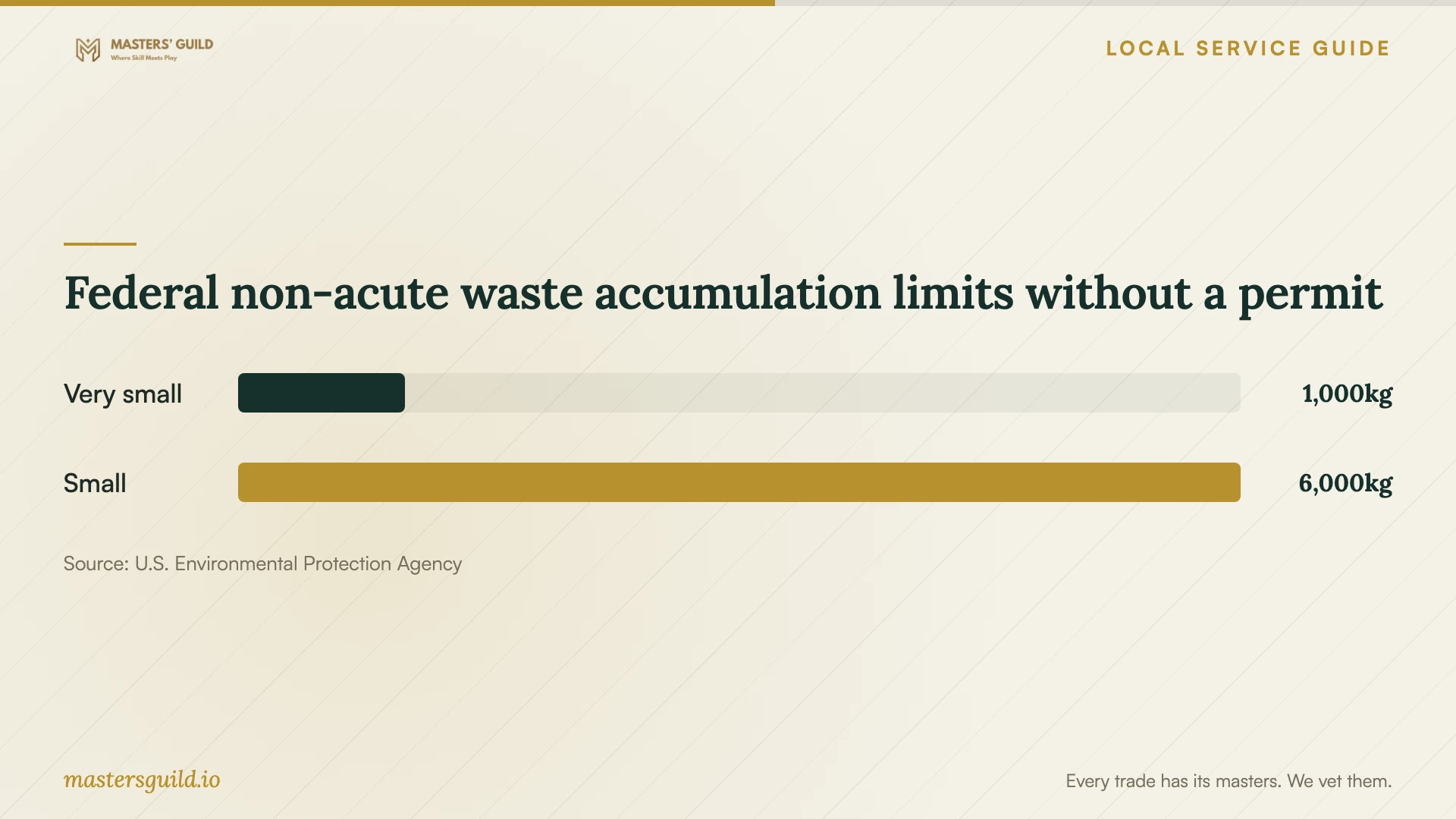
Check both the waste you generate and the amount you hold on site. EPA publishes distinct monthly generation thresholds and quantities generators may accumulate without a permit, including separate thresholds for acute hazardous waste and acute spill residue. Ask the person responsible for your waste compliance to confirm your category before a chemical-inventory cleanout. [4]
Federal non-acute waste accumulation limits without a permit
Local details that affect your job
Use the Polk County disposal entry
Iowa DNR's county directory lists Metro Waste Authority as Polk County's main regional collection center at 1105 Prairie Dr., Bondurant, IA 50035, with phone 515-967-5512. The directory advises checking hours and appointments. Use the Polk County entry when arranging a delivery from a site in that county; the directory's Des Moines County entry names a different facility in West Burlington. [2]
Confirm business access before booking hauling
Before adding a Bondurant disposal trip to your warehouse work, contact the facility to confirm business authorization and the documentation it needs for generator status. Iowa DNR describes regional collection centers as serving eligible very small quantity generator businesses and accepting specific waste types. Its reference to free disposal applies to residents, so ask about business charges and accepted materials before approving the hauling quote. [1] [2]
Check construction work with Iowa DIAL
For a warehouse project that expands into construction, check Iowa contractor registration and contact the city or county government responsible for the site about local requirements. DIAL lists its Contractor Registration office at 6200 Park Avenue, Suite 100, Des Moines, and gives 515-242-5871 for registration questions. Use that contact if you need clarification about the construction portion of a bid. [3]
Match the provider to the work
| Your project | Provider or next step | Confirm before approval |
|---|---|---|
| Sorting cartons and labeling existing shelves | Ask an organization crew about its commercial inventory experience | Included zones, label wording and finished inventory records |
| Moving pallets or reaching stock on upper shelves | Ask the crew to explain its equipment and handling plan | Equipment, operators, insurance and work sequence |
| Construction or alterations | Check applicable Iowa contractor registration and local requirements | Construction tasks, registration and city or county guidance |
| Discarding business chemicals | Confirm regional collection center eligibility or arrange a licensed hazardous-waste company | Waste identification, generator status and destination authorization |
Your hiring checklist
- Photograph each included zone and mark areas your staff must keep available.
- List stock categories, handling tasks and proposed inventory changes.
- Name the person who approves write-offs, disposal and location changes.
- Agree on location codes and label wording before buying supplies.
- Request itemized labor, equipment, materials and hauling charges.
- Confirm the destination and authorization for any business hazardous waste before transport.
- Schedule a walkthrough to check labels, stock records and unresolved items.
Frequently Asked Questions
How much should I budget for a warehouse reset?
Request a quote based on the zones, stock handling and finished work you need. Ask bidders to separate labor, equipment, supplies and disposal. Agree on how they will handle additional work and who can authorize spending beyond the original scope.
Can the crew keep the warehouse operating during the work?
Ask the bidder to propose a zone-by-zone sequence around your receiving and dispatch schedule. Identify temporary pick locations and arrange a handoff before staff resume using each completed zone. Put the work window and access arrangements in writing.
Can business chemicals go with the rest of the cleanout?
Iowa DNR prohibits disposing of business hazardous waste in dumpsters, drains, landfills or transfer stations. Confirm a separate authorized route. Eligible very small quantity generator businesses may use a regional collection center after confirming authorization and documenting generator status. [1]
Does an organizer's quote cover new shelving or construction?
Ask the bidder to list installation and alteration tasks separately. If the work constitutes construction, check applicable Iowa contractor registration and local project requirements. DIAL requires registration for construction contractors earning at least $2,000 annually from construction, subject to its stated exceptions. [3]
Sources and scope
This guide combines the sources below with practical planning guidance. Figures apply to the stated geography and period; request a written quote for your property.