
Local service guide
Warehouse Organization in Dallas: Plan and Hire
Arrange Warehouse Organization in Dallas by asking crews to inspect your storage area and quote the work you need: sorting, labeling, moving goods, updating stock records, and removing approved waste. Compare labor, supplies, equipment, and hauling charges. Choose a crew that explains who will handle heavy goods, how employees will find moved stock, and which activities you must pause.
Show the crew what you need done
Photograph the storage area and sketch where employees receive deliveries, store goods, collect orders, and pack shipments. Describe the problem you want the crew to address. You might need to separate returns from goods ready for sale, assign shelves to loose cartons, or identify stock with missing labels. List the areas you want included in the quote.
Separate sorting from heavy lifting, work on high racks, shelving changes, and waste removal. Ask who will carry out each task and what equipment they will bring. Request insurance documentation for the proposed work and agree on responsibility for damaged goods. Ask for a separate plan before allowing anyone to change racks or shelving.
Compare the whole quote
Ask how many people will work, how long they expect to stay, and how they charge. Establish whether an hourly rate covers one person or the whole crew. For a fixed price, write down the areas and tasks included. Request separate amounts for labels, bins, equipment rental, hauling, and disposal.
Name an employee who can approve purchases, added work, and discarded stock. Ask the crew to stop and contact that person before exceeding the agreed amount. Include any waiting charges in the discussion, particularly if workers will need your employees to identify goods or supply lifting equipment.
For waste removal, ask the hauler to name the disposal facility and provide receipts. McCommas Bluff accepts commercial customers. Dallas limits its free resident disposal provision to qualifying residents hauling their own waste from their residences in specified vehicles. Ask for commercial charges when planning a warehouse clear-out. [2]
Try the arrangement in one bay
Choose one storage bay for a trial. Agree on shelf names, label placement, and where employees should put returned goods. Have an employee find and replace an item using the proposed labels. If you use scanners, test the labels with your devices before ordering the full quantity. Check bin dimensions with the goods you intend to store.
Ask the crew to record each item's old and new location as they move it. Set aside goods that need your decision in a marked hold area. Have your employee check the changed locations against stock records before taking orders from the reorganized area. Agree on who will resolve missing labels or uncertain quantities.
Arrange access and work hours
Tell the crew which doors, aisles, and packing areas employees need during the work. Choose a temporary place for displaced goods and agree on the order of work. Name the employee who will speak with delivery drivers. Discuss how workers will stay apart from moving vehicles and keep exits and safety equipment accessible.
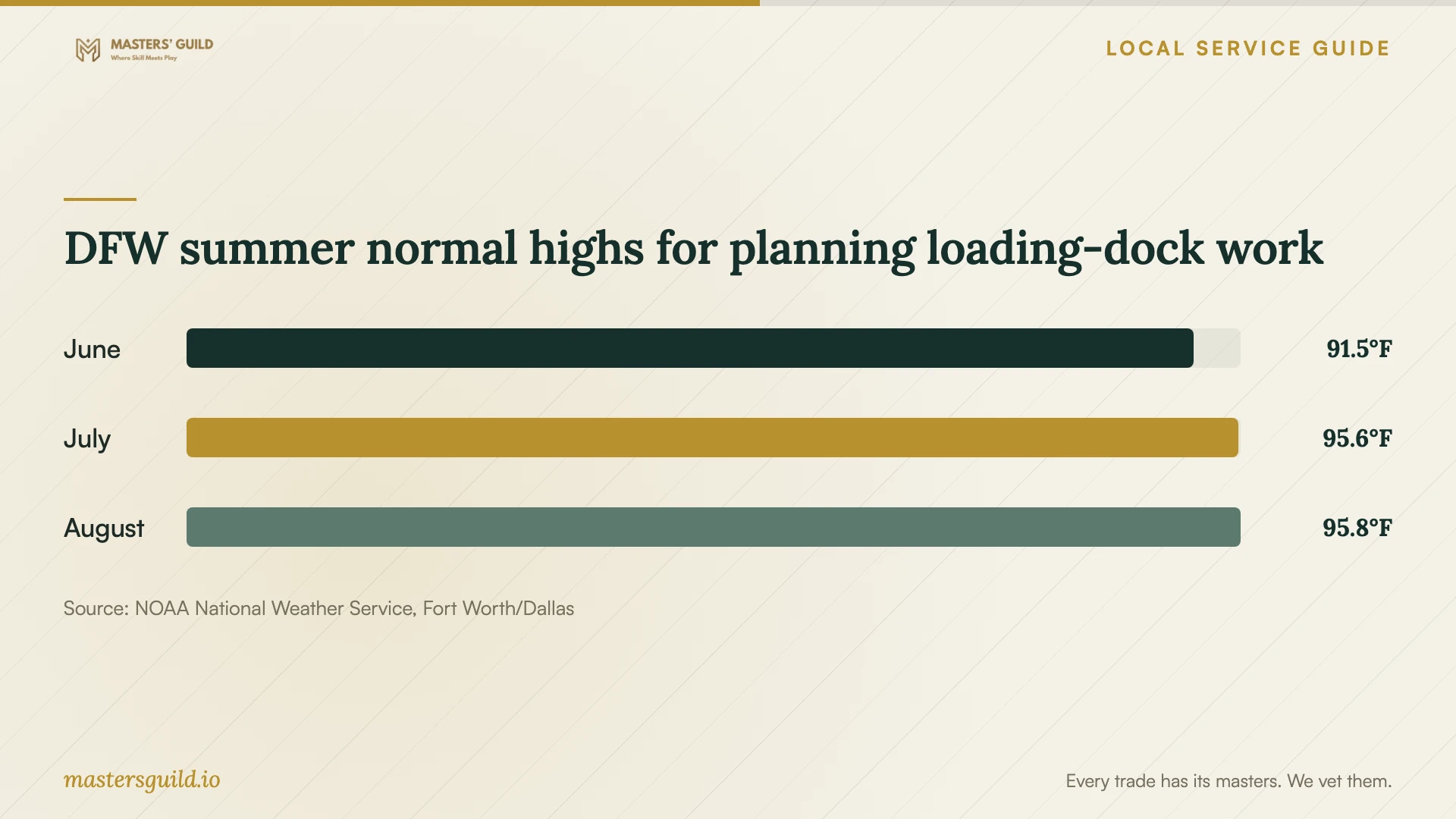
For loading-dock work or an unconditioned building, discuss heat precautions before choosing work hours. The National Weather Service reports DFW normal highs of 95.6°F in July and 95.8°F in August for 1991–2020. Ask about drinking water, breaks, and a cooler recovery area. Use these regional outdoor averages for planning; check the forecast and conditions inside your building before work starts. [3]
Check the work before accepting it
Walk the area with the employee who oversees receiving or order picking. Find selected items using the new labels and compare their locations with the stock records. Check the list of goods awaiting a decision. Collect disposal receipts and identify missing or misplaced items before accepting the work.
Ask the crew to explain the arrangement to the employees who will use it. Decide who approves new shelf locations and where staff should put incoming goods and returns. If you want follow-up visits, agree on their tasks, length, and charges in writing.
DFW summer normal highs for planning loading-dock work
Local details that affect your job
Confirm Dallas disposal fees with the facility
Dallas's FY 2026–27 approved fee page lists commercial gate rates of $45.78 per ton at McCommas Bluff and $71.28 per ton at Bachman Transfer Station. Its table header says approved fees begin October 1, 2027, while its footnote says October 1, 2026 for changes other than residential sanitation fees. The McCommas page displays $43.60 per ton and points readers to changes effective October 1, 2026. Ask the hauler to confirm the applicable rate with the facility and separate gate charges, extra fees, and hauling labor in the quote. [1] [2]
Choose a destination before loading unwanted equipment
McCommas Bluff lists commercial waste among accepted materials, but its electronics entry applies to residents only. Its appliance entry requires refrigerant removal where applicable. Give the hauler a list of unwanted electronics and refrigeration equipment and request a confirmed destination for each. Dallas requires covered loads containing loose materials and lists a $40 uncovered-load fee. Include load covering in your hauling agreement. [2]
Choose the tasks to include in your quote
| Your task | Ask the crew for | Check before approving |
|---|---|---|
| Sort and label reachable stock | A named work area, labels, and updated item locations | Test labels with employees and their scanners |
| Move heavy goods or stock on high racks | Named workers, suitable equipment, and a handling plan | Review the proposed work and insurance documentation |
| Change racks or shelving | A separate proposal for the changes | Agree on who will plan and perform the work |
| Remove ordinary warehouse waste | A commercial disposal destination and receipts | Confirm charges and cover loads containing loose materials |
| Discard electronics or refrigeration equipment | A confirmed destination for each material | McCommas lists electronics for residents only and appliances with refrigerants removed where applicable |
Your hiring checklist
- Photograph the area and mark receiving, storage, and packing locations on a floor sketch.
- List the goods to move and the stock records the crew must update.
- Name the employee who approves purchases, disposal, and added work.
- Compare labor, supplies, equipment, hauling, and disposal charges.
- Test labels, scanners, and bins in one storage bay.
- Agree on work hours, delivery access, and temporary storage.
- Ask the hauler to confirm waste acceptance and fees before loading.
- Check item locations and collect receipts before accepting the work.
Frequently Asked Questions
How much should I budget for warehouse organization?
Request a quote after the crew inspects your goods and access. Compare sorting, labeling, lifting, record updates, supplies, and hauling as separate tasks. Establish whether hourly charges apply per person or per crew, and agree on when workers must seek approval for extra charges.
Can my business use free Dallas resident disposal?
Dallas describes free disposal for qualifying residents hauling their own waste from their residences in specified vehicles. Ask your hauler for commercial disposal charges for a warehouse clear-out and require receipts. [2]
Can employees keep shipping orders during the work?
Ask the crew to propose an area-by-area schedule. Identify the doors and stock locations employees need, choose temporary storage, and agree on which activities you will pause. Have an employee check changed item locations before reopening each area.
Should I buy bins and labels before hiring?
Prepare your requirements, then test samples with the crew and your employees. Check label readability, scanner compatibility, and container fit. Agree on who orders supplies and require approval before substitutions.
Sources and scope
This guide combines the sources below with practical planning guidance. Figures apply to the stated geography and period; request a written quote for your property.