
Local service guide
Warehouse Organization in Columbia, SC
Arrange Warehouse Organization in Columbia, SC by hiring a crew for a defined storage zone, with written instructions for stock handling, location labels, inventory updates and removal. Separate sorting from construction or trade work before accepting a quote. For premises within city limits, Columbia requires permits for regulated commercial work. Ask the Development Center about proposed building changes before committing to an installation date. [1]
Define the work before requesting quotes
Choose a starting zone, such as receiving, packing supplies or spare parts. Photograph it and list the items you want the crew to relocate. Include approximate item weights, storage heights and any stock that staff must keep accessible during the work. Mark items that require your approval before disposal.
Ask for a written outcome: a location map, readable bay labels, an updated inventory list and designated spaces for returns, damaged stock and items awaiting a decision. Specify whether the crew must count units, scan barcodes or enter changes into your existing system. Have your staff approve the naming convention before the crew prints labels.
Keep proposed shelving installation, rack alterations and electrical work on a separate scope line. Columbia distinguishes commercial Building Permits from Building Trade Permits, which include electrical, mechanical, plumbing and gas work. Ask the City to classify the proposed work; its guidance does not establish a permit exemption for every rack adjustment. [1]
Choose a crew and compare the complete quote
Ask each bidder to describe comparable commercial stock-handling work and identify who will supervise your reset. Request insurance documentation and clarify who will operate lifting equipment. For heavy inventory or stock on upper shelves, ask the provider to explain its handling plan and equipment needs before booking.
Compare quotes against the same deliverables. For an hourly proposal, request the crew size, estimated labor hours, billing basis and spending limit. Clarify whether the provider charges per worker or for the whole crew. For a fixed quote, list the exclusions and require your approval before the provider adds work.
Ask bidders to separate consumables, storage products, equipment rental, transport and disposal. Tell them who supplies bins and labels, whether you need work outside operating hours, and how you will approve purchases. Request a site visit if photos leave stock volume or access unclear. Use a quote for your premises and commercial scope to set the budget.
Arrange recycling and removal before the reset
Create separate holding areas for retained stock, recycling and approved discards. Name the employee who can release items for removal. Ask the provider to identify the destination, accepted materials and charges for each removal stream before loading begins.
Columbia Public Works provides roll-cart collection to residential and small commercial locations, but limits those carts to household garbage. It collects bulk items separately and collects waste only from City-furnished containers. Call Solid Waste at 803-545-3800 to confirm arrangements for your address and waste type before assigning clear-out disposal to routine collection. [2]
South Carolina’s Department of Environmental Services lists a Columbia commercial recycling program with up to four roll carts for eligible businesses on City garbage service. It describes the collection as commingled material only. It also lists business participation in Richland County curbside recycling. Confirm your jurisdiction, accepted materials and capacity before arranging the reset; the listing does not establish that either program will accept your entire discard pile. [3]
Keep operations running and check the handover
Agree on a work sequence with your supervisor. Start with a zone you can release without interrupting urgent orders, then authorize the next area after staff check the first. Identify temporary storage space, delivery access and routes the crew must keep clear. Give the crew a contact for stock questions throughout the job.
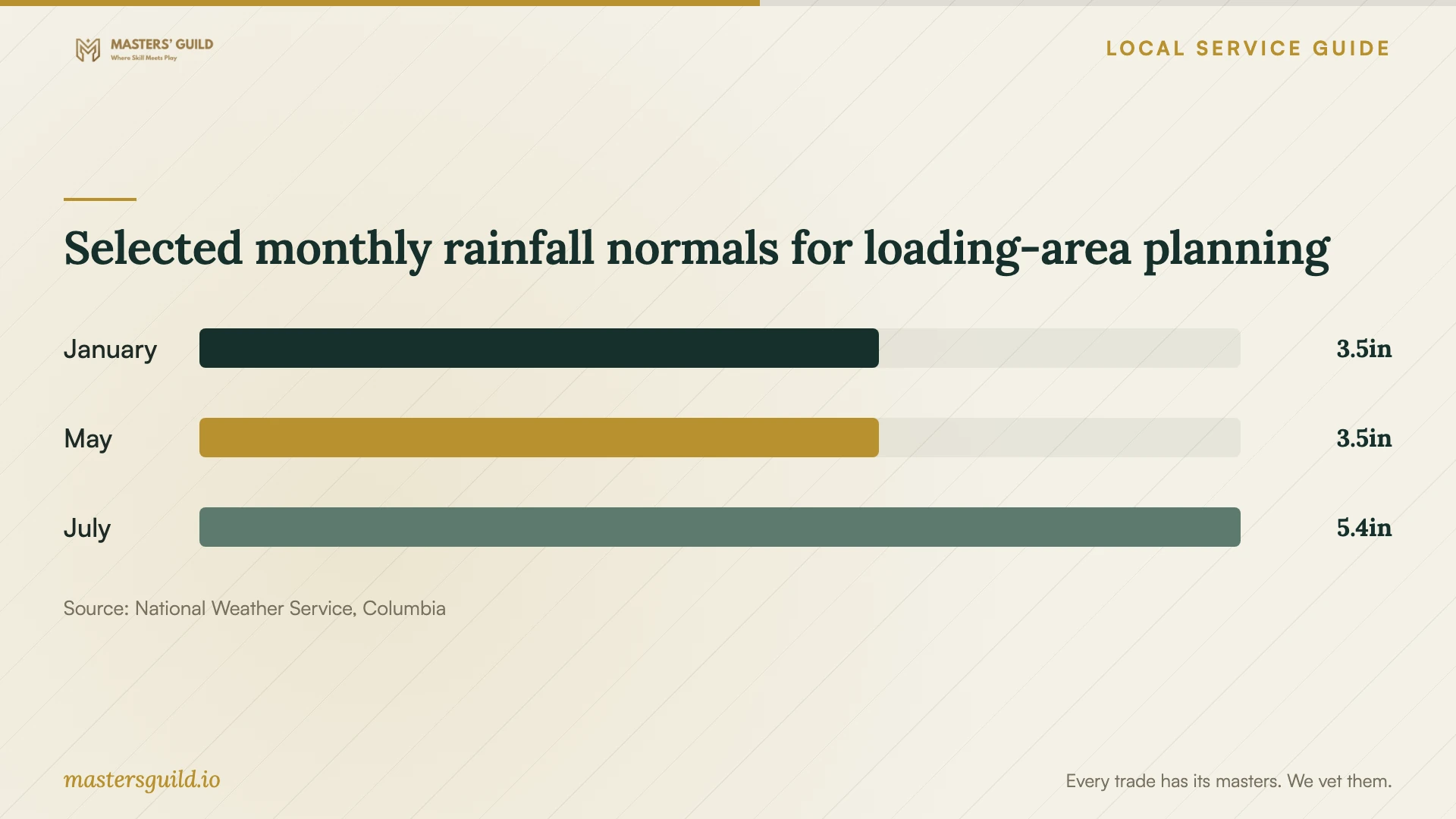
Plan covered staging if workers will move cartons through an outdoor loading area. The National Weather Service’s summary issued in June 2022 includes monthly precipitation normals for Columbia Metropolitan Airport. Use the chart as historical background when planning staging. It does not forecast weather for your booking date or measure conditions inside your warehouse. [4]
At handover, ask a staff member to locate a sample of items using the new labels and inventory records. Check the discard approvals, location map and unresolved-item list with the supervisor. Assign an employee to maintain labels and returns areas, and agree on the scope of any follow-up visit before the crew leaves.
Selected monthly rainfall normals for loading-area planning
Local details that affect your job
City commercial permit contacts
For regulated work within Columbia city limits, the City directs applicants to submit a Commercial Building Trade Permit application and required plans to the Development Center. Call 803-545-3420 for trade-permit information. For Building Permit submission requirements, call 803-545-3483. Describe proposed rack, building or electrical changes before choosing the installation crew and schedule. [1]
Commercial recycling depends on the address and service
The state’s local-government directory limits Columbia’s listed commercial recycling program to businesses within incorporated city limits that use City garbage service, with up to four roll carts and commingled collection. It lists Richland County business curbside participation separately. Confirm which service covers your premises before purchasing containers or including recycling pickup in the provider’s scope. [3]
Routine garbage collection has limits
Columbia separates bulk items from roll-cart garbage and does not collect waste from personal containers. Ask Solid Waste about your intended discards, then arrange any additional haul-away before the crew starts. Include removal charges and responsibility in the written quote. [2]
Match the provider to your proposed work
| Proposed work | Provider to consider | Confirm before booking |
|---|---|---|
| Sort light stock and label existing locations | Commercial organization crew | Counting duties, label format, stock access and approval for discards |
| Move heavy stock or retrieve items from upper shelves | Crew with an agreed handling and equipment plan | Equipment operators, insurance documentation and staff coordination |
| Alter the building or add electrical work | Contractor suited to the proposed installation or trade | Ask Columbia’s Development Center about the applicable commercial permit process |
| Remove bulky discards | Removal provider or confirmed collection arrangement | Destination, accepted materials and charges; Columbia separates bulk items from roll-cart garbage |
| Create a recurring recycling area | Organization crew coordinated with the applicable collection service | Address eligibility and capacity; Columbia’s listed commercial program requires City garbage service |
Your hiring checklist
- Photograph the starting zone and identify stock that must remain accessible.
- List item weights, storage heights and handling restrictions for bidders.
- Approve the location names and inventory-update method before labeling.
- Separate organization labor from installation and trade work in the scope.
- Request insurance documentation, a named supervisor and a spending limit.
- Confirm recycling acceptance and arrange removal for approved discards.
- Agree on covered staging, delivery access and the work sequence.
- Test item retrieval and sign off the inventory changes at handover.
Frequently Asked Questions
How much should I budget for a warehouse reset?
Request a quote for your stock volume, access and deliverables. Ask providers to separate labor, equipment, storage products and removal. Clarify hourly billing per worker versus per crew, and agree on a spending limit before work starts.
Does warehouse organization require a City permit?
Columbia requires permits for regulated commercial work. Describe any building, rack or trade changes to the Development Center so staff can assess your scope. The City’s published guidance does not resolve the permit status of every organization project or rack adjustment. [1]
Can the crew put the clear-out waste in our usual garbage carts?
Confirm the waste type and collection arrangement first. Columbia limits roll carts to household garbage, separates bulk collection and collects waste only from City-furnished containers. Ask Solid Waste about the planned discards before authorizing removal. [2]
Can we keep shipping orders during the work?
Ask the provider to propose a phased reset around your order schedule. Identify stock that staff need throughout the job, reserve temporary storage and test the first completed zone before releasing the next. Put access arrangements and any shutdown window in writing.
Sources and scope
This guide combines the sources below with practical planning guidance. Figures apply to the stated geography and period; request a written quote for your property.