
Local service guide
Long-Distance Moving in Chicago: Hiring and Planning
Arrange Long-Distance Moving in Chicago by comparing written quotes for the same inventory, checking the mover’s authority for your route, and agreeing on loading access before booking. Ask who will arrange curb space, how the crew will use stairs or elevators, and what happens if delivery misses your building’s reserved window. Chicago’s 47th Ward guidance distinguishes courtesy moving signs from enforceable CDOT tow-zone signs, so specify which arrangement you need. [3]
Check the company for your actual route
Give each bidder the pickup and destination addresses before discussing credentials. For a move that stays within Illinois, the Illinois Commerce Commission provides household-goods licensing guidance and a license-status lookup. The ICC requires covered movers to maintain valid insurance and service-price tariffs on file. Ask for the company’s legal name and license number, then compare those details with the company named on your paperwork. [1]
For a move across state lines, ask the company to identify the authority under which it will transport your belongings and where you can verify it. Ask whether the business taking your booking will operate the truck or arrange transport with another company. Get the transporting company’s name and a contact for pickup and delivery before committing.
Ask for written explanations of loss or damage protection, exclusions, deductibles and the claims process. Describe valuable or fragile items before accepting a quote. Keep photographs and your own inventory, and ask the mover how it will record each item’s condition at pickup.
Compare complete quotes rather than headline prices
Request quotes against one inventory and one access description. Include furniture, packed boxes, storage areas and items that need disassembly. Send photos or arrange a walkthrough so bidders can review the same shipment. Ask each company to state its pricing basis, included work and circumstances that could change the total.
Have bidders address packing materials, stairs, elevator use, carrying distance, smaller-truck transfers, storage and specialty handling. Ask whether each item is included, excluded or subject to a stated charge. For an Illinois-only move, ask the mover to explain the relevant charges in its filed tariff, which the ICC describes as a list of services and prices. [1]
Do not use a bedroom count alone to set your budget. Compare the written totals after matching the scope, and keep separate allowances for travel, temporary accommodation and essentials you will carry yourself. Before paying a deposit, request the cancellation terms, refund terms and payment schedule in writing.
Agree on pickup access before reserving the date
Ask your building manager about moving hours, elevator reservations, loading entrances and any required mover documents. Give the mover doorway and elevator measurements for large pieces. Confirm who will protect shared floors and walls, and ask the crew to review the route from your home to the proposed truck position.
For street loading, choose between requesting cooperation from neighbors and arranging enforceable restrictions. The 47th Ward offers free courtesy signs and recommends posting them 48 to 72 hours before the move. Its guidance says moving companies can apply online for CDOT tow-zone signs and should allow enough time for the City to post them. Agree in writing who will handle that application. [3]
Ask the mover to review a fallback loading position before booking. Describe the carrying route from that position and request any associated charge. If you plan to use a portable container, confirm the placement arrangement with the supplier and property manager before choosing that service.
Coordinate delivery and weather contingencies
Ask for the pickup window and delivery window as separate commitments. Have the mover explain how it will notify you, who you should call during transit and what you should arrange if the destination is unavailable. Reserve the destination elevator only after discussing how the delivery window fits the building’s rules.
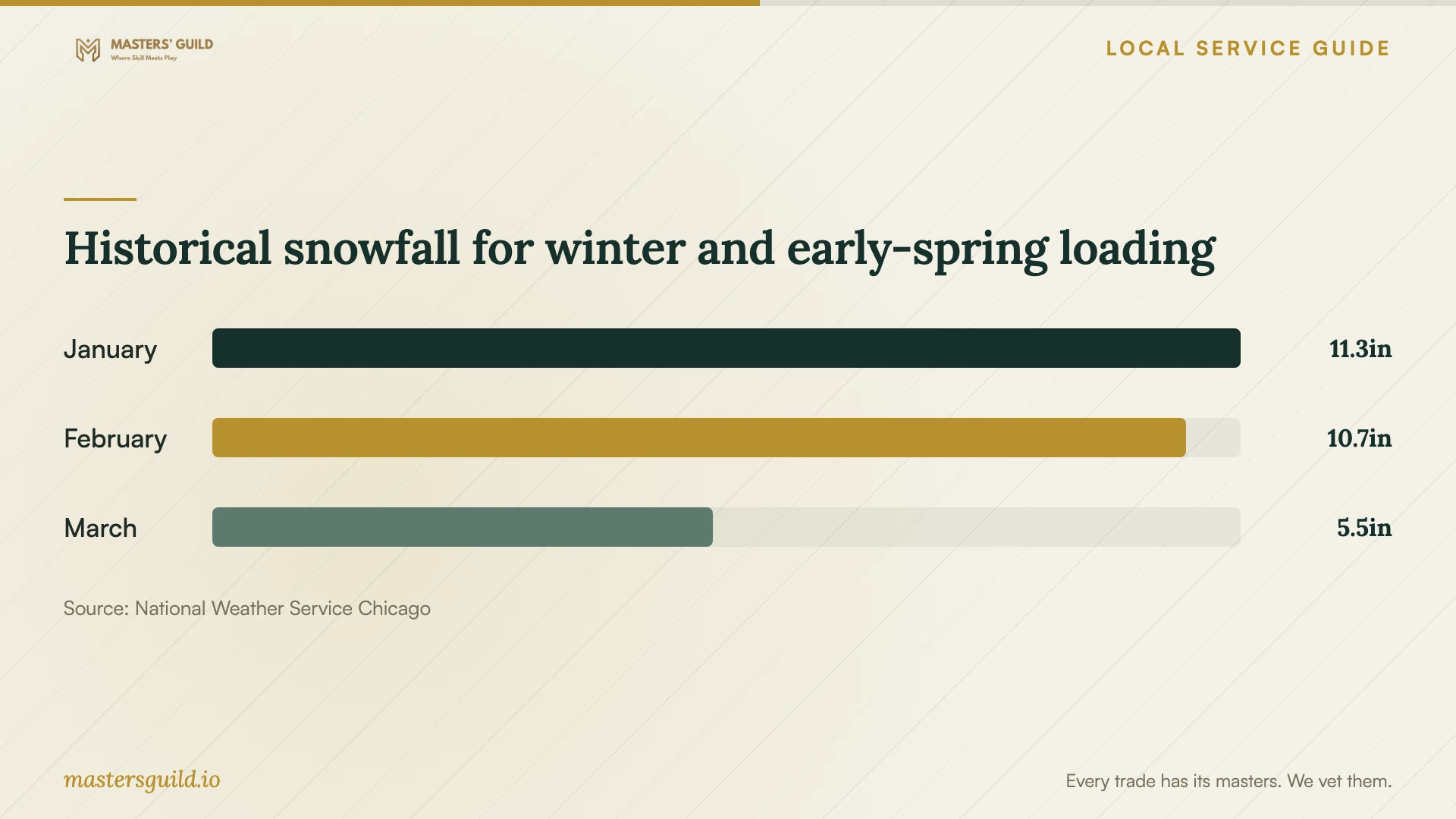
Prepare a winter loading plan with the crew. O’Hare’s 1991–2020 climate normals report 11.3 inches of January snowfall and 10.7 inches in February. Discuss who will clear the loading path, protect floors from wet footwear and decide whether unsafe access requires a schedule change. These historical averages do not predict conditions on your moving date. [2]
Keep medication, identification, keys, chargers and essential clothing with you. At delivery, compare the shipment with your inventory, photograph any visible damage and ask how to document missing items. Keep the signed paperwork and confirm the claims contact before the crew leaves.
Historical snowfall for winter and early-spring loading
Local details that affect your job
Courtesy signs and CDOT tow-zone signs serve different needs
The 47th Ward supplies free, non-enforceable courtesy moving signs. For enforceable signs, its guidance directs moving companies to the online CDOT application process and lists the CDOT permit office at 312-744-4652 for instructions. Ask your own ward about courtesy-sign arrangements and ask the mover who will obtain enforceable signs before you rely on street loading. [3]
Confirm container placement before choosing a container move
The 47th Ward advises placing portable storage containers on private property, such as a yard, driveway or private garage. It says legal street placement requires a movable trailer. If you lack private space, ask the container supplier and CDOT to confirm a compliant arrangement before ordering delivery. [3]
Check winter restrictions before overnight truck staging
Chicago designates priority arterial streets with a parking restriction from 3 a.m. to 7 a.m. between December 1 and April 1, even without snow. Check the signs at the proposed staging location and ask your mover to choose a permitted alternative if it plans to arrive overnight or wait for an early loading slot. [4]
Match your moving plan to the address and route
| Your situation | Next step | Confirm before booking |
|---|---|---|
| The move stays within Illinois | Check the ICC license-status lookup | The company’s legal name, license status and applicable tariff charges |
| You need enforceable street loading space | Ask the mover about the online CDOT tow-zone application | Who applies and whether the City can post signs before pickup |
| You want a portable storage container | Review private-property placement or a movable-trailer arrangement | A compliant location with the supplier and relevant local office |
| You plan overnight winter truck staging | Check whether the location has the designated-street parking restriction | A permitted staging location outside restricted hours |
Your hiring checklist
- Prepare one inventory, including storage areas, fragile items and furniture requiring disassembly.
- Record the company’s legal name and verify the authority appropriate to the route.
- Get a written total, pricing basis, exclusions and conditions for additional charges.
- Confirm elevator reservations, loading entrances and building document requirements at both addresses.
- Assign responsibility for curb access and confirm the proposed truck or container location.
- Agree on pickup and delivery windows, contact details and a plan for unavailable destination access.
- Keep essentials with you and retain photographs, inventory records and signed paperwork.
Frequently Asked Questions
How much should I budget for the move?
Get written quotes based on your inventory, route, access and requested services. Ask each bidder to identify its pricing basis and potential additional charges. Use the same scope for each quote, then add your own travel and temporary accommodation allowance.
Do courtesy moving signs reserve an enforceable space?
The 47th Ward describes its courtesy signs as non-enforceable. Its guidance says moving companies can apply online for enforceable CDOT tow-zone signs. Ask which type your mover plans to arrange and who will handle the application. [3]
Can I leave a portable moving container on the street?
The 47th Ward advises private-property placement and says legal street placement requires a movable trailer. Confirm the arrangement with the supplier and CDOT before delivery, especially if your property has no driveway or yard. [3]
Does the winter parking restriction apply without snow?
Yes. Chicago’s guidance says designated priority arterial streets restrict parking from 3 a.m. to 7 a.m., December 1 through April 1, regardless of whether snow is present. Check the proposed truck staging location before scheduling an overnight arrival. [4]
Sources and scope
This guide combines the sources below with practical planning guidance. Figures apply to the stated geography and period; request a written quote for your property.