
Local service guide
HVAC services in Chicago: Hiring and Planning
Arrange HVAC services in Chicago by requesting a written diagnosis or replacement scope, comparing itemized quotes, and assigning permit responsibility before installation. The city lists mechanical work within its Express Permit Program. Have the contractor identify the application route for your project. For a heat pump, discuss existing ducts, heating fuel, and electrical work before choosing equipment. [1] [4]
Start with a diagnosis
Tell the contractor whether you want a repair, a second opinion, or a replacement proposal. Describe affected rooms, thermostat messages, unusual sounds, and repeated shutdowns. Share equipment model numbers and service records. Confirm the visit charge, what the diagnostic visit includes, and whether the contractor credits that charge toward an approved repair.
Before authorizing repairs, get the diagnosed fault, proposed work, and total charge in writing. If the contractor recommends replacement, request an explanation of what repair would resolve and what concerns would remain. Keep optional upgrades separate so you can approve the work that fits your needs and budget.
Assign permit and electrical responsibilities
Chicago requires a building permit before most construction, demolition, and repair work. The Department of Buildings lists Mechanical (HVAC) Work under its Express Permit Program instructions and also provides plan-based application routes. Have the bidder identify the process for your scope before agreeing to an installation date. [1]
Chicago requires a permit before installing or altering electrical equipment. Its electrical-only route covers stand-alone electrical work; it excludes electrical work associated with construction under a separate building permit. For a proposal involving wiring changes, have the installer explain how the mechanical and electrical applications fit together. [2]
Name the permit applicant and the person responsible for arranging required inspections in the quote. Include permit fees and proposed electrical changes. Chicago holds electrical contractors responsible for overloads when they add apparatus to existing loads. Have the electrician explain the capacity review and any circuit or service changes before you approve that work. [2]
Compare heat pumps around your home
ComEd describes ducted heat pumps as using existing furnace or central air conditioner ducts and serving the areas those ducts reach. Ductless mini-splits condition rooms or areas without ductwork. Have the bidder identify the spaces each proposal will serve, including rooms that you struggle to heat or cool. [4]
For homes heated with gas or propane, ComEd identifies dual fuel as an option for retaining supplemental fossil fuel heating. Compare that arrangement with an all-electric proposal if both interest you. Request the proposed controls, supplemental heating plan, and operating-cost assumptions in writing. [4]
ComEd cautions that a heat pump may increase winter heating costs depending on your existing heating fuel, with potential cooling savings in summer. Use your bills when discussing operating costs. ComEd also offers free home energy assessments and says certain eligible customers may qualify for weatherization improvements. Check eligibility before finalizing your equipment scope. [4]
Build your budget from comparable quotes
Build your budget from itemized quotes for your home. Give bidders the same description of the work and request equipment model numbers, labor, removal of old equipment, controls, duct changes, and electrical work. Include exclusions, payment terms, warranty terms, and the process for approving additional charges.
ComEd requires heat pump-trained contractors to complete six on-demand trainings and at least one manufacturer training. The utility provides a customer-accessible contractor list and gives participants access to equipment discounts. Confirm the bidder’s participation and the proposed equipment’s eligibility, then have the bidder show the gross price and proposed discount as separate amounts. [3]
Request insurance documents and the credentials applicable to the proposed work as separate hiring checks. Have the bidder identify who will perform each part of the installation and who will handle questions after completion. Agree on how you will approve substitutions if the proposed equipment becomes unavailable.
Prepare for installation and handover
Clear access to the equipment, thermostat, and electrical panel. In a condo or shared building, confirm who can authorize work and arrange access to shared equipment or installation areas. Tell the contractor about access restrictions before setting the appointment. Agree on how the crew will protect work areas and remove old equipment.
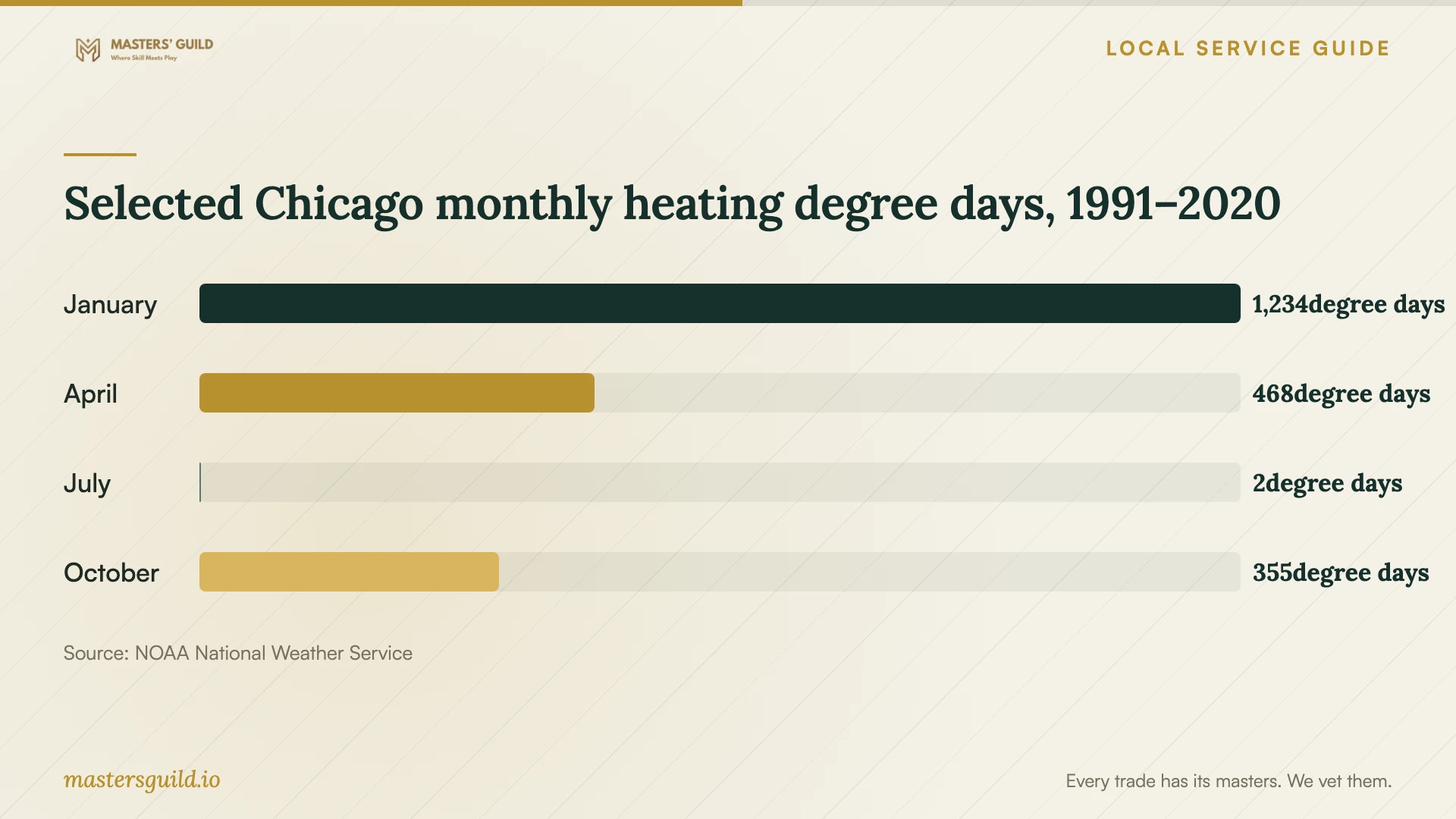
The National Weather Service’s Chicago table reports 1,234 heating degree days for January and 2 for July in its 1991–2020 normals. Use the chart to frame questions about heating performance across the year. Have the bidder explain cold-weather capacity and supplemental heat for your proposed system. [5]
Before final payment, have the installer demonstrate the controls and explain routine care. Collect the service report, equipment documents, warranties, and permit records. Agree in advance on completion checks and who will address unresolved comfort problems.
Selected Chicago monthly heating degree days, 1991–2020
Local details that affect your job
Follow the Chicago permit application
Chicago includes Mechanical (HVAC) Work in its Express Permit Program instructions. Applicants can check application status, pay fees, and view inspection results online. Get the applicable permit route and permit reference from your contractor so you can follow the project before installation and at handover. [1]
Check the electrical application boundary
Chicago excludes electrical work associated with construction under a separate building permit from its electrical-only route. Online electrical-only applicants must be associated with a licensed electrical contractor or expediter in good standing. For wiring changes, confirm who handles the electrical scope and which application includes it. [2]
Confirm ComEd program participation
ComEd provides a customer-accessible heat pump-trained contractor list and gives participants access to equipment discounts. If ComEd serves your home, check the bidder’s program participation and obtain written confirmation of any proposed discount. Keep that check separate from insurance and applicable contractor credentials. [3]
Choose the next discussion for your home
| Your situation | Option to discuss | Question for the bidder |
|---|---|---|
| You want to use existing ductwork | A ducted heat pump uses existing ducts. | Which rooms will it serve, and what duct changes do you propose? |
| You want to condition an area without adding ducts | A ductless mini-split provides room or area control. | Where will the indoor unit go, and which spaces will it serve? |
| You heat with gas or propane and want supplemental fuel heating | ComEd identifies dual fuel as an option. | How will you control the two heat sources and compare operating costs? |
| Your proposal includes electrical alterations | Chicago requires a permit before electrical installation or alteration. | Which application covers this work, and who handles it? |
Your hiring checklist
- Record symptoms, affected rooms, equipment model numbers, and previous repairs.
- Confirm the diagnostic charge and how you will approve repairs.
- Compare itemized quotes with equipment models, inclusions, and exclusions.
- Identify the permit applicant and responsibility for required inspections.
- Discuss electrical capacity and wiring changes for the proposed equipment.
- Confirm shared-building authorization and access arrangements.
- Collect written discount terms, warranties, and handover documents.
Frequently Asked Questions
Does an HVAC replacement need a Chicago permit?
Chicago requires permits before most construction and repair work and lists mechanical work within its Express Permit Program instructions. Have your contractor confirm the requirement and application route for your replacement scope with the Department of Buildings, then include permit responsibility in the quote. [1]
Will a heat pump lower my heating bills?
ComEd says winter heating costs may increase depending on your existing heating fuel, with possible cooling savings in summer. Request a comparison using your bills, the proposed equipment, and stated assumptions before choosing a system. [4]
What does ComEd heat pump contractor training cover?
ComEd requires six on-demand trainings and at least one manufacturer training for its heat pump-trained contractor program. Participants can appear on its customer-accessible list and gain access to equipment discounts. Check the bidder’s insurance and applicable credentials as separate hiring steps. [3]
How should I compare repair with replacement?
Review the written diagnosis, repair scope, and repair total alongside an itemized replacement proposal. Have the contractor explain what each choice resolves, which components remain, and what the quote excludes. Compare those answers with your comfort goals and budget.
Sources and scope
This guide combines the sources below with practical planning guidance. Figures apply to the stated geography and period; request a written quote for your property.