
Local service guide
Warehouse Organization in Charlottetown, PE
Arrange Warehouse Organization in Charlottetown by asking for a written scope covering sorting, stock locations, labels, equipment use and disposal. Choose a crew whose responsibilities match the job: light stock sorting, powered equipment operation and rack changes need separate consideration. PEI requires competent powered-equipment operators, while businesses must sort waste and arrange commercial hauling or self-haul. Confirm those responsibilities before agreeing to a price. [1] [4]
Define the reset before requesting quotes
Give the provider a floor sketch, photographs and a description of the stock you want moved. Identify receiving, picking, returns and dispatch areas. Name the problem you want addressed, such as unlabeled bays or returned goods mixed with saleable inventory. Ask the provider to quote a defined area and list the work included.
Choose a person on your team to approve keep, relocate and discard decisions. Set aside disputed stock for review instead of allowing the crew to dispose of it. Specify whether you need item counting, inventory-system updates or just physical sorting. Agree on a location naming system before anyone prints labels.
Ask for a completion walkthrough with the staff who receive and pick stock. Include a location list, a record of unresolved items and instructions for maintaining the layout. If you want follow-up visits, request a separate scope describing the checks and resets the provider will perform.
Match the crew to stock handling and racking
Treat rack repair, relocation or changes to loading as a separate part of the proposal. WCB PEI guidance requires employers to maintain racks and their required safety features, respect safe loading limits and prevent unstable piles. Ask who will assess any proposed rack changes and what loading information they will use before you approve moving stock onto them. [3]
For work involving forklifts or other powered mobile equipment, identify who supplies the equipment and who operates it. PEI requires competent operators and an inspection before each shift. Employers must use designated pedestrian walkways where practicable and other collision-control procedures where separate walkways are impracticable. [4]
Agree on the work area and delivery schedule before the reset starts. Ask the provider how staff will reach stock during the work and how the team will coordinate equipment movements. Where an operator's view is obstructed, PEI requires a designated worker and mutually agreed signals. [4]
Compare quotes on the same scope
Request separate amounts for labour, labels and bins, equipment, transport and disposal. For an hourly proposal, ask for the crew size, expected hours, minimum charge and approval process for extra work. Clarify whether the quoted hours mean total worker-hours or elapsed time with the whole crew on site.
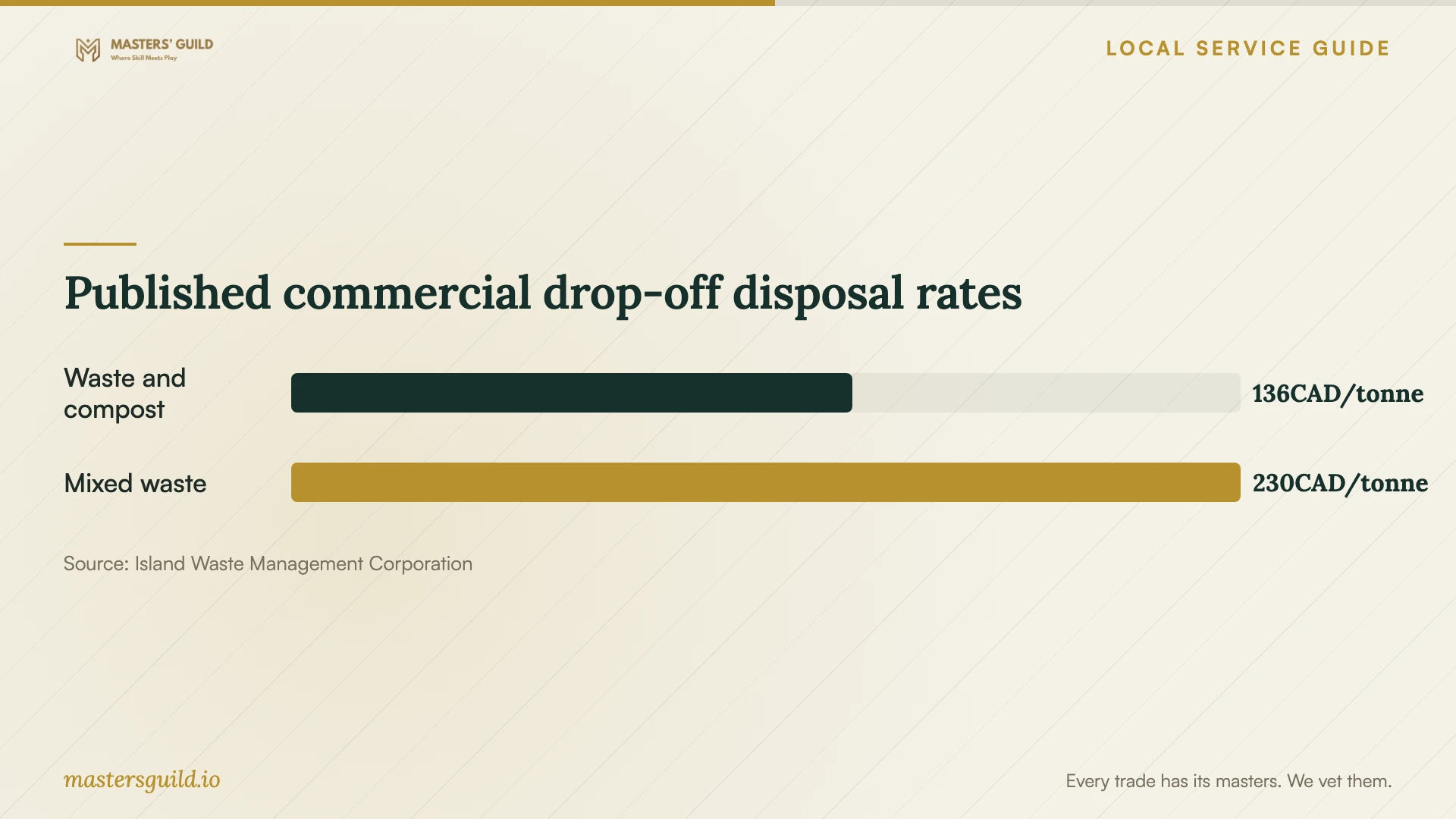
Ask who pays disposal fees and who retains the facility receipts. IWMC lists commercial Waste Watch Drop-Off Centre waste and compost at CAD 136 per tonne with a CAD 5 minimum, and mixed waste at CAD 230 per tonne with a CAD 50 minimum. Use these as disposal references when reviewing a quote, rather than as an organizing-service estimate. [1]
Request evidence of insurance appropriate to the proposed work and written terms for damage, cancellations and additional charges. Ask for an example of the provider's stock-location handover. Describe the goods and equipment involved so the provider can confirm whether the crew can undertake the full scope.
Plan waste sorting and the hauling trip
PEI's mandatory Waste Watch program applies to businesses. Businesses must hire a commercial waste hauler or transport sorted material to a Waste Watch Drop-Off Centre and pay applicable fees. IWMC can surcharge or reject unsorted material and non-transparent bags. Set up labeled sorting containers before the crew starts clearing packaging and unwanted stock. [1]
Keep commercial hazardous waste outside the ordinary disposal scope. IWMC describes hazardous products as corrosive, flammable, reactive or toxic and requires businesses to arrange a hazardous waste carrier. Identify suspected material before quoting and ask the carrier about acceptance and handling arrangements. [1]
For self-haul, include loading, travel, queuing and unloading in the schedule. IWMC requires customers to cover and secure loads and to sort and unload material as facility staff direct. Customers must finish unloading and leave by closing time, so avoid scheduling arrival at the end of the operating day. [2]
Published commercial drop-off disposal rates
Local details that affect your job
Charlottetown drop-off access
IWMC lists the Capital Waste Watch Drop-Off Centre at 8 Superior Crescent, with hours of Monday to Friday, 7:00 am to 5:00 pm, and Saturday, 7:00 am to 2:00 pm, subject to change. Confirm hours before booking transport and allow time to unload and depart before closing. Ask the crew to include unloading and potential queue time in its hauling scope. [2]
Business waste requires its own disposal plan
For a warehouse here, use IWMC's business rules: arrange a commercial hauler or self-haul sorted material and pay the applicable fees. Public-waste contamination allowances do not apply to staff-controlled areas; IWMC requires staff-generated material to be sorted. Specify separate waste streams in the crew's scope rather than authorizing one mixed cleanout load. [1]
PEI equipment rules affect scheduling
PEI requires competent powered-equipment operators and pedestrian separation where practicable. Ask whether your staff or the contractor will operate the forklift, and agree on pedestrian access before scheduling the reset alongside receiving or dispatch work. [4]
Choose the scope that matches your warehouse
| Your job | Scope to request | Point to confirm |
|---|---|---|
| Light stock and unlabeled bins | Sorting, location naming and labels | Who approves moves and updates the stock list? |
| Heavy stock or pallet moves | Handling plan and suitable equipment | PEI requires competent powered-equipment operators. |
| Rack changes or uncertain loading | Separate racking assessment and work scope | Respect safe loading limits and maintain required rack safety features. |
| Packaging and unwanted stock | Sorted removal with itemized hauling and fees | Businesses must arrange commercial hauling or self-haul. |
| Corrosive, flammable, reactive or toxic products | Hazardous waste carrier arrangements | IWMC does not accept commercial hazardous waste. |
Your hiring checklist
- Send a floor sketch, stock photographs and a list of areas included in the reset.
- Name the staff member who can approve stock moves and disposal.
- Confirm whether counting and inventory-system updates belong in the scope.
- Agree on bay names, label materials and the finished location list.
- Assign equipment operation and pedestrian-access responsibilities.
- Request separate labour, supplies, hauling and disposal charges.
- Identify suspected hazardous material before the crew quotes removal.
- Schedule a completion walkthrough and record unresolved stock.
Frequently Asked Questions
Can our staff handle the sorting?
Consider assigning light sorting and stock decisions to your staff if you can provide suitable instruction and supervision. Define separate responsibilities for heavy handling and equipment use. PEI requires employers to provide necessary safety training and requires competent operators for powered mobile equipment. [3] [4]
Can we stay open during the reset?
Ask for a phased plan describing staff access, delivery times and equipment movements. PEI requires designated pedestrian walkways where practicable, with collision-control procedures where separation is impracticable. Review the proposed arrangement before deciding whether receiving or dispatch can continue. [4]
Does a disposal fee cover the whole cleanout?
Request an itemized quote. IWMC's published commercial fees cover disposal by material category and weight, with minimum charges. Ask the provider to price sorting labour, transport, unloading and any equipment separately so you can see the full job scope. [1]
What should we receive at completion?
Specify labeled stock locations, a matching location list, a record of discarded and unresolved items, and a staff walkthrough. Ask the crew to demonstrate where incoming stock, returns and outbound orders belong. Confirm any counting or software updates before work starts.
Sources and scope
This guide combines the sources below with practical planning guidance. Figures apply to the stated geography and period; request a written quote for your property.