
Local service guide
Long-Distance Moving in Charleston, WV
Arrange Long-Distance Moving in Charleston by comparing written plans for the same household inventory, confirming truck access before booking, and agreeing on pickup and delivery arrangements. Ask each mover to explain packing, transport, storage, payment and damage-handling terms. For public curb access, Charleston lists bagged-meter, loading-zone and temporary street-sidewalk closure applications; ask the city which applies to your proposed loading location before committing to it. [1]
Compare a complete move plan
Start with a room-by-room inventory. Identify furniture you want disassembled, fragile items you want packed, and belongings you will carry yourself. Send photographs of bulky pieces and the route between your door and the proposed truck position. Ask each mover to price the same work so you can compare offers without guessing what each includes.
Request a written explanation of the quoted amount, payment schedule and circumstances that could change the charge. Ask who will transport your belongings and who will answer questions after pickup. Have the mover describe its damage-reporting process and available shipment protection in writing. Review those terms before handing over possessions.
Choose a plan you can explain back to the mover: who packs, who loads, who drives, where belongings go between addresses, and who confirms delivery. Ask for clarification wherever an offer leaves one of those responsibilities open.
Confirm the loading position before booking
Charleston’s Traffic, Parking and Transportation Department manages curbside activities and issues permits for street obstructions and street closings. Its department page lists a Bagged Meter Request Form, Loading Zone Permit Application and Temporary Street-Sidewalk Closure Permit. Describe your proposed truck location to the department and ask which process applies. [1]
Give the city and mover the address, proposed date, expected loading hours and any plan to occupy a sidewalk or roadway. Ask who will submit any required application and how approval will affect the loading arrangement. Confirm application instructions, timing and any charges with the city rather than assuming that a form listing grants permission. [1]
Ask the mover to review access at both homes. Include stairs, elevator arrangements, doorway measurements and the walking route from truck to entrance. If the proposed truck cannot use the agreed position, request a written alternative and an explanation of any resulting charge before accepting the plan.
Agree on delivery and household handover
Ask whether the mover offers a delivery date or a delivery window, how it communicates changes, and what happens if you cannot receive the shipment. Identify a contact at each address. Arrange building access with the property manager where relevant, and tell the mover about any limits on delivery hours.
Keep medicines, identification, keys, essential chargers and the move paperwork with you. Photograph belongings before loading and retain your inventory. At delivery, compare the items received with that inventory and record concerns using the procedure you agreed with the mover.
Prepare for wet loading and box disposal
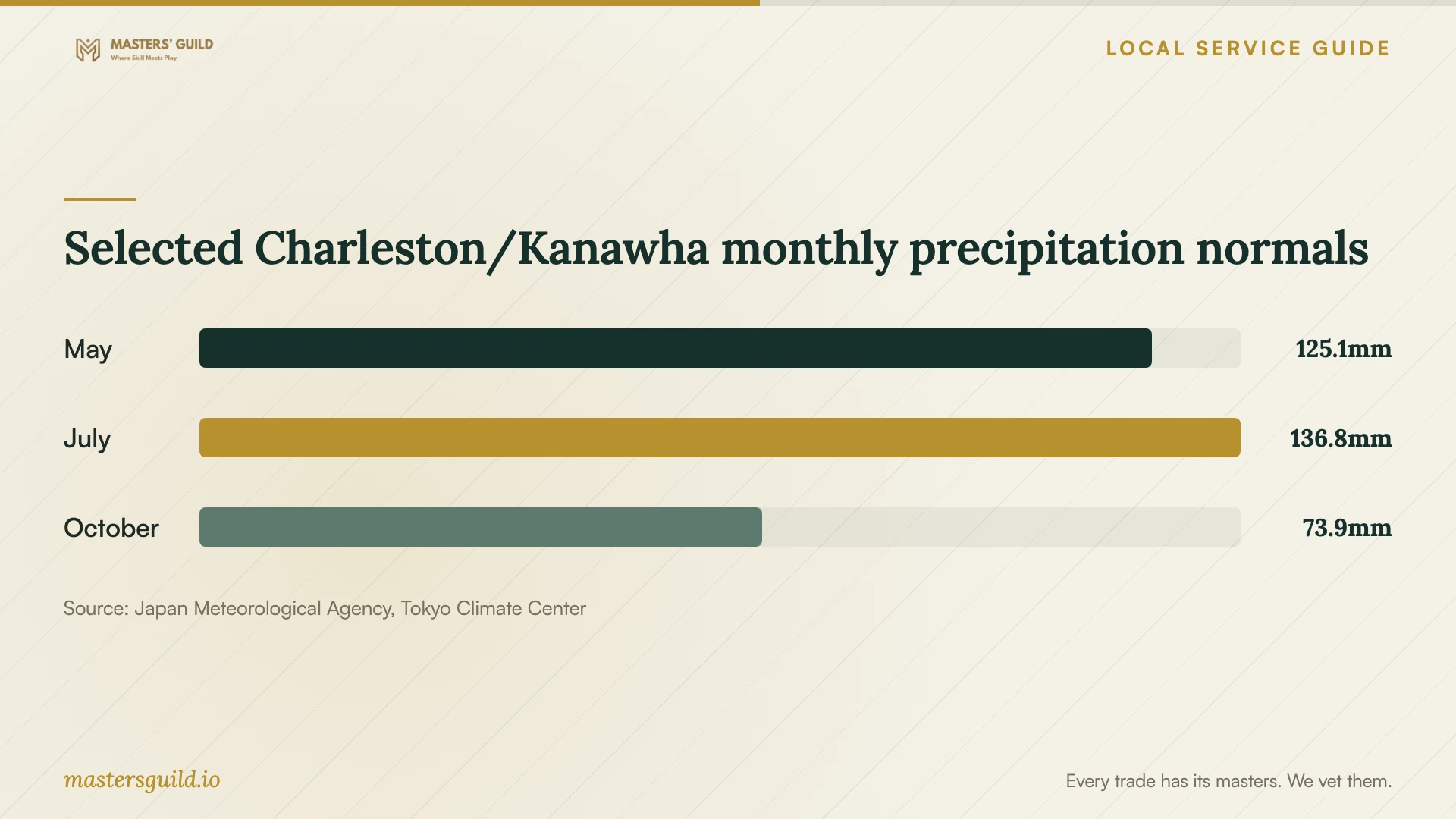
The Japan Meteorological Agency’s Charleston/Kanawha station table reports precipitation normals for each month, including 125.1 millimeters in May, 136.8 in July and 73.9 in October. Use the chart as background for discussing covered staging and protection during loading. Check the forecast near your move date before deciding where to place boxes. [3]
Ask whether the mover will remove packing materials or leave them with you. Charleston accepts corrugated and non-corrugated cardboard for recycling and requires paper and cardboard to remain dry. The city also instructs residents to separate recyclables from regular garbage and food, so reserve a dry place for empty boxes. [2]
Selected Charleston/Kanawha monthly precipitation normals
Local details that affect your job
Use the city’s curb-access application options
Before agreeing to public-street loading, review the bagged-meter, loading-zone and temporary street-sidewalk closure applications listed by Traffic, Parking and Transportation. Ask the department which fits the proposed location and activity. The city lists the Parking Operations Center at 915 Quarrier Street, Suite 2, with telephone number 304-348-8158. Explain your loading plan and request the appropriate contact if it involves a street obstruction. [1]
Plan a compliant box collection
Charleston instructs residents to place recyclables in sealed or closed containers at the curb on their scheduled weekly trash pickup day. Its page specifies containers under 40 pounds when full and no larger than 48 gallons. Separate dry cardboard from foam and plastic bags, which the city does not accept through this program. Ask the mover to remove those materials or arrange another disposal option. [2]
Resolve these choices before accepting an offer
| Your situation | Next step | Get in writing |
|---|---|---|
| You propose loading beside parking meters | Ask the city whether its bagged-meter process fits the location. | Who will arrange permission and the agreed truck position. |
| Loading could obstruct a street or sidewalk | Ask Traffic, Parking and Transportation which closure or obstruction process applies. | The approved access arrangement and any alternative. |
| You cannot receive delivery on a fixed day | Ask the mover to explain delivery coordination and storage options. | Notice arrangements, storage responsibilities and charges. |
| You want the mover to handle packing materials | Specify removal as part of the requested scope. | Which materials the crew will take away. |
Your hiring checklist
- Send the same household inventory and requested packing scope to each mover.
- Photograph the entrance, stairs and proposed truck position at both addresses.
- Ask the city which curb-access application fits the loading plan.
- Record who will arrange any required permission and confirm the approved location.
- Review payment, shipment protection and damage-reporting terms before booking.
- Confirm delivery arrangements and a contact for schedule changes.
- Keep essential belongings and move documents with you.
- Assign packing-material removal and reserve dry storage for empty boxes.
Frequently Asked Questions
Does paying a parking meter reserve space for a moving truck?
Do not treat meter payment as confirmation of a loading arrangement. Charleston lists separate bagged-meter and loading-zone applications. Describe the proposed use to the city and ask what permission you need. [1]
What should I ask before choosing a mover?
Ask who will transport the shipment, what work the quote includes, how charges could change, how delivery is arranged, and how to report damage. Request written answers and compare them against the same inventory.
Can I put all the packing materials into city recycling?
Charleston accepts cardboard, but excludes plastic bags and Styrofoam. Keep paper and cardboard dry and separate recyclables from food and regular garbage. Agree on another disposal plan for materials the city excludes. [2]
Does October’s lower precipitation normal guarantee dry loading?
No. The station table reports monthly climate normals, not a moving-day forecast. Discuss weather protection with the mover and check the forecast near pickup and delivery. [3]
Sources and scope
This guide combines the sources below with practical planning guidance. Figures apply to the stated geography and period; request a written quote for your property.