
Local service guide
Warehouse Organization in Calgary, AB
For Warehouse Organization in Calgary, hire a provider whose written scope covers stock sorting, storage locations, labels and staff handover. Arrange separate help for rack alterations, trade work and waste hauling. Before approving layout changes, check the scope with the City: its commercial alterations guidance includes racking, and changes to building systems or business activity can require approvals. [1]
Choose the provider around the work
Write a short brief before requesting quotes. Identify the zones you want reset, the stock you want counted, and the records staff must update. Ask each provider to describe who will sort stock, move it, approve exceptions and train your team. Request evidence of insurance that covers the proposed work, plus a description of the equipment and operators they plan to use.
Separate organization work from construction in the scope. Ask an organizer to propose stock locations and labels; assign rack alterations and changes to electrical, plumbing, gas or HVAC systems to people qualified for those tasks. Calgary requires the appropriate trade contractor to apply for separate trade permits. An architect or professional engineer may also need to design and inspect an alteration project. [1]
Prepare a layout staff can use
Start with a walkthrough alongside the person who receives goods and the person who picks orders. Mark receiving, active stock, returns, damaged goods and dispatch on a draft plan. Agree on a location naming system before printing labels. Ask the provider to test it with a real receipt and pick, then record any stock that lacks a clear owner or destination.
Give the provider your current building drawings and fire safety plan, if your premises require one. Calgary identifies regulated indoor and outdoor storage areas among the premises requiring a fire safety plan. The City requires a review at least every 12 months to account for changes in use or building characteristics. Ask the person responsible for fire safety to review the proposed reset and identify any drawings or procedures that need updating. [4]
Agree on temporary stock locations before moving anything. Preserve access to exits and fire safety equipment throughout the work. Let your facility lead approve the working layout and equipment routes before the crew starts. Keep undecided returns or damaged stock in a named holding area rather than mixing them into available inventory.
Compare quotes and plan the shutdown
Ask for a quote that names the crew size, working hours, equipment, label supplies and handover documents. Require the provider to state whether the price includes inventory counting, record entry, cleaning and removal. For hourly work, agree on an approval point before the crew exceeds the budget. For a fixed price, list the assumptions about stock volume and access.
Choose a work window around your receiving and dispatch commitments. Decide whether staff will keep serving orders from untouched zones or pause operations during the reset. Give one person authority to resolve questions about unknown stock. Ask the provider to leave you a completed location map and an exceptions list so staff can distinguish finished work from unresolved decisions.
Build approval time into projects that involve alterations. Calgary lists a typical interior-renovation permit timeline of 21 to 49 days, with variation for complexity and application completeness. Treat that as planning guidance rather than a promised completion date, and confirm the requirements for your project before booking a construction crew. [1]
Arrange recycling before the cleanout
Agree on collection destinations before the crew starts sorting. Calgary requires businesses to store recyclables apart from other waste and ensure delivery to a recycling facility. Its listed commercial materials include corrugated cardboard, clear plastic film, scrap metal and raw, unprocessed wood such as wooden pallets. The wood category excludes treated wood, plywood, particle board and finished or painted wood. [2]
Ask the hauler to identify the material streams, receiving facilities and charges in writing. Calgary charges mixed landfill loads at the highest applicable rate. City staff inspect loads and have final authority over acceptance and charges. Require the hauler to provide disposal receipts, and decide who pays if a load needs another destination or attracts an additional charge. [3]
Include waste-station labels in the handover. Calgary requires signage on collection containers and education for tenants at least once per year. Ask your provider to leave clear sorting instructions for the materials your business handles, then assign someone on staff to maintain those stations. [2]
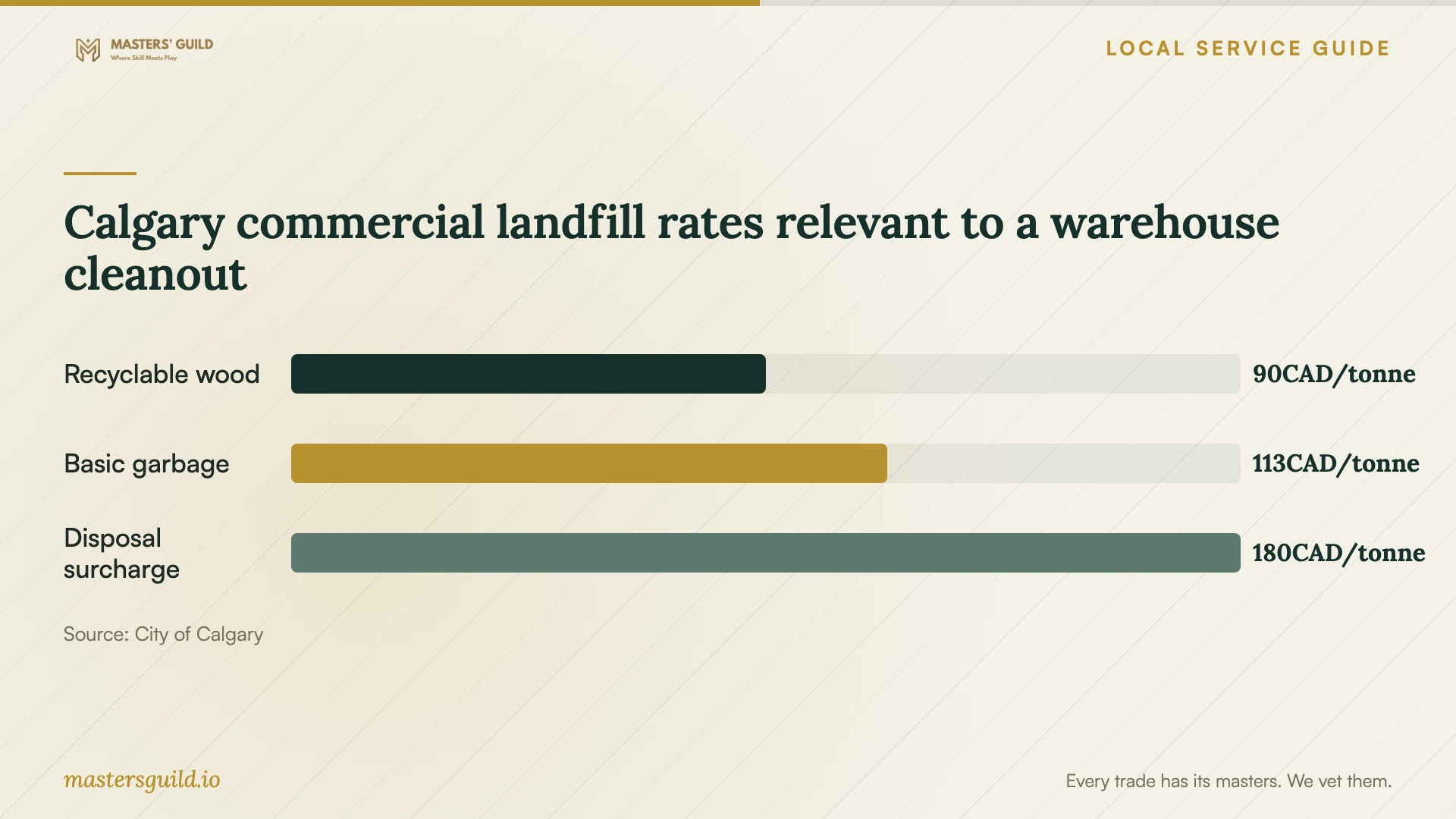
Calgary commercial landfill rates relevant to a warehouse cleanout
Local details that affect your job
Confirm approvals before changing the space
Contact Calgary's Planning Services Centre at 403-268-5311 with the address and proposed scope if rack alterations or changed operations form part of the reset. The City checks planning approval before issuing a building permit and may hold the application until the appropriate approval exists. Its guidance also notes that forklift use in a warehouse may require additional ventilation, so include proposed equipment changes in your enquiry. [1]
Sort loads before paying landfill charges
For 2026, Calgary lists basic sanitary waste at CAD 113 per tonne and qualifying recyclable wood at CAD 90 per tonne. It lists a disposal surcharge rate of CAD 180 per tonne for qualifying mixed garbage loads, including loads with 10 percent or more paper or cardboard. Ask the hauler to separate materials before departure and confirm facility acceptance rather than assuming a single mixed load will receive the basic rate. [3]
Coordinate changes to the fire safety plan
Ask your building manager or fire safety lead whether the reset changes information in the required fire safety plan. For help developing a plan, Calgary directs businesses to Fire Inspections and Investigations through 311, or 403-268-2489 from outside the city. Use that route to clarify storage-related plan requirements before approving a revised layout. [4]
Match the scope to the next step
| Proposed work | Who to involve | Before booking |
|---|---|---|
| Sort stock and label existing locations | Organization provider and inventory lead | Agree on labels, disposal authority and handover records. |
| Alter racking or building systems | Relevant contractor and City permit staff | Confirm the permit scope and any professional design involvement. |
| Change business activity or introduce equipment | Operations lead and Planning Services Centre | Check planning, building classification and ventilation implications. |
| Remove pallets, cardboard or mixed waste | Waste hauler and facility lead | Separate materials and confirm acceptance, rates and receipts. |
| Revise storage covered by a fire safety plan | Building manager or fire safety lead | Review the plan and identify information or drawings to update. |
Your hiring checklist
- Send photos, a zone sketch and the stock categories with your quote request.
- Identify who can approve disposal, returns and inventory adjustments.
- Agree on the location naming system and test a sample label.
- Confirm the crew's insurance, equipment and operator responsibilities.
- Assign responsibility for checking approvals for alterations.
- Choose temporary stock locations and a receiving or dispatch plan.
- List waste streams, destinations and receipt requirements in the quote.
- Arrange a staff walkthrough with the final map and exceptions list.
Frequently Asked Questions
Does a warehouse reset need a building permit?
Describe the scope to the City before assuming it does or does not. Calgary exempts wholly cosmetic work such as painting or furniture when its other permit criteria do not apply. Its alterations guidance includes racking and identifies construction, building-system changes and certain changes of business activity as approval triggers. [1]
How much should I budget for the service?
Request a site-specific quote. The supplied sources establish municipal disposal fees, but provide no verified local organization-service rate. Ask providers to separate labour, equipment, supplies, hauling and disposal so you can compare the same scope. [3]
Can the crew put old pallets and wrapping in one garbage load?
Arrange separate recycling streams. Calgary requires warehouses to recycle qualifying raw wood, including wooden pallets, and clear plastic film. Check pallet treatment and wrapping material before choosing a destination; the City's categories exclude treated wood and cellophane. [2]
What should the provider leave at handover?
Specify a location map, readable labels, an inventory exceptions list and a walkthrough with your staff. Ask the provider to demonstrate receiving and picking with the new system. Assign an employee to approve future location changes and keep the records current.
Sources and scope
This guide combines the sources below with practical planning guidance. Figures apply to the stated geography and period; request a written quote for your property.