
Local service guide
Warehouse Organization in Burnaby, BC
Arrange Warehouse Organization in Burnaby by requesting a site assessment and a written scope for sorting, storage locations, labels, inventory updates and waste removal. Identify proposed racking alterations before choosing the crew. Agree on who approves discarded stock, how staff will access active orders during the reset, and which records the provider will hand over.
Choose a crew for the work you need
Start the assessment at receiving and follow a stock item through storage, picking and dispatch. Show the provider the problem you want to resolve: overflow without recorded locations, returns mixed with saleable inventory, or packaging occupying floor space. Ask for a proposed location map and sample label before approving the reset.
Ask each bidder who will move heavy stock, supply equipment and operate it. Describe proposed rack moves or additions as separate tasks. Request insurance evidence suitable for the work and agree on responsibility for damaged goods. Identify chemicals, batteries and unknown materials before anyone includes them in a clear-out.
For work outside your staffed hours, discuss how crew members will obtain help. WorkSafeBC requires employers to identify and control hazards before assigning workers to work alone or in isolation. Employers must also implement a written well-being check procedure, including check intervals, missed-contact steps and emergency-rescue provisions. Ask who will perform and record those checks. [4]
Define the quote and completion criteria
Give bidders the same photographs, inventory snapshot and access information. Include the zones, stock types, loading arrangements and work window. Request separate amounts for labour, labels and bins, equipment, hauling and disposal. For hourly work, confirm crew size, whether the rate applies per worker, and who can approve time beyond your spending limit.
Write completion criteria that you can check on site. For example, require a location map, readable labels, an updated stock-location file, an approved discard list and unresolved discrepancies for staff review. Specify whether the crew will count stock or only record its new location. Ask a staff member to test receiving and picking before accepting the handover.
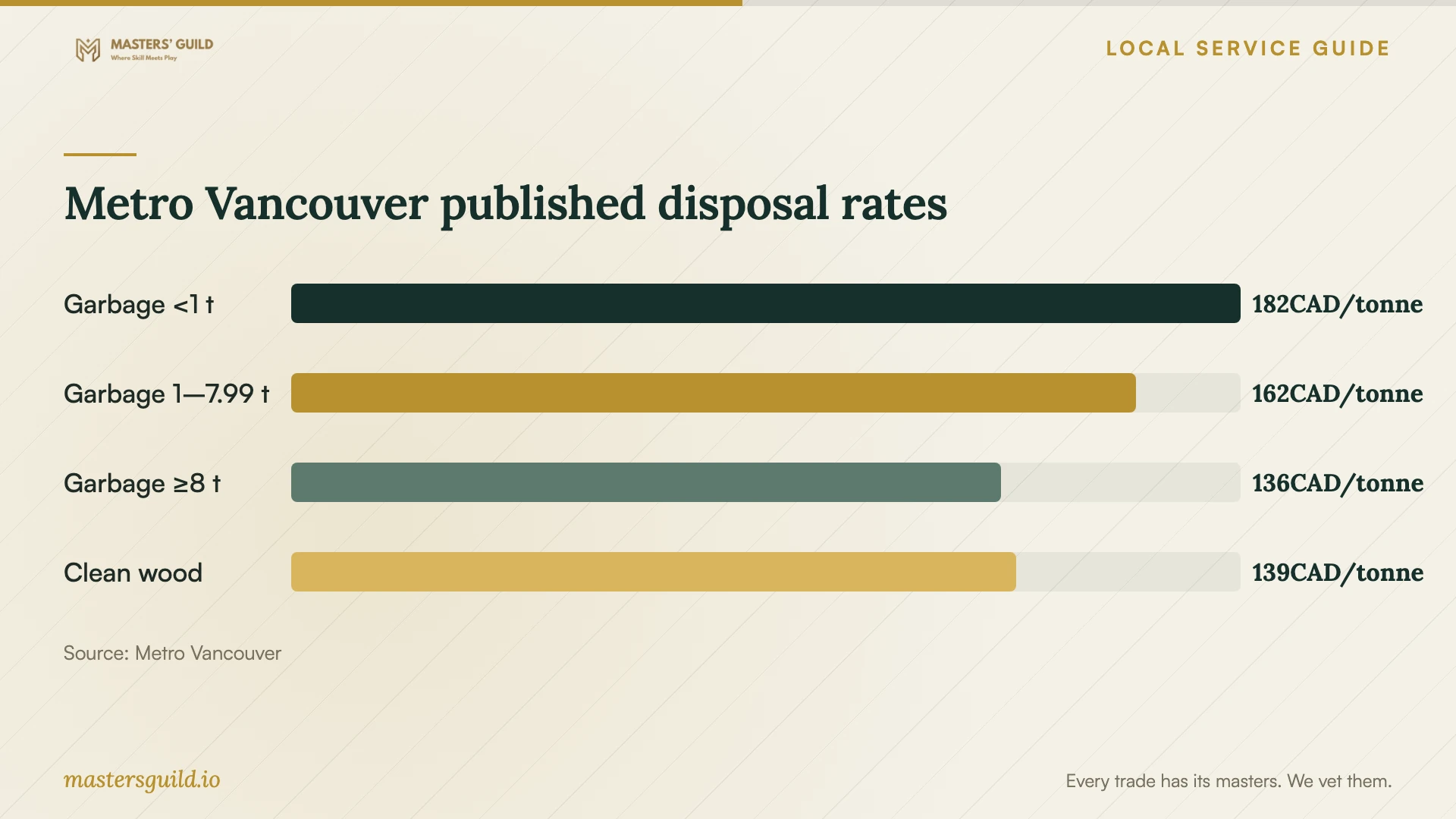
Metro Vancouver’s disposal schedule starting July 1, 2026 includes weight-based rates, load minimums and maximums, and transaction fees for specified loads. Use the chart to question the disposal allowance in a quote. Ask the hauler to name the facility, material category and expected weight, then explain transport and handling charges as separate items. [3]
Separate materials before the clear-out
Designate areas for stock to retain, return, resell and discard. Name the person who can authorize write-offs, and keep customer-owned goods or items subject to a hold out of the discard area. Preserve original markings on unidentified items until your staff decide what they are and how to handle them.
Metro Vancouver bans corrugated cardboard, recyclable paper, clean wood and expanded polystyrene packaging from garbage disposal. Its banned product-stewardship materials include batteries, paint and electronic products. Ask the hauler to specify separate streams and confirm a destination for each commercial material before loading. [2]
Metro Vancouver applies a surcharge of 50% of the tipping fee to the entire load containing banned recyclable materials. Loads containing more than 20% expanded polystyrene packaging attract a 100% tipping-fee surcharge. For banned hazardous, operational-impact or product-stewardship materials, it applies an $80 minimum surcharge plus potential removal, clean-up or remediation costs. Clarify responsibility for these charges in the quote. [2]
Confirm the disposal destination and alteration scope
Burnaby’s Eco-Centre excludes garbage and furniture from recycling drop-off, restricts plastic foam packaging to residential loads, and excludes pallets and pallet wood from green waste. Ask the provider to confirm commercial acceptance for your materials rather than naming the Eco-Centre as a destination for the whole clear-out. Check the vehicle limits before reserving a truck. [1]
For proposed racking or premises alterations, contact Burnaby’s Building Division with a description of the work. The City lists racking, mezzanine and tenant improvement guidance and identifies an in-person application process for commercial tenant improvement permits. Obtain an answer for your scope before combining alterations with sorting and labeling work. [5]
Keep orders accessible and hand over the system
Divide the reset into named zones and agree on the order of work. Reserve staging space and identify stock that staff must access for active orders. Assign one person to approve location changes and record movements during the job. Decide whether the crew may edit inventory software or must submit changes for staff approval.
Before the crew leaves, have staff locate an item, receive a delivery and process a return using the new labels and map. Assign responsibility for overflow and replenishment. Keep the discard approvals and disposal receipts with the job record, then review any confusing locations after staff have used the arrangement.
Metro Vancouver published disposal rates
Local details that affect your job
Check the truck before using Still Creek
Burnaby’s Eco-Centre at 4855 Still Creek Drive lists hours of 8 am to 4 pm daily, with closures on Christmas Day and New Year’s Day. The City limits gross vehicle weight to 7,500 kg, vehicle length to 7.6 m and combined vehicle-and-trailer length to 9.1 m. Have the hauler check the planned vehicle and confirm commercial material acceptance before scheduling this stop. A destination change should form part of the hauling quote. [1]
Resolve alterations with the Building Division
Describe rack moves or additions, a proposed mezzanine, or other premises changes to Burnaby’s Building Division at 604-294-7130. The City’s general building page lists guidance for these subjects and says commercial tenant improvement permit applications require an in-person application at City Hall. Ask which requirements apply to your project and who will handle the application. The guidance titles alone do not establish whether your reset needs a permit. [5]
Match the job scope to your warehouse
| Your situation | Scope to request | Question to resolve |
|---|---|---|
| Stock locations and labels need a reset | Sorting, location labels, record updates and staff walkthrough | Will the crew count stock or record new locations? |
| Heavy stock needs movement | A handling plan with named equipment responsibilities | Who supplies and operates the equipment? |
| You propose racking or premises alterations | An alteration assessment and inquiry to Burnaby’s Building Division | Which requirements apply before the reset begins? |
| Packaging and surplus goods need removal | Material separation, confirmed commercial destinations and receipts | Can the destination accept each material and the planned vehicle? |
| A worker will be assigned to work alone or in isolation | Hazard controls and a written well-being check procedure | Who records checks and responds to missed contact? |
Your hiring checklist
- 1. Photograph the work areas and list the stock categories and zones to reorganize.
- 2. Identify goods that need approval before movement, write-off or disposal.
- 3. Give bidders the same scope and request separate labour, supplies, equipment and hauling charges.
- 4. Resolve proposed alterations and confirm who handles equipment and site supervision.
- 5. Approve the location map, label format and inventory-record responsibilities.
- 6. Confirm commercial waste destinations, vehicle suitability and disposal charges.
- 7. Test the arrangement with staff and collect the handover records and disposal receipts.
Frequently Asked Questions
How much should I budget for organizing labour?
Request labour quotes for your inventory, access, crew size and deliverables; the disposal rates below do not establish organizing labour costs. Ask bidders to separate labour from supplies, equipment and waste removal. Confirm whether hourly charges apply per worker and require approval before the crew exceeds your agreed spending limit.
Can the crew take pallets and foam packaging to the Eco-Centre?
Burnaby excludes pallets and pallet wood from green-waste drop-off and lists plastic foam packaging as residential only. Ask the hauler to confirm an appropriate commercial destination before loading these materials and include that destination in the removal scope. [1]
Does a warehouse reset require a permit?
Describe proposed alterations to Burnaby’s Building Division before work starts. The City lists racking and tenant improvement guidance, but that listing does not determine requirements for your project. The City requires commercial tenant improvement permit applications in person at City Hall. Obtain advice for the actual work you propose. [5]
How can I keep orders moving during the work?
Phase the reset by zone, reserve staging space and identify active orders before stock moves. Assign a staff member to approve movements and record changed locations. Include coordination and the staff walkthrough in the quote, and agree on which zones the crew must finish before starting another.
Sources and scope
This guide combines the sources below with practical planning guidance. Figures apply to the stated geography and period; request a written quote for your property.