
Local service guide
HVAC Services in Burlington, VT: Hiring and Planning
For HVAC Services in Burlington, hire around your existing heating system and the work you need: diagnosis, repair, or replacement. Request a written scope that assigns permit and inspection responsibility, names the equipment, and separates installation costs from rebates. Burlington requires mechanical inspections for issued HVAC permits. For a heat-pump conversion, confirm Burlington Electric Department eligibility before accepting a quote. [1] [2]
Describe the problem before requesting a quote
Tell the contractor whether you need a repair visit or a replacement proposal. Record the equipment model, fuel type, thermostat settings, error messages, and rooms that feel uncomfortable. Describe when the problem occurs and any work someone has attempted. Ask about the diagnostic charge, after-hours charges, and whether the contractor needs your approval before starting repairs.
For replacement proposals, have the contractor explain the sizing method and how the design will serve each room. Request a written plan for existing ducts or heating distribution, thermostat controls, and any retained heating equipment. If you want cooling as well as heating, include both in the scope.
Compare complete installation costs
Have bidders name the indoor and outdoor equipment models and list labor, electrical work, distribution changes, controls, equipment removal, and permit costs. Request a gross installed total before incentives, then a separate explanation of each proposed discount or rebate. Identify which applications you must submit and which discounts the contractor applies at purchase.
BED requires contractor quotes or final invoices to show the paired indoor and outdoor models for its higher centrally ducted heat-pump rebate. If the contractor installs a new furnace alongside the heat pump, BED needs a separate invoice line for the heat-pump installation cost. Request those details before signing so you can check the proposal against the program requirements. [2]
For an electric-panel upgrade, BED says a licensed electrician must perform the panel work. The electrician coordinates with BED for disconnect and reconnect service. BED may charge for that service or infrastructure upgrades after reviewing the electrician’s Contractor Application. Ask who will coordinate this work and which utility charges the quote includes. [2]
Assign permits and inspections before work starts
Burlington provides permit applications through its online Permitting Portal. The city says submitting a building-permit application does not authorize work: the applicant must pay the fees and obtain a signed, active issued building permit before beginning work that requires it. Have the contractor identify the approvals your installation needs and who will obtain them. [3]
The city requires mechanical inspections for all issued HVAC permits and a rough inspection before workers close walls. It also assigns applicants responsibility for scheduling inspections and obtaining final project approval. Put those tasks in the contract and coordinate the inspection sequence with anyone handling drywall or other renovation work. [1] [3]
Choose a heat-pump design around your home
BED describes mini-splits as an option for specific rooms and buildings without ductwork. Centrally ducted systems distribute heating and cooling through ducts and can work with an existing furnace. BED also describes air-to-water heat pumps for hydronic distribution and possible boiler retrofits. Have the installer explain which approach fits your current distribution and intended room coverage. [2]
Review insulation and air sealing before committing to equipment. BED advises weatherizing first and warns that a natural-gas conversion might increase annual heating costs. Request an operating-cost comparison using your bills, the proposed equipment, and the planned controls. Decide whether you prioritize cooling, reduced fossil-fuel use, whole-home heating, or a combination. [2]
BED gives differently worded crossover-temperature instructions for its high-performance centrally ducted rebate. Its qualification summary specifies 15°F, while its detailed terms allow a maximum of 15°F. A setting of 15°F satisfies both descriptions. Both require the contractor to document the temperature on the quote or final invoice. Confirm BED’s accepted setting before signing a rebate-dependent proposal, then have the installer record that setting in writing. [2]
Check credentials and the completion handoff
Vermont’s Division of Fire Safety requires a Certification of Fitness for covered oil-burner work and describes full and limited installer categories. For oil equipment installation, inspection, or service, ask which category the individual holds and whether it covers your scope. The division’s page includes a certified-installer list. [4]
Request proof of insurance and identify who will handle each part of the job. Agree on the handoff before installation: operating instructions, thermostat settings, equipment model numbers, warranty paperwork, maintenance instructions, and confirmation of inspection completion. Have the contractor demonstrate the controls and explain how to request service after the job.
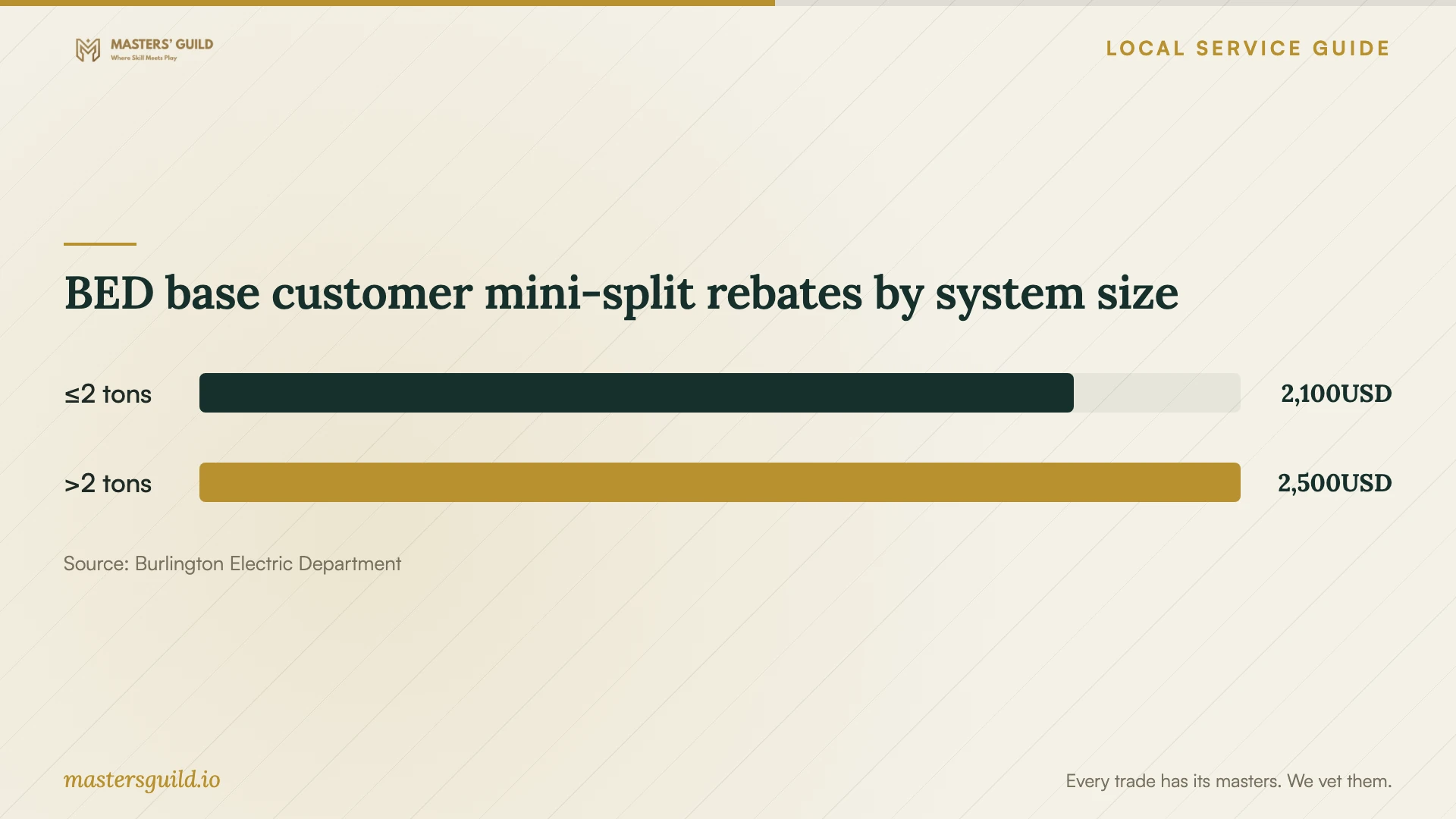
BED base customer mini-split rebates by system size
Local details that affect your job
Rebate eligibility affects equipment purchasing
BED’s mini-split terms require equipment purchased through participating local qualified professionals and HVAC distributors; customer-sourced equipment does not qualify. The program serves active BED accounts in existing buildings and requires submission within 90 days of installation. BED lists December 31, 2026 as the offer expiration date, but reserves the right to change or end the offer. Confirm eligibility before buying equipment or budgeting around a rebate. [2]
Room coverage affects which rebate applies
BED limits its centrally ducted online rebate to full central distribution with ducts reaching all heated spaces. It treats short-ducted installations under the ductless rebate rules. Households receiving a centrally ducted rebate cannot also receive a mini-split rebate. Have the bidder identify the applicable category and show the room coverage before comparing incentive totals. [2]
Renovation sequencing needs an inspection checkpoint
Burlington requires a rough mechanical inspection before walls close on permitted HVAC work. If you combine installation with a renovation, assign the inspection booking to a named person and make wall closure dependent on that inspection. The city also requires applicants to obtain final project approval. [1] [3]
Match the proposal to the work
| Your situation | Proposal to request | Check before accepting |
|---|---|---|
| A malfunctioning existing system | A diagnostic visit with a repair estimate | Charges and approval required before repairs |
| Specific rooms need heating and cooling | A mini-split design with room coverage | BED equipment eligibility and ductless rebate category |
| You want whole-home heating through ducts | A centrally ducted proposal with controls | Full distribution coverage, paired models, and BED confirmation of the crossover setting for the higher rebate |
| You want to retain hydronic distribution | An air-to-water assessment | Have the installer assess compatibility with your existing boiler and distribution |
| Oil-burning equipment needs work | A technician whose certification covers the scope | Vermont Certification of Fitness category |
Your hiring checklist
- Record equipment models, fuel type, symptoms, error messages, and affected rooms.
- Ask for diagnostic charges and a repair-authorization limit before the service visit.
- Compare written scopes with equipment models, electrical work, controls, removal, and exclusions.
- Assign permit applications, inspection booking, and final approval to a named person.
- Have the installer document room coverage and explain the proposed controls.
- Confirm rebate eligibility, purchasing requirements, and the accepted crossover setting before signing.
- Request operating instructions, warranty paperwork, and a demonstration at completion.
Frequently Asked Questions
Can I start work after submitting the permit application?
Burlington says a submitted building-permit application does not authorize work. The applicant must pay the fees and obtain a signed, active issued building permit before beginning work that requires it. [3]
Will replacing natural-gas heat with a heat pump lower my bills?
BED warns that your electricity bill could increase by more than your gas bill decreases. Request a comparison using your consumption and the proposed system. Review weatherization and the backup-heating plan alongside the equipment quote. [2]
Can I buy a mini-split myself and claim the BED rebate?
BED’s mini-split terms exclude customer-sourced equipment. They require purchasing through participating local qualified professionals and HVAC distributors. Confirm the purchasing arrangement before placing an order. [2]
Does an oil-heating technician need a Vermont credential?
The Division of Fire Safety requires a Certification of Fitness for covered oil-burner activities. Its guidance distinguishes full and limited installer categories. Ask the individual to identify the certification that covers your installation, inspection, or service work. [4]
Sources and scope
This guide combines the sources below with practical planning guidance. Figures apply to the stated geography and period; request a written quote for your property.