
Local service guide
Warehouse Organization in Bridgeport, CT
Arrange Warehouse Organization in Bridgeport, CT by defining the stock to sort, the areas to reset, and who will approve disposal before you compare crews. Request separate prices for labor, labels, equipment, and hauling. If your plan includes building alterations or an occupancy change, check the city's permit requirements before scheduling that work. [1]
Define the work before requesting quotes
Write a scope that names the receiving area, storage bays, packing benches, or other spaces you want the crew to organize. Describe the intended result for each area: sorted stock, assigned locations, readable labels, or a documented list of items awaiting your decision. Mark anything the crew must leave untouched.
Give the provider photographs and an inventory summary. Identify bulky items, stock on upper shelves, damaged shelving, and materials with special handling concerns. Ask the provider to inspect access and handling needs before committing to equipment or crew size. Request proof of insurance suitable for the proposed work and ask who will operate any lifting equipment.
Choose one staff member to approve location changes and disposal. Create a hold area for unidentified stock, customer goods, returns, and items with disputed ownership. Require approval before the crew removes anything from the premises.
Compare the full project price
Ask each bidder to separate organization labor, inventory recording, labels, storage products, equipment, hauling, and disposal charges. For hourly work, request the number of workers, the billing basis, and a spending limit that requires your approval to exceed. For a fixed quote, ask which quantities and tasks the price covers.
Describe the operating constraints in the quote request. Tell bidders when deliveries arrive, which workstations must stay available, and where they may stage stock. Ask for a sequence that lets you approve one area before the crew starts the next. Agree on how the provider will price extra stock or additional hauling discovered during the job.
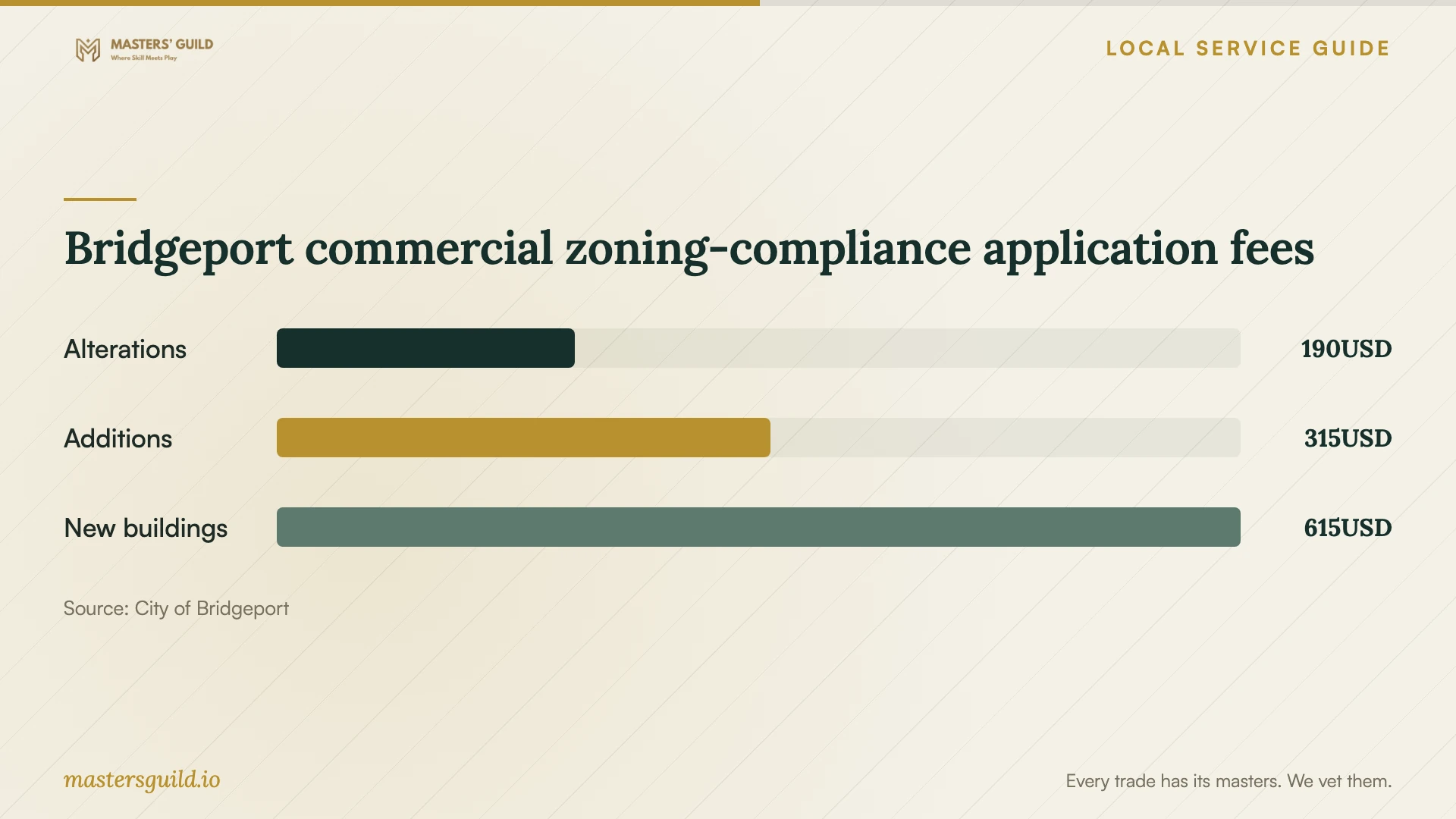
Use the published zoning fees below when your project includes facility changes. Bridgeport lists commercial zoning-compliance totals of $190 for alterations, $315 for additions, and $615 for new industrial and commercial buildings. These figures cover zoning application fees; budget organization labor and other permit charges separately. Confirm the applicable category with the city before including it in your budget. [4]
Plan recycling and hauling before the reset
Ask the provider to name the destination for each waste stream and confirm that the receiving facility accepts the material and commercial load. Bridgeport's transfer-station page describes resident household disposal and excludes construction debris, chemicals, toxic material, and hazardous liquids or material. Require the bidder to confirm disposal access before including hauling in the quote. [2]
Connecticut DEEP states that businesses must recycle mandated materials and identifies scrap metal as one of them. Include labeled collection areas and a recycling plan in the crew's scope. Ask your hauler how to separate the materials you expect to discard, and keep unidentified chemicals aside until you arrange an appropriate handling route. [3]
Review surplus equipment and reusable containers before authorizing disposal. DEEP describes a regional Reuse Marketplace for businesses and other organizations to sell, trade, or give away surplus materials, including storage containers and industrial equipment. Consider that option if you can manage the exchange, pickup arrangements, and storage while awaiting a recipient. [3]
Agree on the handover and maintenance plan
Request a location map and an agreed label format before the crew starts relabeling stock. Decide whether workers should record item codes, quantities, or exceptions, and specify who will update your inventory system. Ask the provider to demonstrate a sample bay so staff can approve the format before workers label the remaining bays.
At handover, walk through the completed areas with the crew leader and your stock owner. Check sample items against their assigned locations, inspect the hold area, and review disposal approvals and hauling records. Assign a staff member to maintain labels and review misplaced stock. If you want follow-up visits, define their tasks and billing basis in advance.
Bridgeport commercial zoning-compliance application fees
Local details that affect your job
Check facility alterations with the city
Bridgeport requires a building permit to alter, repair, or change the occupancy of an existing building or structure. The city directs applicants to create a Park City Portal account and submit a Zoning Plan application with every building permit. It also requests PDF documents, a detailed scope, and construction drawings or sketches. If your reset includes construction or changes to the use of the space, give the Building Department that scope before booking the construction portion. The cited page does not establish a permit requirement for ordinary sorting and labeling. [1]
Confirm a destination for commercial waste
The city lists its transfer station at 475 Asylum Street as a resident service for household trash and recycling. It excludes construction debris and several hazardous material categories, and requires covered, secured loads. Ask your warehouse provider to identify and confirm a suitable commercial destination. The city lists alternative facilities in Stratford and Milford for demolition or bulk material, but you should confirm acceptance and charges with the destination before agreeing to hauling. [2]
Choose the scope that matches your warehouse
| Your situation | Scope to request | Decision before booking |
|---|---|---|
| Stock needs sorting and location labels | Organization crew with a sample labeling plan | Approve the location map and inventory-recording tasks |
| Bulky stock or items on upper shelves need relocation | Provider with a written handling and equipment plan | Confirm operators, access, and insurance for the proposed work |
| Surplus goods and scrap need removal | Organization plus separate reuse, recycling, and hauling arrangements | Confirm commercial destinations and mandated recycling |
| The project includes building alterations or an occupancy change | Organization scope plus a separate construction scope | Check building permits and the accompanying Zoning Plan application |
Your hiring checklist
- Photograph each work area and mark stock or equipment the crew must leave untouched.
- Describe item quantities, bulky stock, storage on upper shelves, and handling concerns.
- Name the person who can approve relocation and disposal.
- Request itemized labor, materials, equipment, and hauling prices.
- Agree on delivery access, staging space, and the sequence of work.
- Confirm recycling and disposal destinations before authorizing removal.
- Resolve permit questions for any proposed facility alterations.
- Specify the location map, label format, and handover checks.
Frequently Asked Questions
Do I need a permit for sorting and labeling?
The city permit page does not establish that ordinary sorting and labeling require a permit. The city does require permits for building alterations, repairs, and occupancy changes. Describe any proposed facility work to the Building Department before scheduling it. [1]
Can the crew take warehouse waste to the city transfer station?
Confirm access before booking. Bridgeport describes the service as resident household disposal and excludes construction debris, chemicals, and other listed materials. Require the provider to confirm a destination that accepts your commercial load. [2]
How should I compare hourly and fixed quotes?
Give both bidders the same scope. For hourly work, ask how many workers the rate covers and set an approval limit. For a fixed price, list included tasks and quantities, then agree on charges for additional work.
Should the provider remove all unwanted stock?
Require your approval first. Separate reusable goods, mandated recyclables, and items needing special handling. Connecticut DEEP says businesses must recycle mandated materials and offers reuse resources for surplus equipment and containers. [3]
Sources and scope
This guide combines the sources below with practical planning guidance. Figures apply to the stated geography and period; request a written quote for your property.